
The Square Can Win
Published April 26, 2012 • Read time: 6m
Join the Conversation
0In 1972, a young aide named Patrick Buchanan suggested that Richard Nixon frame the presidential campaign as "square America" vs. "radical America." The square won 49 states.
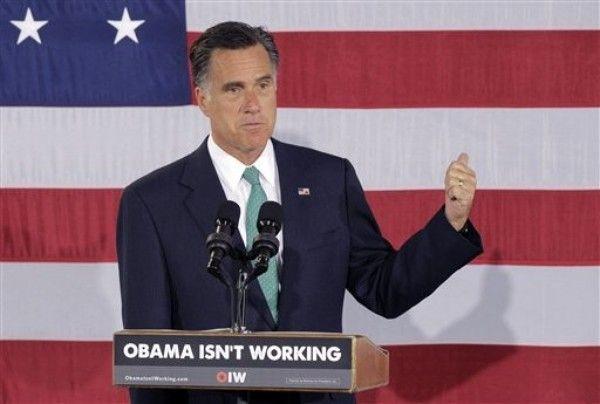
Pundits tend to describe Mitt Romney's vanilla disposition as a liability. The Washington Post recently asked, "Why does Mitt Romney seem so stiff?" But there's a more practical question: How much does it matter?
Stiffs can become president, even in this television age. During the 1988 campaign, George H.W. Bush asked reporters, “What’s wrong with being a boring kind of guy?" The answer came on Election Day. Americans backed the boring guy.
Today, pundits mythologize Bill Clinton’s “I feel your pain” personality. But Clinton owed his presidency far more to the recession and Ross Perot than his softer side. Barack Obama, the prof-in-chief, does not lead with his heart. Joe Biden is the more Clintonian pol. But Biden was lucky to be number two on that ticket.
Back in 1972, Nixon didn’t merely campaign for “square America.” He was intrinsically square. His second-grade teacher recalled that little Dick Nixon came to school every day wearing a white starched shirt and long sleeves. That square went on to win one of the largest landslides in American history.
So we watch as this latest square seeks the presidency. Romney does navigate a stage as if the hanger is still inside his shirt. But Al Gore won the popular vote despite his starched demeanor.
Romney exudes 1950s man. Ronald Reagan did too. Even Reagan’s pompadour recalled the “good old days.” Romney’s perpetually coiffed hair may as well. In 1996, a Knight-Ridder poll found that Americans -- including a plurality of men, women, liberals and conservatives -- saw the 1950s as the best decade to live and raise children in. Romney’s disposition could evoke this rose-colored memory. He’s more Ward Cleaver than Don Draper.
Reporters favor an anecdote about this stiff man. Romney often recites, or sings, lines of “America the Beautiful” at rallies. These occasions may be awkward. They can also serve as cultural traps. In presidential politics, it’s better to be criticized for effusive patriotism than to be aligned with the critics. H.W. Bush took on a fondness for flags, and their factories, during the 1988 campaign. He doggedly pummeled Michael Dukakis for his veto of a bill mandating the recitation of the Pledge of Allegiance. Some reporters scoffed. But it helped keep Dukakis on his heels.
Politicians must run as themselves. The art is to turn weakness into strength. Romney can campaign as a serious man for serious times. Would Romney be a stronger candidate if he were emotive? Yes. That’s also true for the current president.
Every four years, we exaggerate the importance of charisma. Re-election campaigns are largely referendums on the incumbent and the political environment (see Sean Trende’s smart explanation).
The challenger has to meet a competence threshold. Not compassion. The candidate perceived as more caring often loses. Reagan and both Bushes were perceived as less empathetic than their opponents. Republicans won five of those six elections.
Romney’s conservative scruples may also prove an asset. The United States is one of the most socially conservative Western nations. Gallup has regularly found, over the past decade, that about eight in 10 Americans rate the “overall state” of moral values in this country as “only fair” or “poor.”
Americans may look at Romney and see a square. But, in terms of facial features, voters associate squares with leadership. Social scientists have found that people gravitate to the faces of politicians who exude competence above all else, including attractiveness. As Slate’s Libby Copeland wrote in January, summarizing the findings, “The competent face shape is masculine but approachable, with a square jaw, high cheekbones, and large eyes. When people say Romney just looks presidential, this is the image they’re summoning.”
Romney’s True Problem
It’s a mistake to equate Romney’s square demeanor with his plutocratic demeanor. The latter is a serious problem. Nixon exuded stiff. But it was working stiff. And Nixon brilliantly understood the power of grunt imagery. “I got a couple of letters of commendation. But I was just there when the bombs were falling,” he said of his wartime service during his Checkers speech.
Romney could never give that speech. “I keep waiting for Mitt to say, ‘Pardon me, do you have any Grey Poupon?’ ” Rick Perry joked at the Gridiron dinner.
Romney speaks awkwardly about his wealth and class. His rich gaffes personify the negative stereotype of the ultra-rich Republican. H.W. Bush did as well. But the unemployment rate bobbed in the mid-fives in 1988. Romney’s Wall Street resume only further estranges him from Main Street. It helps Democrats frame 2012 as also about Romney.
Americans will elect squares. But there is a particular American allergy to snobbery and elitism. This is why the son of a president campaigned as a regular fella, more W than Bush. It’s why, in 1840, Whig William Henry Harrison framed himself as a humble backwoodsman. Harrison actually grew up in a palatial Virginia estate and was the son of a signatory to the Declaration of Independence. Americans wanted, even then, to elect a people’s candidate.
The patrician candidate can win voters’ favor. Yet most privileged sons who become president have formative stories to tell. Romney doesn't. There’s no war story. No storybook triumph. No great obstacle overcome. His business experience includes job growth and downsizing. He’s not the all-American industrial executive his father was. And Romney’s best emotional bridge to voters is closed to him. George W. Bush’s religiosity helped voters see the soul in the man. But Romney’s Mormonism gives him pause, and polls show his concerns are not unfounded.
Romney cannot compensate by simply mimicking Nixon’s 1972 strategy. There is no contemporary cultural frame that resonates like “acid, abortion and amnesty.” Instead, he can run on competence vs. incompetence. It de-personalizes the attack. Independents do not share conservatives’ disdain for Obama. Thus, Romney must bear-hug. His best tactic is to portray Obama as a good man but not the best man for the job, or up to the job. And Romney seems to understand that. “I think he’s a nice person, I just don't think we can afford him any longer,” Romney said in a recent speech.
The GOP presumptive nominee, therefore, need not match Obama’s aplomb -- let alone Reagan’s stage presence. Many presidents could not. He does not need to talk about his iPod playlist or sink three-pointers to win. He may be the underdog. But six in 10 Americans say the nation is on the wrong track. Americans’ distrust of politicians is at historic levels. This public is crying for competence more than compassion.
So the stiff can win as that competent man. And he should welcome the association with “square America.” Obama does not want to be seen as attacking that America. The left has already learned that a “silent majority” can also make presidents. As Theodore White wrote of the 1960 campaign, “Predictions of a Kennedy sweep based on crowd response ignored an enormous political truth: that quiet people vote, too.”
RCP Today
Top stories on RealClearPolitics
The Takeaway
Polling intelligence and analysis delivered to your inbox
World News
Featuring the latest world news
Policy
Featuring the latest policy news
Support Our Mission
As part of RealClearPolitics, authors aim to provide balanced, non-partisan analysis by presenting top reporting and commentary from all sides of the political spectrum.
Trusted by policymakers and citizens alike since 2000