
Presidential Campaigns Always Concern Character
Published May 23, 2012 • Read time: 8m
Join the Conversation
0There were the "Meet the Press" panelists discussing character attacks. Gasp, the general election is getting personal! Any student of history would predict it. Newark Mayor Cory Booker was nonetheless disgusted. "It's either going to be a small campaign about this crap," Booker said, "or it’s going to be a big campaign, in my opinion, about the issues that the American public cares about."
Americans do care. The public wags its finger at dirty politics. But voters do not filter out the dirt. Most campaign events do not actually make a president. Yet when events do matter, they often matter more for what they say, in aggregate, about the inner man than the issues themselves.
The presidential campaign is always personal. Americans judge incumbent presidents by the tenor of the times. They vote for candidates who share their values. Yet they also seek candidates who embody what they value in the presidency.
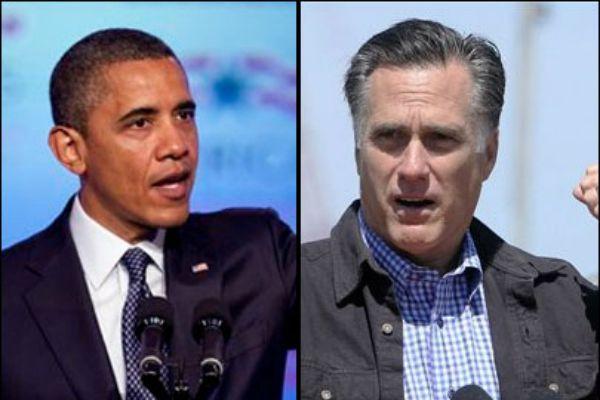
So we watch the two sides spar over who will better serve America’s economy: chief executive Barack Obama or onetime Bain Capital executive Mitt Romney. They debate the stimulus package, unemployment, whether certain species of capitalism are more vampire than virtue. They are ultimately debating who better embodies the office: Who is the better manager? The better man? Who can help you do better?
This is a famously personal vote. The public judges whether candidates meet the stature of the office. Despite frequent disappointments, Americans still want a president as large as that office. What they’ll settle for is another matter.
It’s an intriguing matter in 2012. Neither Obama nor Romney owns this presidential character. Both men appear outwardly directed. It’s difficult to name a maxim that guides either candidate. The public does not view Obama or Romney as an especially strong leader. And while character is not electoral destiny, voters’ impression matters.
In springtime 2007, the Gallup organization asked Americans to delineate the most important quality they sought in a presidential candidate. One-third of the public said honest and straightforward. Leadership ranked second. Tied for third: integrity and the ability to govern. Gallup went on to ask what qualities were “essential” in a presidential candidate. The top three: strong and decisive leader (78 percent), good moral character (68 percent) and an effective manager (63 percent).
That same spring, Ipsos-Associated Press pollsters asked an open-ended question: name the “most important qualities or characteristics you look for in a presidential candidate.” One-third selected a specific policy issue. Six in 10, however, selected traits that testify to good character. In respective order: honesty, integrity, and someone who follows through on what they say. About a fifth selected leadership. Other qualities -- experience, compassion, intelligence -- ranked in the low teens. Notably, two-thirds of independents cited character traits above all else.
The search for these traits underlies our policy debates. Consider Obama’s recent expression of support for gay marriage. Even liberal activists questioned their standard-bearer’s spine. Obama had a chance to show he has principles that supersede politics. Yet the timing conveyed the opposite. Two-thirds of Americans decided, according to a CBS News-New York Times poll, that Obama made his announcement “mostly for political reasons.” Only one-quarter said he did it “mostly because he thinks it is right.”
So we see why a controversial advertising proposal immediately rallied both sides. Last week, The New York Times reported that a conservative group (tellingly named Character Matters), proposed tying Obama to the incendiary comments of his onetime spiritual adviser, the Rev. Jeremiah Wright Jr.
The content was meant to radicalize Obama’s character. But the proposal was so off-color that it backfired. Pundits predictably asked: What does this say about Romney’s character? He’s seen as a man afraid of his base. Romney had a chance to chip away at this conception of his character. So Romney soon said he “repudiates” such ads. He deemed certain attacks out-of-bounds. But Romney also sought to set future boundaries. He doesn’t want his Mormonism in bounds.
Obama’s and Romney’s staffs may avoid religion and race (we’ll see about other groups). This campaign will, however, remain personal. A re-election campaign is not either a referendum or a choice. It is primarily a referendum. The alternative cannot be easily disqualified. But, in tough times, incumbents will try.
Romney can complain, as he recently did, that he is “disappointed with the president’s campaign” of “character assassination.” Romney, though, dishes the same. His campaign biography is titled “No Apology.” On the trail, Romney tells voters that “our campaign is about more than just replacing a president; it’s about restoring America’s promise.” Obama is framed as a president who apologizes for America, who has even dishonored America. That hits the core of presidential character.
On the other side, as all political junkies know, Obama’s staff shall do unto Republicans as Republicans did unto Democrats -- in 2004, that is.
Obama retains the presidential edge, as George W. Bush did eight years ago. Polls show that Americans overall, as well as independents, currently see Obama as a stronger leader than Romney. It helps to already be president.
The right therefore must undercut that stature. Team Romney contrasts the hyperbolic promise of Obama, vintage 2008, with the hard times of 2012. It would be foolish if Romney did not. But that too is a character attack. Obama is portrayed as a man who is all talk, a sweet talker, or someone who speaks good words but does bad things.
Obama has a resonant story to buttresses his stature. So we hear about the risky order to kill Osama bin Laden. The White House feeds reporters tick-tocks of the Situation Room that day. Bill Clinton says in an Obama ad, “That’s one thing George Bush said that was right: The president is the decider-in-chief.”
Obama would be foolish not to recall this imagery. After all, why did liberal attacks on Bush’s questionable Vietnam service not stick? Americans did not see a draft-dodging president. They saw the 9/11 commander-in-chief.
Yet Obama is not Bush. And, if only on this point, he likely wishes Americans saw a little more W in him. At the outset of Obama’s presidency, nearly three in four voters said he was a “strong and decisive” leader. About half do today. Some views of the president’s personal characteristics -- that he understands the problems people face and sharing Americans values -- have steadied since early 2010. His image as a leader, however, continued to recede.
The president cannot afford to lose this psychological bully pulpit. Gallup has asked what matters most when voting for president: character or policy positions? In 2008, when independent voters were given three options, they said “leadership skills and vision” (43 percent), “issue positions” (38 percent) and “experience” (17 percent). In autumn 2004, likely voters chose “leadership” over “stances” by a 50 percent to 38 percent margin.
But leadership can wane in importance. In 2000, voters initially said they cared more about leadership. By autumn, voters valued a candidate's stances by a 44-to-36 margin. Even then, a majority of the public said character mattered as much as policy or more.
Issues appear, as of now, at the fore this year. Voters favor a presidential candidate who shares their “views on issues” over “strong leadership qualities” by a 56-to-40 margin, according to this week’s NBC News-Wall Street Journal poll. However, by a similar margin, the poll found that the public prefers a president who “stands up for convictions” rather than “seeks common ground.”
Bush depended on his convictions throughout his two presidential campaigns. Kerry was attacked as a “flip-flopper” for this reason. It was not only Kerry’s weakness. Bush ’s character was seen as strong. Obama will struggle to make the same stark contrast.
So the Obama campaign flirts with other attacks. Romney is framed as a “radical.” But Romney is viewed as too moderate for that branding to stick. There’s Joe Biden in Ohio railing against Romney as a man who just doesn’t “get it.” Biden is the man to make that case. Yet his indictment would prove more effective if it hit Romney not only as a man who doesn’t get it, but a person who doesn’t have it -- that right stuff, that grit, that presidential character.
We see Democrats attack Romney’s business experience to weaken his strength. But Republicans undermined Kerry by framing him as fundamentally weak.
This is still a campaign about the economy. Yet the public wants an able steward of that economy. They search for a chief executive. That presidential character. Early in the 2008 campaign, Iraq appeared to be the dominant issue. But the fundamental questions were not that different. This is one reason presidential campaigns will always get personal. Americans care about the person. They know issues change but character endures. And so the character attacks will as well.
RCP Today
Top stories on RealClearPolitics
The Takeaway
Polling intelligence and analysis delivered to your inbox
World News
Featuring the latest world news
Policy
Featuring the latest policy news
Support Our Mission
As part of RealClearPolitics, authors aim to provide balanced, non-partisan analysis by presenting top reporting and commentary from all sides of the political spectrum.
Trusted by policymakers and citizens alike since 2000