
Lindsey the Luddite? Graham's Email Avoidance, in Context
Published March 10, 2015 • Read time: 5m
You don’t have to be enamored of technology to be a successful president.
Consider Harry S. Truman, for example.
In his biography of the 33rd president, David McCullough notes that Truman was “a nineteenth-century man,” even while presiding in the White House during the 1950s.
“He never learned to like the telephone or Daylight Saving Time,” McCullough wrote of Truman. “He tried using a typewriter for a while, but gave it up.”
That the commander-in-chief who ushered in the Atomic Age preferred to write in the longhand style familiar to George Washington should dispel any notion that presidents have to be personal adapters of new gadgets in order to keep the country up with the times.
But imagine the resulting puzzlement if Truman had said during his first national campaign in 1944 that he had never once operated a light switch.
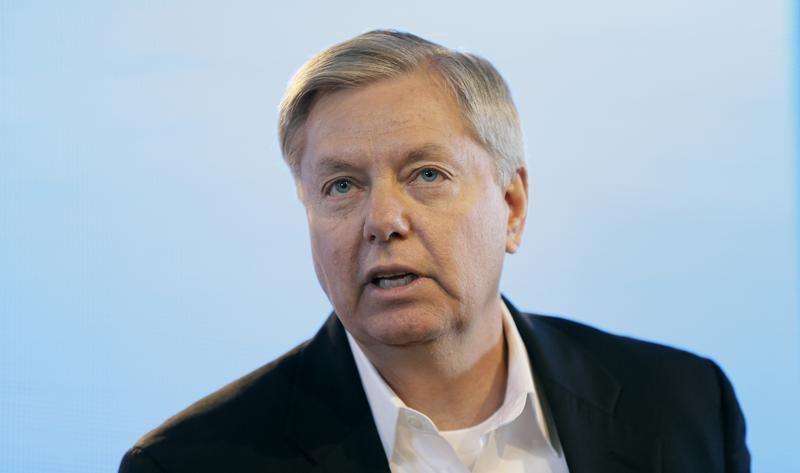
That theoretical admission may not be not directly comparable to the jarring revelation that South Carolina Sen. Lindsey Graham made about his own relationship with technology on “Meet the Press” on Sunday—but it isn’t entirely inconsistent either.
"I don't email," Graham told Chuck Todd during a discussion of the controversy surrounding Hillary Clinton’s use of a private email account when she was secretary of state. "No, you can have every email I've ever sent. I've never sent one. I don’t know what that makes me."
What it makes him, to say the least, is unusual.
Consider the Truman comparison.
By 1944, electricity had been in regular use in homes around America for about two decades, as email has been in 2015.
But Graham—who is exploring a run for the 2016 Republican presidential nomination—has been in Congress since 1993, and with a fulltime communications staff throughout that tenure, he has not had to live like the rest of us for a long time.
His revelation, however, was nonetheless surprising for a vigorous and worldly man who is not yet 60 years old.
At a time when most people’s grandparents are using email, Graham’s abstention from it opened him up to immediate ridicule among the younger crowd that can’t remember a time before the Internet and for whom email use is already becoming somewhat obsolete.
When Bloomberg News caught up with Graham in New Hampshire to get a better sense of his relationship with electronic communication, his answers did not exactly make his abstention from email less of a head-scratcher.
"What I do, basically, is that I've got iPads, and I play around," Graham said.
Well, then.
Graham added that he has purposely avoided sending even a single email in his life to prevent a scenario in which he is inclined to “say the first dumb thing that comes to mind” in and to “jealously guard myself in terms of being able to think through problems and not engage in chat all day.”
It wouldn’t be hard to find a crisis management expert in Washington who would defend Graham’s caution as prudent—especially at a time when the latest Clinton drama is reminding everyone of the risks of leaving an electronic footprint that can later be pored over by anyone on the receiving end of a public records request, a malicious hack or even an accidental leak.
But Graham isn’t the only recent presidential hopeful who has suffered a public relations hit amid news stories that have bolstered perceptions of Luddism.
In early 1992, President George H.W. Bush became the butt of a national joke when a report in the New York Times suggested he was amazed by the wonders of an electronic scanner at a supermarket exhibition hall.
That the write-up was later demonstrated to have been something between an exaggeration and a mischaracterization (Bush had, in fact, been shown a new type of scanner that could weigh groceries and read torn bar codes) did little to change the popular view that the incumbent president had become an aloof creature of Washington—grossly out of touch with the daily lives of everyday Americans.
And there are more recent examples.
In 2006, the year before John McCain launched his second White House bid, the Arizona senator admitted to Fortune magazine that he, too, was a stranger to email use. (An aversion to the technology, as it turns out, is a trait not uncommon among Graham’s closest friends in the Senate).
“I'm a Neanderthal—I don't even type,” McCain said in the interview.
As if to hammer home the caveman image, McCain then marveled at the technological prowess that his wife, Cindy, showed in completing basic tasks online.
“She's just a wizard,” he said. “She even does my boarding passes—people can do that now. When we go to the movies, she gets the tickets ahead of time. It's incredible.”
And while we now know that likely 2016 candidate Hillary Clinton is an avid email user, who could forget the time two years ago when she confessed she hadn’t driven a car since 1996?
But does anyone really care about these kinds of stories?
Voters by and large don’t require candidates for the nation’s highest office to have everyday lives that mirror their own. They do, however, expect them to have a basic understanding of how people live in 2015.
An attorney by training, Lindsey Graham’s reluctance to open himself up to the practical and legal pitfalls of email may be somewhat understandable.
But if he wants to relate better to the people he hopes to lead into the third decade of the 21st century, he might consider sitting through a quick tutorial on how to fill out an electronic address field and hit “send.”
Carl Cannon contributed to this report.




RCP Today
Top stories on RealClearPolitics
The Takeaway
Polling intelligence and analysis delivered to your inbox
World News
Featuring the latest world news
Policy
Featuring the latest policy news
Support Our Mission
As part of RealClearPolitics, authors aim to provide balanced, non-partisan analysis by presenting top reporting and commentary from all sides of the political spectrum.
Trusted by policymakers and citizens alike since 2000