
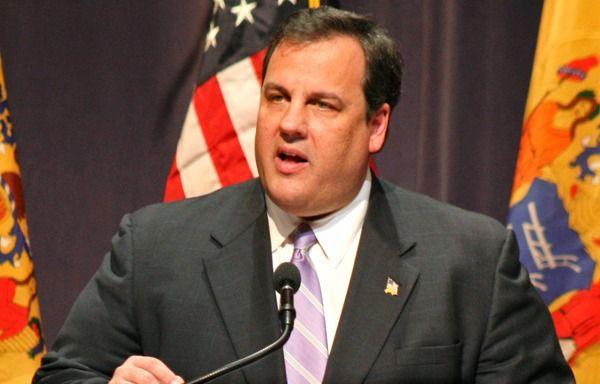
Christie's Early Missteps Shaped Future Triumphs
Published Nov. 13, 2013 • Read time: 11m
MENDHAM TOWNSHIP, N.J. -- Following his re-election last week, Chris Christie finds himself in a happy position: He's being extolled in glowing press coverage as a Republican savior.
GOP power brokers eager to counter the Tea Party wing of the party are placing their 2016 bets on the charismatic New Jersey governor, whom they can already envision in the White House.
Christie’s magnetism may be hard to define, but its upshot is quite tangible: Running in a reliably Democratic “blue” state, he not only won in a landslide, but did so by bridging the ideological and demographic divides that have eluded Republicans in the last two national elections.
But the very quality that he has honed in recent years was missing early in Christie’s electoral forays in northern New Jersey. Initially, his aggressive style was perceived as abrasive rather than charming. And his initial steps into the madcap world of local-level politics hardly portended a bright future for the young attorney with a penchant for bare-knuckle tactics.
In just four years, Christie burned enough bridges among fellow Morris County Republicans that his political career was seemingly over before it had gotten off the ground, making his subsequent success in the elective big leagues all the more remarkable.
Although seen as a political maestro today, two decades ago he couldn’t pull together 100 valid signatures to get on the ballot in a 1993 state legislative race.
* * * *
He’d come over from nearby Essex County with a calculated plan: to knock off a powerful state senator -- a fellow Republican -- by running to the incumbent’s left on gun control. But Christie was tripped up by the befuddling New Jersey custom of assigning nearly identical names to two distinct municipalities.
Lies, Assault and Cover-ups Don't Stop Donald Trump
Trump Stands by His Man; Obama on a Health Scourge; Hayden Interview; Reagan's Courage
Analysis: For Trump, Few Limits to Win-At-Any-Cost Approach
What If Clinton Isn't Indicted?
Sixty-one of the 100 required signatures that he obtained came from his hometown of Mendham Township and were ruled valid, but the 39 signatures he acquired in Mendham Borough belonged to residents of a separate Senate district and were thus disqualified in an ensuing legal battle.
It would not be the last time a Christie campaign ended in litigation and bad feelings.
Not one to be dissuaded by a mere administrative error, he soon set his sights on the Morris County Board of Chosen Freeholders, the state’s esoterically named equivalent of a county commission.
Again, Christie targeted an incumbent member of his adopted county’s Republican establishment.
This time, he won in a campaign so nasty that it resulted in a post-election libel lawsuit filed against Christie by his opponents. The case ended in an undisclosed out-of-court settlement and a newspaper ad in which the winner apologized to his opponents.
The dust-up left a foul taste in the mouths of many local Republicans, but Christie now held his first position in government. It was a role he liked, even if the part-time job in county-level politics carried minimal allure.
Within weeks of being sworn in as a freeholder, he announced his intention to mount his third challenge to a GOP incumbent in two years. This time, he would vie to represent the 25th District in the New Jersey General Assembly, the lower house of the legislature.
It was this tumultuous 1995 campaign that solidified Christie’s unpopularity among Morris County Republican activists, but it also provided him with the most critical lessons of his early political career -- and persuaded him to abandon the local route and place his career aspirations in federal and statewide offices.
At the Country County Shop in Mendham Township, a heavily Republican enclave with a quaint and bucolic ambiance that belies its location less than 40 miles from midtown Manhattan, Rick Merkt recalls teaming up with Christie that year to run an uphill race against two better-known candidates in the primary. (Every district in New Jersey elects two representatives to the General Assembly; sometimes candidates team up and essentially run as a ticket.)
Now mayor of Mendham, which is the township where Christie still resides, Merkt recounted his three months on the campaign trail in between bites of apple pie washed down by sips of hot chocolate with whipped cream.
“We were doing Republican events all over the district, and my impression was here was a guy who had, shall we say, a great deal of self-confidence -- probably more than what was warranted from his experience,” Merkt recalled.
He and Christie initially seemed well-positioned in their self-funded bid to take on incumbent Anthony Bucco -- then a low-key appointed assemblyman and now a state senator -- and Michael Patrick Carroll, a conservative stalwart known for his avid hobby as a Civil War re-enactor, who had lost his run for the seat in the previous cycle.
At the time, Carroll was particularly aggressive in portraying Christie as a striving carpetbagger, scoffing, “He’s been a freeholder for what, 20 minutes?”
Undeterred by the newbie charge, Christie turned it on its head.
Just as he had done in his two previous campaigns, he portrayed Bucco -- the stronger of his and Merkt’s two opponents -- as an out-of-touch relic of the old guard.
“I used to kid around with Chris and say he was probably the only politician in the state more outspoken than me and more impolitic than me,” Carroll, who still holds the Morris County seat he won that year in the General Assembly, recalled in an interview inside the office that Christie had sought.
Bucco also did not take kindly to his opponent’s approach and responded with a cheeky campaign flier that portrayed Christie as a pacifier-sucking baby in pajamas.
“That was a hit,” Bucco, now a staunch Christie supporter, remembered with a laugh. “I know he didn’t care for that one.”
Christie, meanwhile, kept chugging along in the abbreviated primary campaign, reassuring his running mate of his promise to punch back at every turn.
“Rick, I’m Sicilian,” Christie told Merkt. “We don’t get mad. We get even.”
That brash attitude comes as no surprise to those who have watched Christie in recent years. Perhaps more revealing -- and potentially damaging in the context of a prospective presidential campaign -- was how he attempted to thread the political needle in what then was an evolving Republican Party.
As he had done in his abbreviated state Senate bid two years earlier, Christie made his support for strict gun regulation a centerpiece of his campaign. In one provocative flier, he spotlighted Bucco and Carroll’s support for legislation that would have repealed a statewide ban on semi-automatic assault weapons.

“It’s dangerous. It’s crazy. It’s radical. They must be stopped,” the Christie-sponsored mailing read.

Christie’s continued support for gun control is one of the issues that will test the limits of his no-nonsense persona in an all-but assured 2016 presidential bid, as his Second Amendment views are anathema to a majority of Republican primary voters nationwide.
His past support of abortion rights, another centerpiece of his 1995 campaign, is also problematic -- and will likely be brought up repeatedly by potential rivals such as Ted Cruz, Rand Paul, and Marco Rubio.
In the northern New Jersey of the mid-1990s, there was a long established tradition of GOP candidates being elected on abortion-rights platforms. Christie was no different.
Rodney Frelinghuysen, who in 1995 had recently won a seat in Congress after representing the 25th District in the General Assembly for more than a decade, was something of a model for Christie in projecting an abortion-rights stance.
Thus, when campaigning for Republican votes across the district in early 1995, Christie trumpeted his support for legalized abortion in public appearances and campaign literature, a strategy that seemed politically sound at the time.
Longtime state GOP strategist Rick Shaftan, who was the chief consultant to Carroll’s 1995 campaign and remains a Christie critic, recalls polling Republican voters in the district that year and finding that only 44 percent were self-described conservatives, while 41 percent called themselves moderates.
“Today, you’d get numbers of around 70 percent conservative,” Shaftan said. “But back then, it was pretty close between moderates and conservatives, and it was totally driven around the abortion issue.”
Confident in the intensity of voters who opposed abortion -- at a time when the late-term-abortion issue was recasting the debate within the GOP -- Christie’s opponents reveled in his challenge to them instead of running from it.
And in the end, Bucco and Carroll won that primary on their way to being elected to the General Assembly. Christie finished a distant fourth, earning 15.6 percent of the vote in the six-candidate Republican field.
“It was a miscalculation,” Merkt said of Christie’s eagerness to tout his support for abortion during the campaign. “And as you’ve noticed, he’s changed his position since then. We had an epiphany.”
As he explained it during his 2009 gubernatorial run, Christie’s views on abortion were forever altered in the months after his election loss in 1995 when he made a prenatal visit to the doctor’s office with his wife and listened to the heartbeat of his unborn daughter Sarah, his second-born child.
His conversion was deemed sincere enough by local activists that he earned the endorsement of Morris County Right to Life in his 1997 re-election bid for freeholder, just two years after he ran as an abortion-rights candidate.
Nonetheless, Christie had burned too many bridges among local Republican power brokers to keep his freeholder seat. They recruited another candidate for the post, who defeated the incumbent in a primary campaign that ended in yet another libel suit against the winning candidate (this one filed by Christie).
During his concession speech, Christie suffered through one final indignity in Morris County politics. That night, as he tried to be gracious, the partisan crowd talked over him and paid little attention to his remarks -- a rude gesture that the losing candidate believed to be a final, coordinated slight of someone whose political career appeared to be over.
****
With Christie all but chased out of town, Merkt was among those who urged him privately to seek a federal career path during a lunch meeting in 1998.
It was advice that Christie would take to heart.
After returning briefly to his law practice and focusing on lobbying in Trenton, he parlayed a stint as a key fundraiser for George W. Bush’s 2000 presidential campaign into an appointment as U.S. attorney in 2001.
He began the federal position with little prosecutorial experience but developed an impressive record, amassing 130 convictions and zero acquittals of public officials.
Critics, however, still insist that he declined to go after the biggest fish in order to avoid jeopardizing his perfect record in the corruption-rife state.
And Christie was also singled out in a Department of Justice inspector general report for his frequent stays in luxury hotels at taxpayer expense -- a potentially foreboding piece of opposition research that future rivals could well use against the politician who loves to tout his cost-cutting achievements.
Eight years later, in January 2009, Christie filed the papers for his gubernatorial candidacy, eventually trouncing Steve Lonegan (who went on to become the 2013 GOP Senate nominee against Cory Booker) and Merkt, who finished a distant third in the primary, before upsetting incumbent Democrat Jon Corzine that November.
During that 2009 primary campaign, Lonegan tried to attack Christie on the abortion issue. Citing a 1996 Bergen Record article that quoted Christie describing himself as “pro-choice,” he accused the front-runner of having given inconsistent answers on when and how he had shifted on the issue.
But the charge had little effect on a conservative Republican electorate convinced that Christie was now solidly in the pro-life camp.
Republicans in critical primary states like South Carolina and Florida, however, may not be so willing to accept his conversion.
As Mitt Romney might attest, particularly in light of his failed 2008 run for the GOP nomination, having a past life as an abortion-rights supporter is a severe liability in a Republican presidential campaign.
But in his relationships with local party power brokers, Christie has executed a 180-degree turn in the years since his early campaigns. While Merkt and Christie have had a falling out, Christie is now on great terms with many of his former opponents in Morris County.
On his path to re-election earlier this month, he lined up endorsements from county and city officials everywhere he went.
“I think he’s matured from the early to mid-’90s period of his life,” Bucco said, adding that he would support Christie for president in 2016 -- a common refrain among state Republicans. “I think he understands politics today better than he did at that time.”
Former Gov. Christine Todd Whitman, who was elected in the same year as Christie’s first campaign for state Senate, predicted that his early experience in calibrating how to run against candidates to his ideological right would pay dividends in 2016.
“I’m sure he’ll be attacked by the mindless ones that would rather go down in defeat with an ideologically pure candidate than win an election,” Whitman said. “I think we’re getting to the point where Republicans are finally saying we want to win.”

The GOP Majority Should Go Out in Glory
Daniel McCarthy • RealClearPolitics
Republican Majorities Could Return Sooner Than Expected
J.T. Young • RealClearPolitics
The Danger Before the Attack
Leslie J. Sullivan • RealClearPolitics
Jon Finer’s Old and Dangerous ‘New Approach’ to Israel
Peter Berkowitz • RealClearPolitics
The President Deserves Better
John Ullyot • RealClearPolitics
Congress Doesn’t Need Another Blame Game. It Needs To Find What’s Broken
Jarrod Bernstein • RealClearPolitics
RCP Today
Top stories on RealClearPolitics
The Takeaway
Polling intelligence and analysis delivered to your inbox
World News
Featuring the latest world news
Policy
Featuring the latest policy news
Support Our Mission
As part of RealClearPolitics, authors aim to provide balanced, non-partisan analysis by presenting top reporting and commentary from all sides of the political spectrum.
Trusted by policymakers and citizens alike since 2000