
Election 2026 Republicans
GOP Campaigns Use Social Pressure To Turn Out Voters
Published Oct. 30, 2026 • Read time: 8m
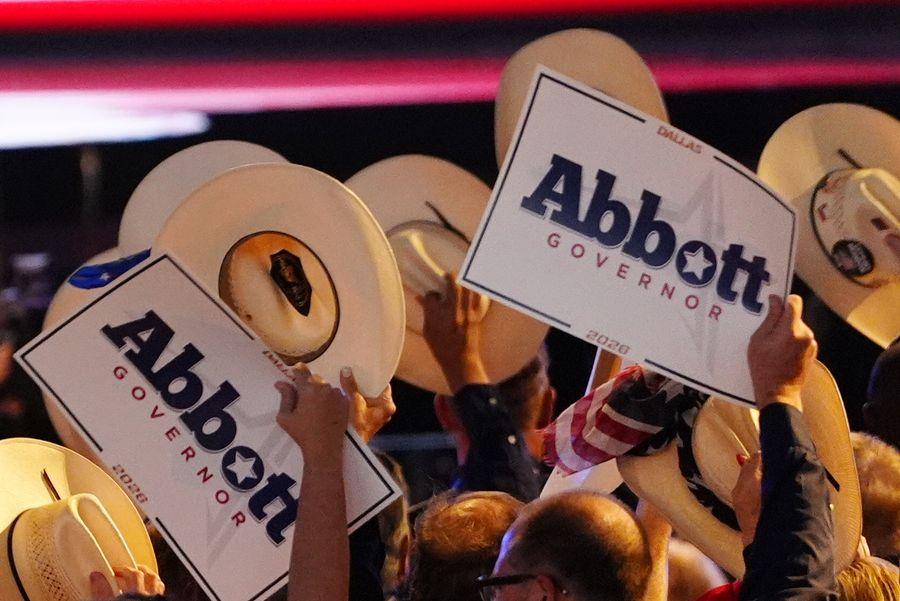
Cindy Siegel was walking through a Houston-area grocery store as she pulled up an app on her phone. With a few easy clicks on Abbott Impact, she could see everyone in her contacts and whether they were registered to vote and had cast a ballot yet. The Harris County GOP chair banks up to 200 messages or calls per day, in between coordinating with campaigns and helping set up polling locations. The app awards 10 points per voter contact. If she calls enough people, she could win a grill, Abbott campaign-branded shirts, a Yeti cooler, a Dyson air wrap, or even a dinner in the governor’s mansion (if he wins).
“It’s the way of the future,” Siegel told RCP. “Let’s face it, my daughters will text me more than they’ll call me. But even with both options, this is a very effective tool.”
Democratic state Rep. Gina Hinojosa is challenging incumbent Gov. Greg Abbott this year. Although Abbott leads the RCP Average by 3.5 percentage points, Texas Republicans have insisted that the party not become complacent, particularly during a midterm year. His campaign launched the Abbott Impact app last week. In most states, data on whether a person voted is public record, though voting choices remain private. The app identifies both phone contacts and geo-locates a user’s self-identified neighborhood to encourage users to go vote. Some precinct chairs have told Siegel they have been sending out thousands of messages since early voting began.
Siegel likes to personalize a text message, but if she’s short on time, she can send an auto-filled one. Sometimes she lets her personal friends know she found them on the app. In her neighborhood, she simply lets people know where their polling precincts are and encourages them to go vote, preferably Republican.
The method has its pros and cons. For one, Siegel told RCP she hears complaints from constituents all the time about a flood of campaign texts and calls, particularly asking for donations. She worries that more technological outreach will muddy the waters, even as it helps her reach more voters.
“I think it burns people out, unfortunately,” Siegel said. “Because the idea and the effectiveness is being able to get people out to vote. But I think the donation texts have made it more difficult for candidates and the parties to reach the voters.”
Secondly, attempting to use social pressure could backfire. In 2018, several Democratic campaigns and aligned organizations aired ads or mailed flyers, also letting voters know that whether they cast a ballot is public.
“There can be a backlash effect,” Jenifer Fernandez Ancona, co-founder of strategic communications and progressive donor hub Way to Win, told RCP. “I have seen plenty of communities where it just isn’t the most persuasive messaging. And at the end of the day, people need a substantive argument, too. It’s not just mobilization, it’s persuasion.”
Fernandez Ancona studied exit polls after 2024 to figure out why the Biden administration and then the Kamala Harris campaign lost voters. She calls them the skippers: the people who voted for Biden in 2020 but then didn’t vote in 2024.
“It’s not because they didn’t know where they could go vote, it was because they didn’t really believe Democrats were going to fight for them,” Ancona said. “People just want change. They want their material conditions to change, and they have been wanting that for several cycles.”
Now the impetus is on the Republican Party, which must defend its two years in power in Washington and make the case for two more. Throughout the year, races in the Senate and the House have trended more Democratic, adding to the pressure. It also adds enthusiasm for the likely blue voters who feel assured of a “blue wave.”
But the anticipated midterm waves have failed before. Political pundits expected a “red wave” in 2022 in response to the Biden administration, and while Republicans did win the House, Democrats retained the Senate and the House margins were narrow. Overall, around 46% of eligible voters cast ballots in the 2022 midterm elections, around 4% less than in 2018.
Nevertheless, midterm participation has steadily grown in the past 20 years. In 2002, only around 40% of voters turned out for the midterm elections, but 2014 saw the lowest participation at 36.7%.
This year, Democrats are anecdotally energized by a majority of polls that show their candidates leading across the board and even in some reliably Republican states. But Republicans are deploying a variety of methods to get their own voters out on Election Day.
As of Oct. 27, more than 6.7 million Texans had cast a ballot in early voting, according to data from the Texas Secretary of State's office. That rate more closely follows record turnout in the 2018 midterms, when Sen. Ted Cruz narrowly beat Beto O’Rourke for the Senate seat. Overall, the state has 7.7% more registered voters this year compared to 2022. But Democrats generally tend to vote early, while Republicans tend to wait to vote in person on Election Day.
Abbott’s app is a localized example of a wave of Republican and conservative-aligned operators adopting public pressure tactics. On Oct. 18, Elon Musk’s super PAC, America, posted an ad to X that reads, “Your neighbors will know if you don’t vote… and they won’t be happy. Don’t wait until the last minute. Make your plan to vote by Nov. 3.”
But it’s not exclusive to the conservatives. In 2018, a liberal-aligned group called Georgia Engaged mailed flyers that reminded voters not only about the public record but also added, “You may be contacted after the election… and asked about your voting experience.” For this cycle, the Progressive Turnout Project in Michigan mailed millions of postcards telling voters that read, “Thank you for being a voter! How you vote is private, but whether you vote is public record. Please vote in the Nov. 3. Election!” The difference with these ones, though, is that they are handwritten by volunteers.
The personal touch is almost always more effective, campaign operatives say. Door-knocking remains the best way to interact with prospective voters, though also the most time-intensive. To gin up turnout, the Trump administration is levying other persuasion tactics centered on personal relationships.
“Do you promise to bring 10 friends with you to the polls?” Vice President JD Vance asked a crowd at a rally in Michigan earlier this month. He repeated the ask in Ohio, urging attendees to bring every person they know to vote for Sen. Jon Husted. The Hatch Act prohibits federal employees from using their office to promote political parties or candidates, but it does not apply to the president or the vice president. Other administration officials are finding workarounds to promote turnout.
Secretary of War Pete Hegseth granted all service members one day off between Oct. 2 and Oct. 15 to go and vote.
“We’re not telling you who to vote for, but we will give you every opportunity to do so,” Hegseth said in an X video posted in early October. “You are the best citizens of our country, and therefore you should have every opportunity to exercise your right to vote.”
White House Faith Office director Paula White-Cain is also the founder of the National Faith Advisory Board, a group she founded in 2021. The group regularly presses conservative pastors and faith leaders to discuss politics openly and to encourage their congregants to vote.
“Elections matter because elections determine policy. This is not about personalities. This is not about partisan. This is not about a party. This is about we as Christians. We as people of faith. Where do our values land?” White-Cain told NFAB supporters on a midterms webinar on Wednesday. She clarified that she was speaking to the group in her personal capacity, even though she was calling in from Rome, where she was working on official White House business.
Although White-Cain did not discuss particular candidates, she argued that Christianity suffered under the Biden administration but has been thriving under the Trump White House. To make the point, she discussed various religious task forces that investigated alleged religious persecution from 2021 to 2024. White-Cain urged pastors, specifically, to disseminate voter information guides, host voter registration drives, and coordinate ways to get people to the polls.
“It is our civic duty,” White-Cain said. “We’re not going to let our voice be silenced, and we’re not going to let the [congressional] committees be taken, so that there cannot be the religious liberty, the strengthening marriage and family, the great things that this party and different administrations and people [do].”
Back in Texas, Republican officials are scrambling to make the most of the Abbott Impact app. The automatic message that it suggests for contacts is, “Quick reminder: This is the LAST week of early voting! There’s rain in the forecast for election day, so go vote now if you haven’t already!”
Two storm systems are likely to hit East Texas over the weekend and into Tuesday. There is an 80% chance of rain on Nov. 3.
Support Our Mission
The Internet provides an endless stream of content. Not all of it is worth your time. That's why, every day, RealClearPolitics curates the most essential news and information—from all sides and across mediums. The links, videos, and podcasts curated here are the product of human judgment, not algorithms or AI. Please help power our mission of presenting a thoughtful, balanced public discourse through a tax-deductible donation.
Would you consider supporting us today?
Contributing to RealClear Politics through the RealClear Media Foundation supports essential initiatives that drive meaningful change.

RCP Today
Top stories on RealClearPolitics
The Takeaway
Polling intelligence and analysis delivered to your inbox
World News
Featuring the latest world news
Policy
Featuring the latest policy news
Support Our Mission
As part of RealClearPolitics, authors aim to provide balanced, non-partisan analysis by presenting top reporting and commentary from all sides of the political spectrum.
Trusted by policymakers and citizens alike since 2000