
Congress Biden Manchin
The Framers Likely Would've Flunked the Filibuster
COMMENTARY
Published Oct. 21, 2021 • Read time: 6m
This week, Senate Majority Leader Chuck Schumer was looking to move forward on the Freedom to Vote Act. However, the bill will not come up for a vote after Republicans filibustered it Wednesday, and given the 60-vote threshold needed for the Senate to overcome that maneuver. This has enraged many Democrats as they see time running out on their slim legislative majorities in the House and Senate. The inability to break the filibuster has become a frequent subject of scorn to both parties over the years.
Few likely remember that the word “filibuster” derives from a Dutch word meaning “free booty” or “freebooter,” signifying one who hijacks or steals — in this case, parliamentary procedure. The term did not exist at the nation’s founding, though attempts to derail policymaking by active minorities through continued debate did.
The filibuster is not found in the United States Constitution. It is a creature of legislative procedure – a procedure discouraged by the Framers and used infrequently for much of the American republic’s early years.
The “Mr. Smith Goes to Washington” version of a senator needing to hold the floor and continue debate has long been absent from Senate procedure. Instead, the filibuster has simply come to mean the requirement of 60 votes for cloture on a bill before it can come up for a vote. In an age of extreme polarization, that number has become a very high threshold and has come under attack as obstructionist by both parties, albeit at different times depending on which party controls the chamber. Still, its users defend it as integral to protecting the rights of the minority. Notably, the House requires only a simple majority to close debate before voting on an issue.
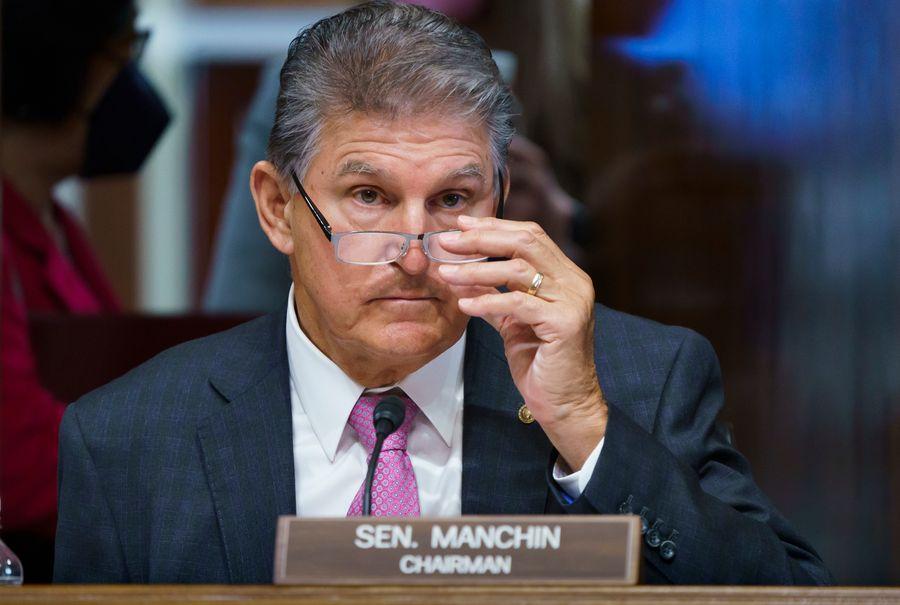
Sens. Joe Manchin and Kyrsten Sinema are under pressure to join their fellow Democrats to support rule changes that would modify or end the filibuster under certain conditions. It does not appear that they will do so.
Earlier this year, Sinema stated: “The filibuster compels moderation and helps protect the country from wild swings between opposing policy poles.” Ironically, there has been little evidence to support the filibuster’s role in producing these salutary effects in recent years. Deepened polarization would seem to further complicate Sinema’s thesis that the filibuster encourages moderation.
In an April op-ed, Manchin argued that “the filibuster is a critical tool to protecting that input and our democratic form of government. That is why I have said it before and will say it again to remove any shred of doubt: There is no circumstance in which I will vote to eliminate or weaken the filibuster.”
In an interview on “Meet the Press,” Manchin praised the Framers and their desire for minority input: “The Senate is the most unique body of government in the world. It’s deliberate. It’s basically designed, Chuck, to make sure the minority has input. That’s exactly our Founding Fathers.”
Yet, history does not bear this out. In fact, the Framers were rather explicit in their rejection of obstructionist tactics such as the filibuster. Delay tactics under the Articles of Confederation were among the frustrations the Framers specifically cited in the Federalist Papers.
Several passages from the Federalist Papers condemn supermajority requirements under the Articles of Confederation. In short, the Framers wanted majority rule and minority rights, not a feckless majority unable to enact national policies.
In Federalist 58, James Madison wrote:
It has been said that more than a majority ought to have been required for a quorum, and in particular cases, if not in all, more than a majority for a decision. That some advantages might have resulted from such a precaution, cannot be denied. ... But these considerations are outweighed by the inconveniences in the opposite scale. In all cases where justice or the general good might require new laws to be passed, or active measures to be pursued, the fundamental principle of free government would be reversed. It would be no longer the majority that would rule: the power would be transferred to the minority.
Alexander Hamilton also showed his disdain for obstructionist tactics by minority interests. His words in Federalist 22 seem like they could be uttered by frustrated Democrats today. He argued that
the necessity of unanimity in public bodies, or of something approaching towards it, has been founded upon a supposition that it would contribute to security. But its real operation is to embarrass the administration ... to destroy the energy of government, & to substitute the pleasure, caprice or artifices of an insignificant, turbulent or corrupt junto, to the regular deliberations & decisions of a respectable majority.
Political scientist William Blake points out that a 60-vote threshold to pass legislation in the Senate seems to be at odds with the few instances where the Constitution does enumerate procedural references. These include a two-thirds requirement for conviction on impeachment, expulsion of a member, or to override a presidential veto. These supermajority requirements would be expected only in unusual circumstances. The passage of a law would not seem to fit this characterization. Blake suggests that if the Framers saw the filibuster as being of critical value, they would have enshrined some version of it in the Constitution.
While Thomas Jefferson warned about the dangers relating to the “tyranny of the majority,” a few decades after the Founding he expressed his thoughts about when the majority was thwarted. He pointedly wrote that “where the law of the majority ceases to be acknowledged, there government ends; the law of the strongest takes its place, and life and property are his who can take them.”
Changing rules around the filibuster would assuredly have unintended consequences. Whether the sum of them would be “good” or “bad” is unknown. But the current state of our political system is as tenuous as it has been in quite some time. The filibuster has not served to ameliorate current tensions in American society.
Arguments supporting the filibuster’s use can rest on many grounds, but they should not rest on the claim that it has the blessing of the Founding Fathers. Given what they wrote on relevant subjects, it is highly unlikely that Madison, Hamilton, or Jefferson would champion the current practice. Arguments suggesting that the Framers supported the filibuster are misguided at best.




RCP Today
Top stories on RealClearPolitics
The Takeaway
Polling intelligence and analysis delivered to your inbox
World News
Featuring the latest world news
Policy
Featuring the latest policy news
Support Our Mission
As part of RealClearPolitics, authors aim to provide balanced, non-partisan analysis by presenting top reporting and commentary from all sides of the political spectrum.
Trusted by policymakers and citizens alike since 2000