United States Egypt Military Aid
Don't Let Sentimentalism Drive Bad Policy
COMMENTARY
Published Dec. 14, 2022 • Read time: 4m
Tomorrow, members of the Senate Judiciary Committee will mark up the Pride in Patent Ownership Act. With the government’s budget still to be resolved by the lame-duck Congress, one might wonder what the urgency of this piece of legislation could be. If you thought it was a matter of vital national security, the continuity of the U.S. government, or emergency aid for a hard-hit community, you’d be mistaken.
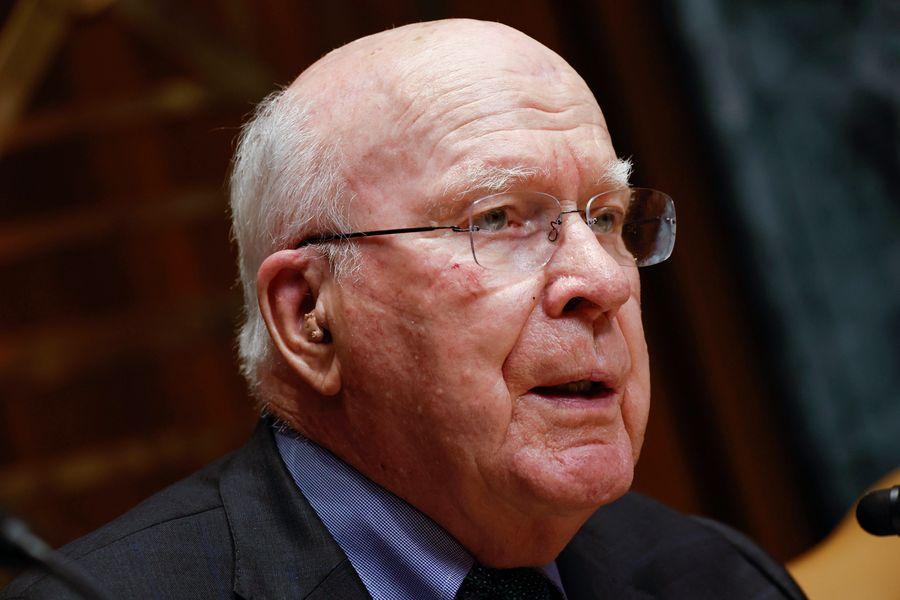
What it’s really about is giving a retiring senator one last legislative win before he rides off into the sunset.
Sen. Pat Leahy of Vermont introduced this legislation and has made several attempts to move it quickly. But PPOA has generated controversy, with senators putting holds on it and House members objecting to PPOA’s inclusion in the National Defense Authorization Act.
Its lack of support is a good thing because what PPOA really does is to make every subsequent owner of a patent pay the price of an earlier owner’s recordation error.
The purported aim of the bill is to require patent owners to record their ownership with the U.S. Patent and Trademark Office. Successive owners, as patents change hands, would have to be recorded. Aside from the fact that the legislation seeks to solve a problem that doesn’t exist – the U.S. patent system flourished without it – the penalties designed to force compliance would gut protections for inventors and patent owners, providing a boon for willful infringers.
In a recent letter to the Senate Judiciary Committee, a coalition of innovators, universities, and industry leaders point out that even administrative errors in recording patent transactions would drastically reduce damages a patent owner could recover as a victim of outright theft of their intellectual property. Further, by establishing a register of ownership, the bill would create a veritable hit list for willful infringers to attack and harass through challenges at the USPTO.
Gavin Newsom's Misguided Redistricting Initiative
A Warning Against the Overuse of Sanctions
Open The Books on the California State Checkbook
Senate Passes Bill Addressing Heroin, Opioid Crisis
The latest version, circulated just days ago and the basis for Thursday’s markup, addresses concerns about limited damages by instead proposing that patent owners not be allowed to move forward with lawsuits against infringers without proper recordation.
At first glance, that may seem like a sensible approach. It was apparently enough to gain the acquiescence of committee members from both parties who have had concerns with PPOA, but are willing to give the retiring senator his last moment in the sun.
But the details are far more complicated than its approach accounts for. Patent ownership is very often a nuanced affair, with ownership split among members of an investor group. Laws about company ownership sometimes create convoluted legal structures that make the recording of patent transactions a less than straightforward affair. Those complexities offer another angle for willful infringers to attack the basis for a lawsuit against them, above and beyond protracted discovery proceedings of every step in the patent’s ownership history.
Certainly it’s not the intent of legislators to hand patent infringers legal strategies to avoid accountability for their IP theft. Yet things are headed in that direction should this legislation, rushed as it has been over the last several weeks, make it into an end-of-year spending bill.
Lawmakers’ determination to let this controversial bill cross the finish line is driven more out of respect for its sponsor in his final days of nearly 48 years in the Senate than out of regard for the bill’s merits or the integrity and fairness of our patent system.
It’s noble that Sen. Leahy’s colleagues would seek to honor him for his years of service and for his commitment over that time to healthy intellectual debate on policies for the American people.
However, pushing through a flawed, imbalanced piece of legislation simply to give Leahy one last win is simply wrongheaded. His legislative legacy has long since been secure. Adding one more bill to the stack is entirely unnecessary.
And if doing so would actually cause harm to the American patent system – which it would – then this bill would become a burr rather than a flower in the departing statesman’s laurel.
Regardless of the senator’s contributions over the past half century, we shouldn’t let sentimentalism drive the adoption of bad policy.

Newsom Defies Voters, Juries and Lawmakers To Spare Murderers While Defending Abortion
Curtis Hill • RealClearPolitics
The Algorithmic Tilt
Frank Filingeri • RealClearPolitics
A RealClear Thanksgiving: Investing in a Better Future
David DesRosiers • RealClearPolitics
Trump’s Newsom Problem: Antagonist-in-Chief
Carolina Lumetta • RealClearPolitics
America’s Free Spirit
John Maxwell Hamilton • RealClearPolitics
The GOP Majority Should Go Out in Glory
Daniel McCarthy • RealClearPolitics
RCP Today
Top stories on RealClearPolitics
The Takeaway
Polling intelligence and analysis delivered to your inbox
World News
Featuring the latest world news
Policy
Featuring the latest policy news
Support Our Mission
As part of RealClearPolitics, authors aim to provide balanced, non-partisan analysis by presenting top reporting and commentary from all sides of the political spectrum.
Trusted by policymakers and citizens alike since 2000