
A Simple Policy Fix to Encourage Two-Parent Homes
COMMENTARY
Published Dec. 16, 2020 • Read time: 4m
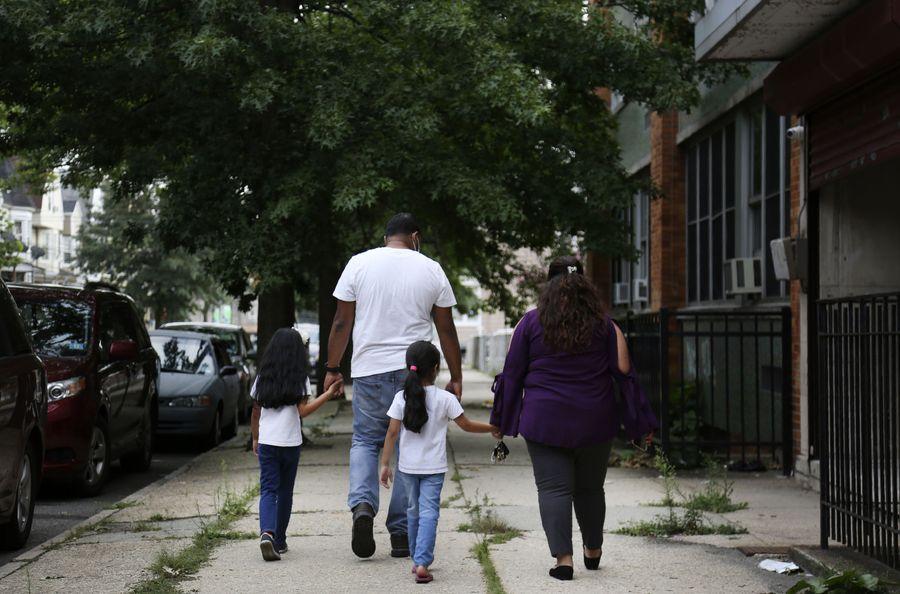
If we are concerned about poverty, inequality, and social mobility, we should care about the collapse of marriage and widespread father absence — concentrated among America’s poor and working class.
Even accounting for differences in parental income, kids growing up without Dad around are more likely to experience poverty as adults, have problems in school, or engage in criminal behavior. Furthermore, recent research has shown that a high presence of fathers in a neighborhood is a primary predictor of future upward mobility for the children in that neighborhood, even when factoring in race or the quality of schools.
Researchers from MIT and Northwestern University have rejected the idea that these effects are due to general poverty. Instead, neighborhoods and schools are less important than the “direct effect of family structure itself.” Other researchers found that “the most critical factor affecting the prospect that a male youth will encounter the criminal justice system is the presence of his father in the home.”
The problem is complex and multi-causal, but reducing the substantial marriage penalties in our safety net that discourage family formation is an obvious place to start.
Welfare penalizes marriage because of the financial disincentive it incurs when there are two adult earners in a family. Consider child care assistance, which requires that household income be below about $45,000 for a mother and her child. If the biological father is living in the home, married or not, both parents' incomes count toward eligibility and the family is unlikely to qualify. Perversely, the income of a live-in boyfriend isn’t counted — a living arrangement that statistically places children at greater risk of abuse.
Gavin Newsom's Misguided Redistricting Initiative
A Warning Against the Overuse of Sanctions
Open The Books on the California State Checkbook
Senate Passes Bill Addressing Heroin, Opioid Crisis
On paper, this discriminates against both biological parents living with their child. In practice, this is a marriage penalty. County welfare officials can easily access marriage records, while cohabiting biological parents can hide their living situation from authorities.
Marriage penalties are the highest for couples who each earn just below the eligibility threshold for a single adult, between $30,000 and $45,000 in the case of child care assistance. That’s particularly problematic because many young Americans without a four-year degree have earnings in this range. These parents will often face a marriage penalty of at least 10% of household income if they decide to tie the knot.
The solution is to take a cue from the tax code, which allows married couples filing jointly to earn more before a higher rate kicks in, accounting for the fact that both adults can be breadwinners. Congress removed marriage penalties for highly paid professionals long ago, and it is past time to give this basic consideration to working-class Americans.
Child care assistance — inherently pro-work, but with the largest marriage penalties due to the high cost of childcare — is the perfect candidate for reform. Moreover, state lawmakers have significant discretion over the program and can enact desperately needed reforms. First, increase the program-eligibility threshold of family income for working-class married couples to account for the reality that two adults will earn more than one adult. Then, phase out the benefit slowly to reduce the financial hit to recipients as they earn more or get married.
Finally, count the income of live-in and unrelated adults toward program eligibility to stop explicitly penalizing biological parents both living with their children. Reform should also include fraud-reduction measures and allow a family to have one spouse work part-time while receiving childcare assistance for limited hours. Given the damage and hurt done to children who grow up without a father, eliminating the penalties that make marriage more expensive for working-class couples is a commonsense reform likely to pay dividends for decades to come.
The GOP Majority Should Go Out in Glory
Daniel McCarthy • RealClearPolitics
Republican Majorities Could Return Sooner Than Expected
J.T. Young • RealClearPolitics
The Danger Before the Attack
Leslie J. Sullivan • RealClearPolitics
Jon Finer’s Old and Dangerous ‘New Approach’ to Israel
Peter Berkowitz • RealClearPolitics
The President Deserves Better
John Ullyot • RealClearPolitics
Congress Doesn’t Need Another Blame Game. It Needs To Find What’s Broken
Jarrod Bernstein • RealClearPolitics
RCP Today
Top stories on RealClearPolitics
The Takeaway
Polling intelligence and analysis delivered to your inbox
World News
Featuring the latest world news
Policy
Featuring the latest policy news
Support Our Mission
As part of RealClearPolitics, authors aim to provide balanced, non-partisan analysis by presenting top reporting and commentary from all sides of the political spectrum.
Trusted by policymakers and citizens alike since 2000