
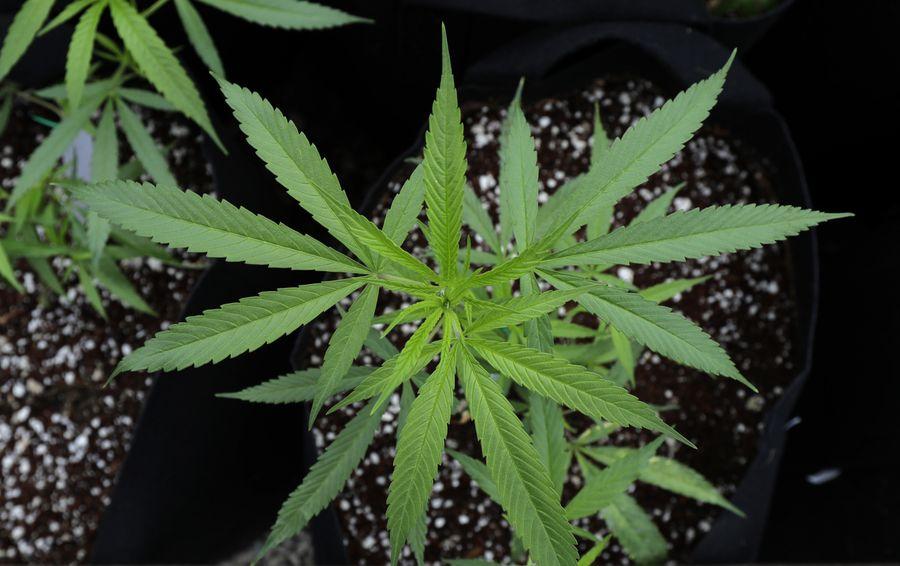
Marijuana Holiday Vignettes
A Budding Consensus on Marijuana Legalization
COMMENTARY
Published Nov. 14, 2026 • Read time: 4m
One issue where the left and libertarians have long found common ground is marijuana legalization. From Ron Paul to Bernie Sanders, there’s been a shared recognition that America needs to move beyond War on Drugs policies of the past. Marijuana should be legally available to adults, subject to reasonable regulations similar to those governing tobacco and alcohol.
The historic wave of Democratic victories this November could help bring that goal closer to reality. Even voters disappointed by, or indifferent to, the “blue tsunami” have reason to welcome one possible consequence: a renewed push to end marijuana prohibition. But it needs to be done right.
Look no further than Texas, where Democrats are introducing legislation to legalize marijuana and expand medical access. Meanwhile, one of the country’s most outspoken opponents of marijuana legalization, Republican Lt. Gov. Dan Patrick, lost reelection.
The political momentum extends well beyond Texas. Some have suggested that public support for legal marijuana is beginning to fade. Massachusetts voters recently had the opportunity to roll back recreational legalization, rather than expand it. The result was decisive: Voters rejected the repeal effort, with 74% opposed.
Marijuana legalization isn’t going anywhere. It remains a bipartisan priority, particularly among younger voters, many of whom increasingly identify as independents or politically homeless.
Other states are following suit. In New Hampshire, lawmakers are discussing a path to legalization, potentially by overriding the governor’s veto. Even in more conservative North Carolina, decriminalization is gaining attention.
These developments should not come as a surprise. An overwhelming majority of Americans have supported moving toward marijuana legalization since 2013. Yet, state and federal lawmakers have repeatedly failed to bring drug policy into line with public opinion.
In recent years, America has made tremendous strides toward reforming its approach to marijuana. Numerous states have legalized recreational use or established medical marijuana programs. Governors have also issued pardons for thousands of Americans convicted of nonviolent marijuana offenses. These are welcome developments, but the patchwork of state laws leaves millions of Americans subject to an inconsistent and often irrational legal framework.
Washington has been particularly slow to catch up. Marijuana remains prohibited on the federal level, creating unnecessary complications for businesses, consumers, and state governments that have already moved toward legalization. Congress has an opportunity to resolve this contradiction. Federal legalization legislation has been introduced, and lawmakers should take the opportunity to move beyond half-measures.
But legalization itself is only half the battle. The next challenge is getting the policy right.
The goal of lawmakers should be to put the consumers first. Can an adult easily, safely, and legally purchase marijuana, knowing what they are buying and accessing a reasonably safe product? That should be the bottom line.
Legalization does not mean abandoning every consumer protection. Plenty of rules, including reasonable age restrictions, accurate product labeling, testing standards, and safeguards against impaired driving, all have a place. But there is a difference between protecting consumers and using regulation to make legal markets unnecessarily expensive or inaccessible.
Excessive taxation, restrictive licensing requirements, and bureaucratic hurdles can undermine the very purpose of legalization. When legal products become prohibitively expensive or difficult to obtain, consumers have an incentive to return to illicit markets. That defeats the purpose of reform and perpetuates many of the problems prohibition was supposed to solve.
Lawmakers should resist the temptation to turn marijuana legalization into another opportunity for government expansion. The objective should not be to construct an elaborate new regulatory industry, maximize tax revenue, or micromanage consumer behavior. It should be to establish a straightforward legal framework that allows adults to make their own choices while protecting public safety.
Democratic victories may bring plenty of policy consequences worth opposing, but if they help finally end one of America’s most misguided exercises in government prohibition, that’s a welcome outcome. Thank goodness!
Support Our Mission
The Internet provides an endless stream of content. Not all of it is worth your time. That's why, every day, RealClearPolitics curates the most essential news and information—from all sides and across mediums. The links, videos, and podcasts curated here are the product of human judgment, not algorithms or AI. Please help power our mission of presenting a thoughtful, balanced public discourse through a tax-deductible donation.
Would you consider supporting us today?
Contributing to RealClear Politics through the RealClear Media Foundation supports essential initiatives that drive meaningful change.




RCP Today
Top stories on RealClearPolitics
The Takeaway
Polling intelligence and analysis delivered to your inbox
World News
Featuring the latest world news
Policy
Featuring the latest policy news
Support Our Mission
As part of RealClearPolitics, authors aim to provide balanced, non-partisan analysis by presenting top reporting and commentary from all sides of the political spectrum.
Trusted by policymakers and citizens alike since 2000