
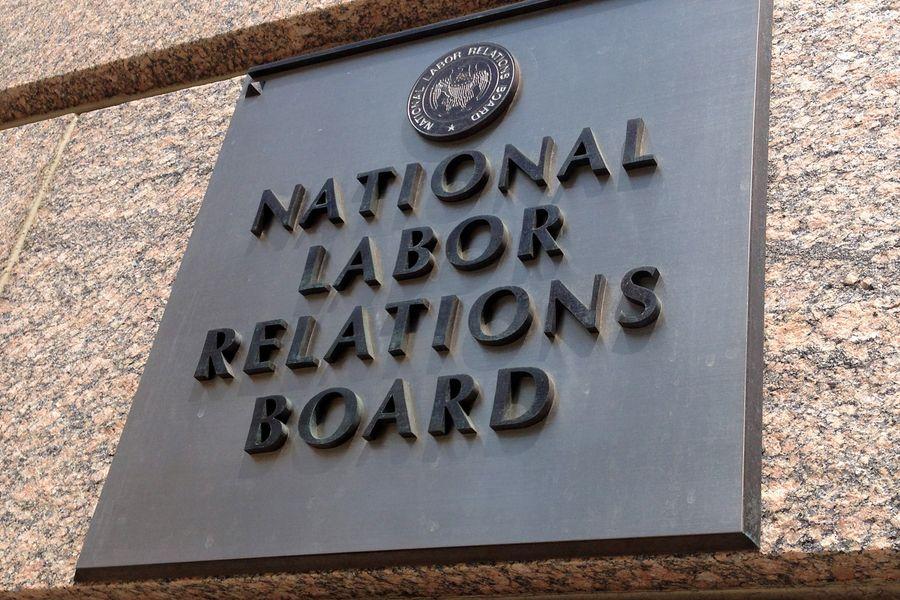
NLRB Union Organizing
Trump Labor Nominee Threatened by Intra-GOP Rift
Published June 18, 2025 • Read time: 4m
President Trump’s nominee for National Labor Relations Board general counsel, Crystal Carey, could be derailed by pro-union Republicans in the Senate.
Carey, who was nominated March 25 by President Trump, has a record as a union-busting attorney that has led many to believe that, if confirmed, she will promote pro-employer practices. Currently, Carey is a partner at Morgan Lewis & Bockius, a firm that specializes in representing employers such as Amazon and Apple in labor disputes, including those related to union organizing, collective bargaining, and labor law compliance.
Sen. Josh Hawley has significant leverage in this situation. Hawley has expressed pro-union sentiments in the past, introducing the Teamster-endorsed Faster Labor Contracts Act in March and advocating for a “pro-labor framework” that strengthens unions. Recently, Hawley went as far as endorsing the proposal for a $15 federal minimum wage. According to Axios, Hawley is “aiming to be the first Republican in decades to sponsor major, pro-union labor reform.”
In a statement to RCP, President Mark Mix of the National Right to Work Committee emphasized the importance of Hawley’s vote and indicated that he may use it to block Trump’s nominee:
As the twelfth Republican on a Committee with eleven Democrats, Senator Hawley has the power to sink any nomination or piece of legislation he does not like, and credible rumors report that he is threatening to use that power. It’s an indication that Senator Hawley’s current allegiance is to Teamsters President Sean O’Brien and the other union bosses, not to President Trump, his party, or the vast majority of Americans who oppose Big Labor’s forced unionism legislative agenda.
The General Counsel of the NLRB acts as the agency’s top prosecutor, overseeing which labor law cases are brought forward and shaping enforcement priorities. Acting General Counsel William Cowen, who was appointed by Trump in February after Biden-appointee Jennifer Abruzzo was dismissed, rescinded many of his predecessor’s memoranda, indicating a shift in labor policy.
The Teamsters, the largest union in the U.S., released a statement rejecting Carey’s nomination as a blow to workers: “Carey has spent her entire professional career backing Big Business to the detriment of working people. On behalf of her corrupt corporate clients, she wants to decimate labor unions and destroy American families – and she has no place serving as NLRB general counsel.”
Similarly, the Economic Policy Institute, a pro-worker think tank, said in a statement to Sludge that “Carey’s nomination as NLRB General Counsel is certainly another example of Trump’s attacks on workers and the right to organize.”
The Coalition for A Democratic Workplace, a business-aligned advocacy group, endorsed Carey’s nomination in a letter to the Senate. CDW Chair Kristen Swearingen stated that “she’ll help steer the Board towards more common-sense application of the National Labor Relations Act.”
G. Roger King, senior labor and employment counsel at HR Policy Association, told RCP that Carey is “qualified and has excellent experience but, that said, she faces potential headwinds.”
The Senate HELP Committee, where Hawley holds a seat, is the first hurdle that Carey’s nomination has to pass before moving to the Senate as a whole. There is currently no scheduled hearing within the committee on Carey’s nomination.
Another senator on the HELP Committee, Roger Marshall, has expressed support for Hawley’s pro-union tendencies. Losing the support of either Marshall or Hawley would likely end Carey’s nomination chances.
Hawley has been explicit about leading the GOP’s shift toward pro-worker policy, saying in a recent RCP interview that “[If] we’re not interested in being a majority party, then we’ll keep doing the things that the party’s done for decades.”
Hawley’s position marks a notable departure from traditional GOP orthodoxy. While most Republican senators have historically aligned with business interests in labor disputes, Hawley has increasingly leaned into populist rhetoric. Figures such as Hawley are part of a small but growing pro-worker realignment in the Republican Party. This comes after Trump received an increasing proportion of voters without a college education in the 2024 election.
Carey’s confirmation, or lack thereof, could serve as a key test of how far the GOP realignment reaches. A failed nomination could signal deepening fractures within the party ahead of the 2026 midterm elections, as GOP candidates attempt to navigate a base increasingly made up of blue-collar workers.
Editor’s Note: This story has been updated to correct a factual error pertaining to the work history of Crystal Carey. She did not work at the National Labor Relations Board during George W. Bush’s administration, as RCP originally reported. Her position as an NLRB field officer, and later as a senior attorney for the Office of Appeals, was during the Obama administration. We regret the error.



RCP Today
Top stories on RealClearPolitics
The Takeaway
Polling intelligence and analysis delivered to your inbox
World News
Featuring the latest world news
Policy
Featuring the latest policy news
Support Our Mission
As part of RealClearPolitics, authors aim to provide balanced, non-partisan analysis by presenting top reporting and commentary from all sides of the political spectrum.
Trusted by policymakers and citizens alike since 2000