
Trump
Elon Musk, the Budget, and the Coming Labor Crisis
COMMENTARY
Published June 9, 2025 • Read time: 6m
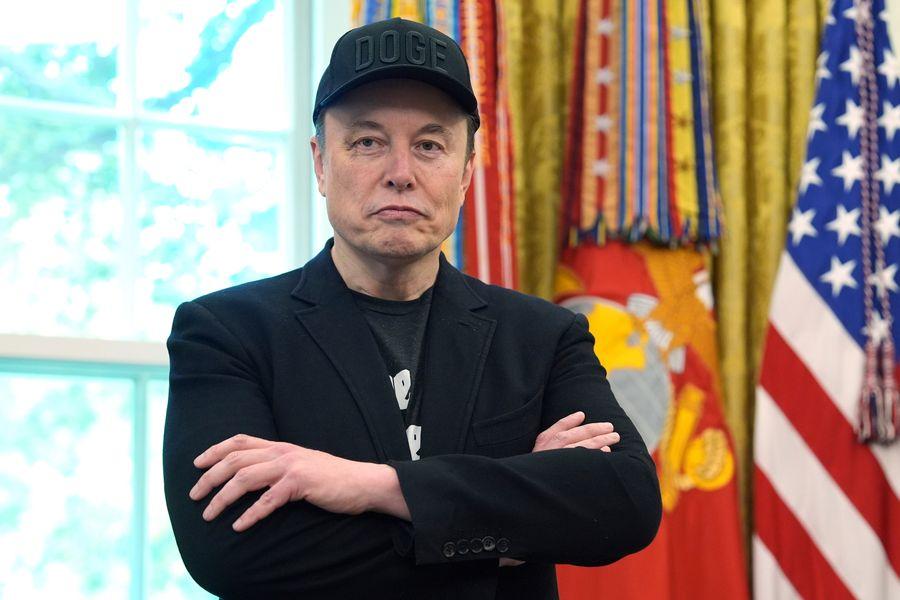
Other than the president himself, no one has had a greater impact on the first months of the new Trump administration than Elon Musk. Not only was Musk’s support critical in getting Donald Trump elected, but his empathy-free approach at the newly formed Department of Government Efficiency (DOGE) made headlines that dominated news cycles while helping flood the zone with contentious and newsworthy actions designed to overwhelm an already exhausted public.
Even after departing his government role, Musk continued – in rather spectacular fashion –exerting outsized influence on American politics. His incendiary opposition to the administration’s ”big beautiful” budget bill significantly complicates the path for congressional Republicans eager to prove their loyalty to the president.
Until Musk’s spectacular split with the president, support for the world’s richest man broke almost entirely along partisan lines. For Republicans, he was lauded for a willingness to tackle the difficult and thankless task of taking on an entrenched bureaucracy. For Democrats, he was an oligarch looking to use his government role to enrich himself while callously demeaning civil servants.
But there was always more nuance to what the world’s richest man was doing in Washington. While Elon’s DOGE efforts were often ham-handed, his opposition to the Republicans’ expensive budget bill reinforces the belief that he genuinely wants to help the government become more effective stewards of taxpayer dollars. Musk’s detractors have suggested his efforts were entirely self-serving, an attempt to curry favor with Trump to benefit all the companies in his orbit. Sen. Elizabeth Warren, for instance, recently released a report outlining as many as 130 instances where Musk “potentially” used his government role and proximity to Trump to enrich himself. But there was less to this critique than meets the eye.
A close reading of Warren’s report reveals that most of the items listed are related to things that might benefit Musk and his companies in the future. They were speculative benefits, in other words. Moreover, Musk swiftly eroded the goodwill he had accumulated with the president, likely eliminating those speculative benefits while simultaneously reinforcing the view that his approach to DOGE was principled, regardless of its effectiveness.
In raw dollar terms, no one has sacrificed more financially to serve in the U.S. government. From the time of Trump’s inauguration to April 22, the date Elon Musk announced in a Tesla analyst call that he would be returning to the automaker, Tesla stock fell by more than 45%. In the process, it erased more than $80 billion from Musk’s net worth – an amount that, by some analysts’ estimates, exceeds the net savings from the DOGE efforts. Yes, a few of Musk’s other businesses may have benefited from his government service, but the magnitude of any such gains is far less than the loss he suffered on Tesla stock. While more than half of those paper losses have been recovered since Musk signaled a return to his company, it’s not clear Tesla’s fortunes in the auto business will ever rebound.
Tesla’s impact on Musk’s net worth is, however, a less relevant issue than what the company is signaling about the direction of American life. Despite single-handedly transforming the automobile industry, Tesla’s dominance in the electric vehicle space is now gone. So, why does the company still command a trillion-dollar valuation in the equity markets?
A simple analysis of its stock suggests its value is not about its car business. That realization is a window into the future. As of the end of May, Tesla’s market capitalization exceeded $1.1 trillion – more than the value of the next nine auto companies combined. This is despite the fact that Tesla sells fewer cars than all but three of those companies. With a brand in free fall, declining sales and profitability, and rising competition from Chinese manufacturer BYD, it would be hard to argue that Tesla’s auto business should trade at a premium to other manufacturers. Assuming Tesla’s auto business is worth roughly the same amount as Mercedes Benz, General Motors, or BMW (all companies with unit sales at least 30% greater than Tesla’s and lacking Tesla’s significant brand issues), the selling of cars would account for a paltry 5% of Tesla’s implied value.
Solar City, on the other hand, could be worth as much as twice its rival First Solar, given its relative size. Assuming that’s correct, another $30 billion or 3% of Tesla’s valuation is explained by the worth of Tesla’s solar power and energy storage division. Even adding in the $24 billion of net cash Tesla has on its balance sheet, we have a company worth between $100 and $110 billion – one-tenth of what the market says Tesla is worth.
So, why has the market rewarded Tesla with a valuation that’s roughly 10 times the sum of its operating businesses? What do investors see in Tesla that they don’t see in other similar companies? The answer would seem to be Musk’s investment in future technologies, most notably humanoid robots (Musk says he’s going to sell a million devices at $30,000 a piece by 2030 and is positing a future where there is one humanoid robot for every person on the planet) – not to mention self-driving vehicles.
In short, 90% of Tesla’s valuation is about one thing – eliminating jobs currently held by Americans. This isn’t a future entirely inspired by Musk’s vision alone. Dozens of major companies are charting a course in this direction. In some ways, it’s a natural evolution of a number of technological advances in material science, artificial intelligence, energy storage and management, and sensors and perception.
So, while Musk has been a lightning rod for all sorts of criticism and approbation, our leaders would be wise to examine what his company is telling us about the future – and legislate appropriately.
From a policy standpoint, the questions that need to be answered are obvious. How will Americans feed themselves and their families when the job they depend upon is being done by a machine? How will the job destruction from these technological advances affect tax receipts, which are overly dependent on income taxes? How will Americans find fulfillment in life without work? How can we best share the benefits of this fourth industrial revolution to ensure they aren’t overly concentrated in a few hands?
Policymakers failed to realize the impact of early automation and offshoring on average Americans, leading to significant income and wealth concentration. They can’t make the same mistake again. Our leaders ushered in an era of globalization, during which imports as a percentage of GDP increased by three times from 1970 to the present. We now have $4 trillion of imports flooding our shelves, giving Americans access to low-cost electronics, clothing, and other consumer goods. While average Americans benefited from these price reductions, as a country, we largely overlooked those Americans who lost their jobs as a result of these import gains. In fact, we’ve never spent more than a billion dollars annually on trade adjustment assistance, 4,000 times less than the imports we have coming on shore every year.
Compounding the mistakes of globalization by neglecting the implications of what’s about to come will lead to an even more alienated and divided electorate. America won’t survive the outcome of that policy failure.


RCP Today
Top stories on RealClearPolitics
The Takeaway
Polling intelligence and analysis delivered to your inbox
World News
Featuring the latest world news
Policy
Featuring the latest policy news
Support Our Mission
As part of RealClearPolitics, authors aim to provide balanced, non-partisan analysis by presenting top reporting and commentary from all sides of the political spectrum.
Trusted by policymakers and citizens alike since 2000