
Biden Advisor Gene Sperling: Goldman Sachs Expects Student Debt Relief To Be "A Wash" For Inflation
Published Aug. 28, 2022
FNC's "Media Buzz" host Howard Kurtz asks Biden advisor Gene Sperling
HOWARD KURTZ: Joining us now from Santa Monica is Gene Sperling, a senior adviser to the president. Gene, welcome. You're the numbers guy. The consensus among economists and I know the White House hasn't done an official estimate yet is that this loan forgiveness will cost 300 to $500 billion. This is as if the Treasury sent these people checks and then enabled them to write off this debt. How on earth is that not going to fuel inflation?
GENE SPERLING: So first of all, Howard, thanks for having me. We our estimate is actually 24 billion a year. So that would be about $240 billion over the next ten years. And understand what that is. That is simply saying that we are expecting that 24 billion would come in per year, that that now people would not have to pay because they had their debt canceled or reduced. You know, we think, obviously, this is going to be a major benefit for tens of millions of American middle-class families who who who have simply been trying to and better themselves at a time of not just COVID, but higher cost for colleges. And less help through things like Pell Grants and in terms of actually meeting the full cost of tuition. And I think there's a lot of studies out there that show that this kind of relief is going to lead to more small business formation, more young people taking risk, more homeownership, that it's going to have lots of benefits. We shall see of inflation.
In terms of inflation, go ahead. Yeah, yeah. No, in terms of inflation, you know, I understand people would like to hear what independent analysts think and they should look at what Goldman Sachs and Moody's, two top financial firms have estimated, that they've estimated that this would be either a wash inflation wise or it would actually be slightly deflationary. And the reason is they're looking at the full proposal the president made, which is which does provide debt relief. But, Howard, this is the important part. It also resumes the payment for next year. And when you look at that, assume resuming those payments plus the debt relief, you find it either has a wash on inflation or it's actually slightly deflation.
HOWARD KURTZ: Or this isn't just the right-left battle. Your former colleague in the Obama administration, economic adviser Jason Furman, as you know, called this reckless, pouring a half a trillion dollars of gasoline on the inflationary fire. Washington Post liberal editorial page calls it an ill conceived windfall for the upper middle class and the wealthy. Strong words.
GENE SPERLING: Yeah. I don't think the numbers back up either of their claims, first of all. 90% of the benefit goes to people under 75,000. Compare that to the Trump tax cut, where about 9080 5% went to people over 75,000 or only 15% went to those under 75,000. Here it's 90% and 90% and and
90% going to those under 60,000 who would get the extra 10,000 because they've received Pell Grants. So I think it is very well targeted to middle-class families, to working poor families who really, really have needed those funds. And you know, I know my friend Jason Furman doesn't like the proposal, but he's just wrong on the inflationary side. Again, you don't have to pit him versus me. You can pay him against Goldman Sachs, against Moody's, even against one of his former mentors and Nobel Prize winners, Joe Stiglitz, who also when you look at the full combination. This is not leading to inflation over this next year.
HOWARD KURTZ: I wasn't trying to start a fight between friends, but the New York Times in a detailed piece, says that President Biden agonized over this. The headline was, He gave in to pressure now. To his credit, he resisted pressure from Chuck Schumer or Elizabeth Warren to forgive $50,000 a student. But here's what the president said a month into his term on CNN.
HOWARD KURTZ: Was Joe Biden right then?
GENE SPERLING: Well, you are right with the following. This was one of those proposals where a whole lot of people, including people like Chuck Schumer or Elizabeth Warren, wanted us to do much more. There were some, as you said, like some a couple of my friends who want us to do less. I think he got it just right. I think this was a Goldilocks moment. And I think the way that he addressed that issue of not wanting to give relief to people who might have seemed upper income or privilege was to look at their current income. And by saying that nobody would receive this, who makes over 125,000, that none would go to people in the top 5%, and that 90% would go to people under 75,000. And even a larger percentage would. And that amount to people under 60,000 who would get the extra 10,000 would receive Pell Grants. I was right. That was his way, I think, of hitting that right middle, which was to ensure he was providing the relief. But instead of limiting it by whether you went to prestigious college or not, he limited it by income so that it is targeted. As The New York Times said squarely on middle class.
HOWARD KURTZ: Families, I think this will be settled by the courts. Let's address the elephant in the room, which is the unfairness argument. This doesn't help people who went to college and paid off their loans. So does it help people who work their way through college? They didn't have to take out a loan. And it doesn't help the majority of the country, a slight majority that didn't go to college at all. Yet all these people as taxpayers have to now pay for the many college graduates. Probably better position in the job market. And who, if it's a married couple, earn as much as $250,000 a year. How is that fair?
GENE SPERLING: So I think first, the fairness argument in terms of what I said, that 90% goes to families under 75,000. I think secondly, I think when people look at what benefits them, they don't look just at themselves. They have families. They have nephew and nieces, grandchildren. I think there's a lot of people who see someone in their family who has debt or who would have liked to go to school or complete a degree had they been able to afford it more. And finally, how I mean, this is just the truth. Every proposal has this element to that. Both Donald Trump and Joe Biden increase the child tax credit, both of them debt. And yet that didn't help the families who had already seen their children become adults or some people who didn't have children.
Much work experience when at $35 it doesn't it's not going to necessarily help the people who've already paid more in the past. So I think, one, people take a broad view of this. We've seen that people with just high school degrees are actually strong supporters of the president's student debt relief plan.
HOWARD KURTZ: I've literally got half a minute, but since you mentioned Donald Trump, I mean, the president's decision on college loans gotten a fair amount of media attention for a day or two. Doesn't this and all the other things that the president's trying to do get blown off the screen by all of the relentless coverage of the Trump melodrama?
GENE SPERLING: Well, you know, I. This is my third White House. And I have learned and we have all learned, and I think our chief of staff, Ron Klain, and certainly Joe Biden has learned. When you're in these jobs, you put your head down and you just take. You just do everything you can every day to help the people that you were elected to help. And this is something, you know, a high debt for 43 million middle-class working-class families. This is a perfect example of doing the people's business, making a tough choice, again, finding that Goldilocks decision between those who wanted more or less. I think we got we ended in the right place.
Latest Videos




In The News
Shapiro: Trump Is Disconnected From The American People, He Thinks He's Done Everything Beautifully
Ben Shapiro
Raskin Questions Trump, Lutnick, Cantor Fitzgerald, Nvidia Ties: "Megacorporate State"
CNBC
Sen. Elizabeth Warren: Jensen Huang’s Return Makes Investigating Him Even More Urgent
CNN
Trump on Jensen Huang: "Sex Sells, Fellas" — "We Want Him on Our Side"
CNBC
MIT's Max Tegmark: AI "Alignment" Means "The Machine God Will Be Nice"
World News
Jeffries: "Imagine How Angry People Will Be If We Fail"
Face the Nation
Most Watched
Hemingway: Dems Are Being Transparent About Plans For "Political Payback" Against Trump Allies
FOX News Channel
Obama to Jeffries: "You've Got To Figure Out How To Actually Get Sh*t Done With Your Colleagues"
White House
Rubio: The Idea That The U.S., Russia, & China Should Not Engage Is Absurd
White House
Victor Davis Hanson: Mysteriously, Gas Prices See Largest Drop In 18 Years Right After Midterms
Podcasts
David Brooks: China-U.S. Power Shift Mirrors Germany-Britain Dynamic Before World War I
PBS NewsHour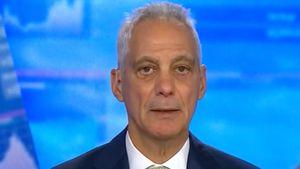
Rahm Emanuel: Democratic Voters Aren't Socialists, They're Angry
Bloomberg Politics