
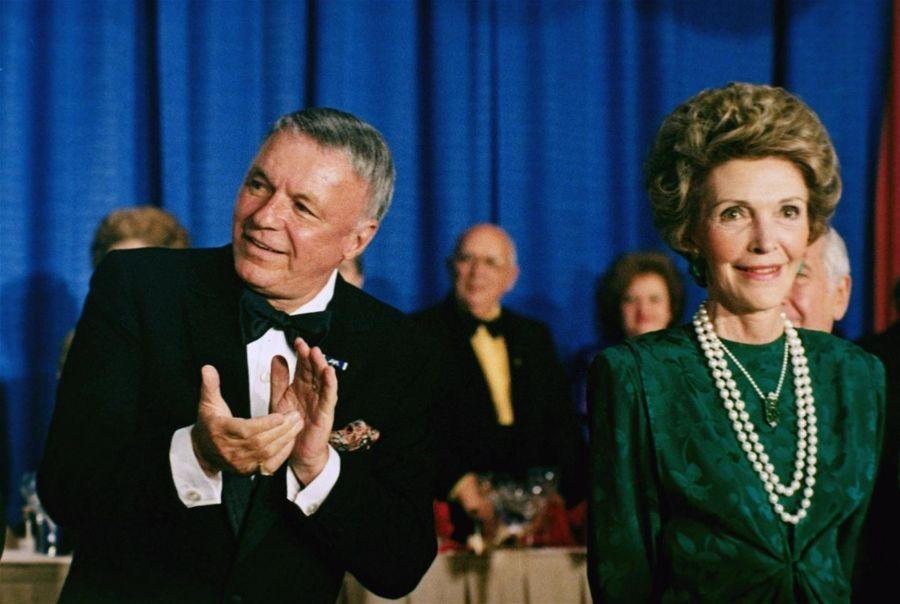
The Personal Side of Nancy Reagan
Published March 8, 2016 • Read time: 7m
Nancy Reagan, who passed away this week at the age of 94, wasn’t everyone’s cup of cocoa.
As first lady of California and again in the beginning stages of the Reagan presidency, Mrs. Reagan battled with reporters, terrified aides and Cabinet members, and became a convenient target for partisan critics of her husband’s policies.
She survived all this and much more—most notably Ronald Reagan’s shooting by a would-be assassin and her own mastectomy for breast cancer—to become a constructive and even inspirational force. Time and again she acted as her husband’s protector, yanking him back from the brink when he wandered near the edge of a political cliff. She played a well-documented leading role in prodding President Reagan to apologize to the American people for secret arms sales to Iran. She later prodded Republican senators to support stem cell research into the disease that had claimed her husband’s life.
I knew Nancy Reagan for nearly 50 years and my thoughts about her since her passing have turned to the personal impact she had away from the spotlight.
Mrs. Reagan’s first months in Sacramento in 1967 were demanding. Away from her friends in Southern California, she was stuck with two children in a decrepit state mansion that had officially been declared a firetrap. Her only exposure to the media had been to a Hollywood press that was at once supine and gossip-ridden. She couldn’t understand why I and other reporters in the Sacramento press corps gave so much ink to her husband’s adversaries, especially Assembly Speaker Jesse Unruh, often known as “Big Daddy.”
Not without reason, Mrs. Reagan believed politicians were hypocritical. She wondered how they could say terrible things about her husband on the floor of the legislature during the day and then socialize with them at night as if nothing had happened. But Nancy Reagan soon did something that her more popular husband didn’t do. She memorized the names of every legislator and learned something about each of them.
Fast-forward to 1973, when Ronnie, as she called him, was beginning his second term as governor. The Reagans were now living in a comfortable house in Sacramento, financed by contributors. They had invited the freshman legislative class to their home but deposited them in the basement, which the wives especially didn’t like. While the legislators were awaiting the governor, Nancy Reagan approached Lou Papan, one of the new Assembly's Democratic members, and his wife, Irene. The Papans had a son who was seriously ill. Mrs. Reagan introduced herself as a doctor’s daughter and spent several minutes trying to comfort the Papans. They later lost their son but never forgot how empathetic Mrs. Reagan had been.
“I think Nancy smoothed over her husband’s rough edges,” Lou Papan told me nearly 20 years later. Mrs. Reagan did this sort of thing many times in her life, never publicizing the interest she showed in others.
My interaction with Mrs. Reagan started with mutual suspicion and ended in mutual trust. She didn’t like what I wrote about her husband for the San Jose Mercury-News and didn’t like what I had written about her in my first book, “Ronnie and Jesse: A Political Odyssey.” In retrospect, I probably overdid my skepticism about “the Gaze”—the adoring way she looked at her husband in public. It seemed an act, but the adoration was genuine and lasted a lifetime.
Eventually, however, Mrs. Reagan came to appreciate reporters and writers who wrote balanced stories and books and become suspicious of hagiographic accounts read only by true believers. She also honed her political skills. In 1976, Mrs. Reagan realized, when he didn’t, that her husband needed to expand his horizons beyond his California circle to run for president. She brought in the astute but authoritarian John Sears, who helped Reagan nearly win the nomination in 1976. Four years later she helped oust Sears because she believed he was hoarding power and disrespecting her husband. After Reagan won the presidency, Mrs. Reagan was involved in the inspired choice of James Baker as White House chief of staff, one of the key appointments of the Reagan presidency.
Nancy Reagan realized that she had changed. Katharine Graham, the revered publisher of The Washington Post (and later Mrs. Reagan’s good friend), took me to a meeting with her at the 1980 Republican convention. Mrs. Graham asked Mrs. Reagan if her husband had changed. “Not a bit,” she said.
Mrs. Graham then asked Mrs. Reagan if she had changed. She laughed and said, “In so many ways.” Turning to me, Mrs. Reagan said, “Ask Lou.” Mrs. Reagan added she had learned something about politics, a considerable understatement.
Nancy Reagan didn’t want her husband to take risks but she was never afraid to take chances with her own image. Her performance as “Second Hand Rose” at the 1982 Gridiron Dinner mocked her preoccupation with clothes and was courageous and terribly funny. I asked her later what she would have done if that performance had bombed. “I would have done something else,” she said simply.
I reached a point while writing “President Reagan: A Role of a Lifetime” after the Reagan presidency where I was struggling to understand his inner life. Ronald Reagan was outwardly gracious and friendly but kept a part of himself hidden behind what I called the Barrier. I became so frustrated at my inability to penetrate this wall that I sought out Mrs. Reagan.
What happened next had never happened before nor would it again. Mrs. Reagan invited me to her house in Bel Air. It was the only time I ever saw her where she wasn’t immaculately attired and stylish. Instead, she was dressed in jeans and a blouse and doing housework, including putting clothes in the washer, while we talked. I wasn’t tape-recording her, as I usually did, and she talked freely.
Nancy Reagan said she understood my problem. We discussed the alcoholism of Ronald Reagan’s father, Jack, which both of us believed had taught the son to be guarded even as a child. But Nancy Reagan was convinced there was another reason. Because the Reagans moved from town to town in Illinois every year or two when Ronald was a boy, he had no friends other than his brother and had learned at any early age to value his own company. The clincher of this talk was that Nancy told me there were times when even she couldn’t penetrate the Barrier. Don’t worry, she was saying. I knew much more about her husband than most people. Just write it.
And write I did. From then on, throughout the completion of a book that remains in publication today, I wrote with confidence, relating what I knew. After the book was published in 1991, Mrs. Reagan wrote me a generous letter of praise, not mentioning the many passages that are critical of Ronald Reagan. When I updated the book in 2000, she provided information about Reagan’s Alzheimer’s disease, which Nancy Reagan said had taught her “a crash course in patience.”
I thanked her, of course, but have never before written about how she bolstered my confidence at a time when I needed it. Now I have, and I want to thank her again.
Update: Due to a technical glitch, three paragraphs were mistakenly omitted in an earlier version of this essay. They were restored at 1:52 p.m.





RCP Today
Top stories on RealClearPolitics
The Takeaway
Polling intelligence and analysis delivered to your inbox
World News
Featuring the latest world news
Policy
Featuring the latest policy news
Support Our Mission
As part of RealClearPolitics, authors aim to provide balanced, non-partisan analysis by presenting top reporting and commentary from all sides of the political spectrum.
Trusted by policymakers and citizens alike since 2000