
Cornell Investigation
Why Weren't the Cornell Allegations Taken Seriously?
COMMENTARY
Published Oct. 8, 2026 • Read time: 6m
Somewhere there exists a woman who could see that disgusting group chat urging others to come and get in on some “free pussy” and “whip it out, boys” at that Cornell Chi Phi frat party and assume after the most perfunctory possible investigation that the whole thing was consensual. But I don’t think I know her.
Women aren’t outraged because we hate men – hadn’t heard that one in a while – or because we don’t believe in due process. It’s because #MeToo came and went, and yet here we are again.
Or rather, here we are still, with male leadership in the university and its police department, along with the district attorney’s office, rushing to conclude that no crime was committed.
Maybe no one will be convicted, or even indicted. Not only do all of the “Cornell 7” deny wrongdoing, but under New York’s medieval law, it’s absurdly difficult to prove that anyone who has been willingly drinking or taking drugs has ever been sexually assaulted.
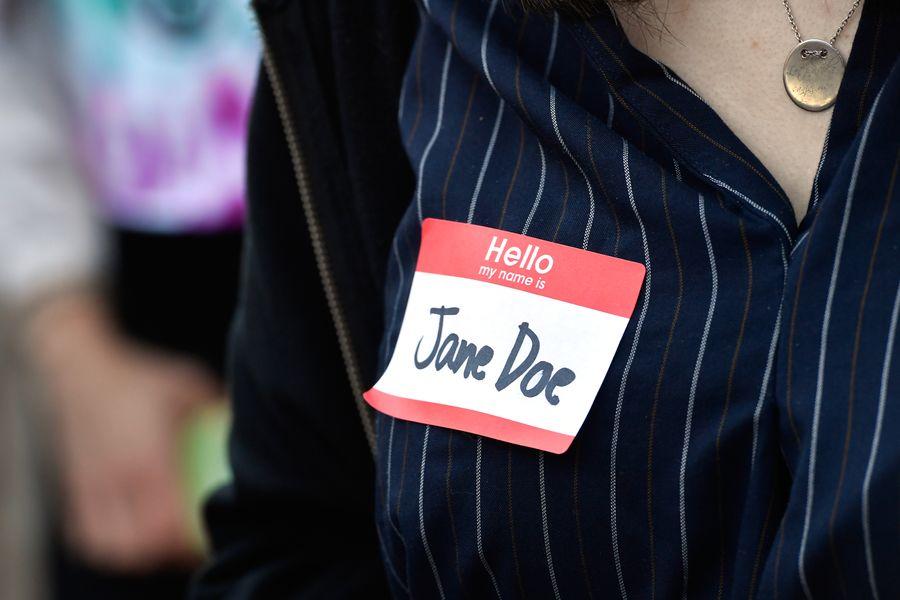
According to Jane Doe’s civil suit, the sophomore had about 10 drinks in the three hours before arriving at the fraternity party two years ago. Her lawsuit says, too, that she was pressured into doing ketamine for the first time, until she was “completely incapacitated,” during her more than four hours in a room from which she felt “there really was no escape.” She (and those young men, too) are lucky she didn’t die.
Democratic New York State Assembly Speaker Carl Heastie, who has been blocking changes to the law that makes sexual assault so hard to prosecute, and suddenly claims that he now fully understands the need for reform, is another case in point. New York’s criminal defense bar has also stacked heavy objects on the other side of the door marked “change for the better.”
It’s equal parts astonishing and pitiful that in 2026, it took the female-led editorial board of Cornell’s student newspaper to send up the flare and New York Gov. Kathy Hochul to see the situation for what it is and appoint New York Attorney General Letitia James as a special prosecutor in the newly reopened case: “At every turn,” Hochul said, 20-year-old Jane Doe “was failed by people and institutions with an obligation to protect her.”
But the fact is that it did take women to intervene; until they jumped in, after Jane Doe filed her civil suit, here’s what we had:
Cornell’s campus police department waited a full week after Jane Doe’s report before even interviewing her, and then never talked to her again.
That alone shows this was never a serious investigation. There was no reinterview, by anybody ever, when there should have been a careful and “trauma-informed” talk with someone trained in taking a rape report.
Then, only a cursory summary of the police report was sent to the prosecutor, omitting the key fact that she said, “I can say with 100% confidence I was raped.” The report also didn’t include the fact that she told police she had been physically hit.
University police departments – paid by the same folks who sign payroll checks for the communications and development offices – should never investigate crimes this serious, because they have such an obvious conflict of interest. Yet they continue to do so and, in general, continue to do so poorly.
Anthony Bellamy, the Cornell police chief at the time of Jane Doe’s report, has since left to become deputy chief of the Ithaca Police Department. Ithaca PD said that it only learned about the alleged gang rape from recent news reports. So their own deputy chief didn’t inform them?
Then we have the prosecutor, Tompkins County District Attorney Matthew Van Houten, who was never given the transcript of what Jane Doe told police. He was given the beyond-awful group chat by the Cornell PD but seems not to have bothered to look at it. Those messages “were not part of our initial analysis,” he said.
This so-called analysis was never bolstered by speaking to Jane Doe, or finding out what the accused said about one another, or what the fraternity did after this happened – panic – or what Jane Doe’s roommates had to say about the numb state she was in for weeks after the fraternity party.
Then we have Cornell’s president, Michael Kotlikoff, who at the time was interim president. Instead of downplaying this horrible event, imagine how stand-up – how manly, actually – it would have been for him to have sat his student body down and said to the men in particular that seeing a group chat like that and doing nothing in response was a big old-fashioned fail. Too damaging to the brand? I think it would have been a positive, as in here we have someone who is not averting his eyes but is responding.
I find it hard to believe that any of the more than 50 Cornell men on that group chat had never heard of the importance and power of bystander intervention. This week, one of those young men told a reporter that he and another guy didn’t know what to think after receiving it, and so did stick their heads in the door to ask if everyone was okay, and heard Jane Doe say yes.
If that’s true, I am glad to hear that someone cared enough to dare to do that. That is not nothing. But as more and more scary information was added to that chat, someone should have called the police, or at a minimum gotten her out of there and taken her home.
One of the seven accused young men named in the lawsuit reportedly said in the chat, “it better not be another fatty,” which certainly makes it seem like this was not a first. Is Cornell’s current president going to do everything in his power to make sure it was the last?
Kotlikoff was still misleading the public even after this story became national news: “None of the individuals charged were offered the opportunity to write essays as a sole consequence of their involvement,” he said. Except that none of the young men were charged at all. Even allowing for that Freudian slip, what he said was technically true, but just barely; The New York Times reported that one student only had to write an essay and take one of those useless, check-the-box sexual harassment trainings.
It’s true that the widespread alumni protests and withdrawals that Kotlikoff is navigating now could be transformative.
But when he says “this could be a defining moment in Cornell’s history,” I think: why now and not two years ago? A woman in his job would see things he has missed.
Support Our Mission
The Internet provides an endless stream of content. Not all of it is worth your time. That's why, every day, RealClearPolitics curates the most essential news and information—from all sides and across mediums. The links, videos, and podcasts curated here are the product of human judgment, not algorithms or AI. Please help power our mission of presenting a thoughtful, balanced public discourse through a tax-deductible donation.
Would you consider supporting us today?
Contributing to RealClear Politics through the RealClear Media Foundation supports essential initiatives that drive meaningful change.






RCP Today
Top stories on RealClearPolitics
The Takeaway
Polling intelligence and analysis delivered to your inbox
World News
Featuring the latest world news
Policy
Featuring the latest policy news
Support Our Mission
As part of RealClearPolitics, authors aim to provide balanced, non-partisan analysis by presenting top reporting and commentary from all sides of the political spectrum.
Trusted by policymakers and citizens alike since 2000