
Replay: White House Press Briefing With Sarah Sanders (Dec. 7)
Published Dec. 7, 2017
WH press secretary Sarah Sanders spoke to the members of the press corps Thursday:
QUESTION: Thank you, Sarah.
I want to ask you about the possible government shutdown, and the optimism that the president might have that he can avert a shutdown. And if I could follow up and ask about the California fires, and the very latest that the White House has on that.
SANDERS: Sure.
In terms of the government shutdown, look, we expect a clean C.R. to pass with Democrat support. It's what we hope will happen. Funding the government, particularly our military, our Veterans Affairs, are always important, but particularly now, with so many threats that we face globally, this is certainly an important priority for the administration, and we hope something that will be discussed and agreed to later today.
Jennifer (ph)?
QUESTION: On the fires -- I'm sorry.
SANDERS: Sorry. On the fires, was there a specific question?QUESTION: Yeah, does the -- is the White House in coordination with the folks out in California in battling that wildfire? Is there more money to be made available, especially for the areas near Los Angeles which are under siege right now by so many devastating fires?
SANDERS: Absolutely. The administration is seeing regular contact. Both FEMA and folks here at the White House are speaking regularly to state and local authorities, and making sure that we're ready and able to help when needed and when requested by those authorities.
Jennifer (ph)?
QUESTION: Can you say a little bit about why John Bolton was here at the White House today?
And also on taxes, we're a little bit confused on whether the White House would support a 22 percent corporate tax rate. (inaudible) the White House economist Kevin Hassett talking about saying it would be OK and it wouldn't undermine the economy. And then a few hours later the legislative affairs director, Marc Short, said something about it needs to be 20.
So can you say...
SANDERS: Look, our focus has been on getting the lowest corporate rate possible. 15's better than 20, 20's better than 22, and 22's better than what we have. Again, we're going to continue to push, but we're not going to negotiate that from the podium. And we're committed to getting the lowest corporate rate we can.
On John Bolton, he is here, he is a friend of the president, somebody who he wanted to visit with. Nothing more than that, nothing more than a check-in and a friendly visit.
Jonathan (ph)?
QUESTION: Sarah, Donald Trump Jr. refused to talk about his conversations with the president, citing attorney-client privilege. Would the president release him from any such privilege and allow him to speak to the committee?
SANDERS: That's a question you would have to ask his attorneys.
We believe that his lawyers had a legitimate reason and basis for not answering those questions. But that's something I would direct you to his attorneys to address more fully.
QUESTION: Can you explain to me -- but can you explain to me how it can be attorney-client privilege when neither Donald Trump Jr. nor President Trump are attorneys?
SANDERS: Again, that's something that you would have to talk with Don Jr.'s attorneys about. That's not something I'm going to be able to comment on from here.
Matthew (ph)?
QUESTION: Thanks, Sarah.
Senator Franken today, in announcing his resignation, said, quote, that he is "aware there is some irony in the fact that I'm leaving while a man who has bragged on tape about his history of sexual assault sits in the Oval Office, and a man who has repeatedly preyed on young girls campaigns for the Senate with the full support of his party," end quote.
What's the White House response to that?
SANDERS: Look, the president addressed the comments back during the campaign. We feel strongly that the people of this country also addressed that when they elected Donald Trump to be president. And I've addressed it several times from here and don't have anything new to add.
QUESTION: (OFF-MIKE) a little more broadly about -- that the differences in the way the two parties are handling these accusations of sexual misconduct?
SANDERS: I -- I think that some of that would be left to some of the party leadership. I'm not sure if there's a specific question in there on the differences.
John (ph)?
QUESTION: Thank you, Sarah.
Have any of the president's counterparts around the world contacted the president, contacted the White House to indicate that they too will follow the president's lead in moving their embassy from Tel Aviv to Jerusalem, or acknowledging that Jerusalem is the capital of Israel?
SANDERS: I'm not aware of any country's commitment to follow suit in this.
QUESTION: Do you expect that to happen? Do you expect -- expect that others will follow the president's lead here?
SANDERS: I'm not -- I'm not aware of any countries that we anticipate that happening at any point soon. I'm not saying that they aren't, but I'm not aware of them.
Jordan (ph)?
QUESTION: Thanks, Sarah.
Last week the president said that the U.S. would be imposing additional sanctions on North Korea today. Do you have an update on where that stands?
SANDERS: Yeah, we expect the Department of Treasury to put out more details on that, hopefully by the end of this week. And we'll keep you guys posted on that front.
Jennifer (ph)?
QUESTION: Thanks, Sarah.
What is the president's reaction to some U.S. allies, particularly in Europe, notably the United Kingdom, who have expressed opposition to his action recognizing Jerusalem?
And also, does the fact that he kept his promise give him more credibility when negotiating in the Middle East?SANDERS: Certainly, I think one of the abilities to follow through on something you've committed to, as the president has done.
But also, let's not forget that this was something that Congress voted on starting back in 1995, and has reaffirmed 10 separate times over the last 20 years. This was something that the president took action on; a very courageous and bold action. And something that, frankly, the members of the United States Congress have voted on many times before.
Olivier?
QUESTION: Thank you, Sarah.
Sarah, yesterday you guys put out a statement, under the president's name, saying that he was directing other officials in the administration to reach out to Saudi Arabia and urge them to immediately allow the flow of humanitarian supplies into Yemen.
I have two questions about that. The first is, why isn't the president himself working the phones? And the second is, are there any consequences for Saudi Arabia, if they don't immediately allow this -- this flow of goods?
SAUNDERS: My understanding is, the president did bring these up on previous conversations. And that I believe there are actions that are taking place were a port to open.
And we'll keep you posted as those details become more available.
Major?
(CROSSTALK)
QUESTION: (OFF-MIKE) Monday.
SAUNDERS: Sorry?
QUESTION: Any consequences for Saudi if they don't do this?
SAUNDERS: As I just said, we have reason to believe that they're moving in that direction, for a port to be open. We'll keep you posted.
Major? QUESTION: (OFF-MIKE) asked on Monday, when the president became aware that Michael Flynn lied to the FBI, you referred her to John Dowd. John Dowd is not engaging on that. That's a knowable fact in this building, it's not a legal matter, not for the attorney to say.
Can you just tell us when the president became aware of that?
SAUNDERS: Well, the attorneys feel differently and they feel this is a question that should be answered by them. And I'll encourage them, again, to respond to you. But I'm going to have to refer you back to John Dowd again.
QUESTION: (OFF-MIKE) it the legal question for them, not about something the president knew and when he knew it?
SAUNDERS: As I said before, Jon Decker (ph)'s the only attorney in here. I'm going to listen to the attorneys on this one. And John Dowd, hopefully, will follow up with you in short order.
More on...
(CROSSTALK)
SAUNDERS: Sorry, Major. I'm going to keep bouncing because I'm...
(CROSSTALK)
QUESTION: This -- I think you'll want to take this one. It's real simple. It's very simple.
Today, the U.N. ambassador said, "It's an open question whether the United States will participate in the Winter Olympics in South Korea." Is there an open question? Is that now in doubt?
SAUNDERS: Look, that wasn't exactly what the ambassador said. No official decision has been made on that. And we'll keep you guys posted, as those decisions are made.
QUESTION: (OFF-MIKE)
SAUNDERS: Look, I know that the -- that the goal is to do so, but that'll be a decision made closer to the time.
Mara (ph)?
I -- I think that's an interagency process, but I think, ultimately, the president would certainly weigh in. But, again, that's something that he would take into account, probably, a number of the stakeholders that would be involved.
QUESTION: (OFF-MIKE) the security?
SAUNDERS: Absolutely. If we felt there was an issue, that would -- that would come up.
(CROSSTALK)
QUESTION: I just have two government funding questions. First, does he want S-CHIP reauthorized?
SAUNDERS: I haven't had that specific conversation with him, but I do know that we want to fully fund the government. Beyond that, I'm not going to get into any more details before the meeting today.
QUESTION: OK.
The bipartisan leadership is coming up in a much different atmosphere than the last meeting, where he tweeted about how he didn't think a deal was possible because the Democrats were so bad on the illegal immigrants pouring over the border.
I'm wondering, has the president changed his mind about that? And also, specifically, what was he referring to, since in a government shutdown, ICE and the Border Patrol aren't affected?
SAUNDERS: The president is still very much committed to a strong border and to a border wall. And I would imagine that's discussed at some point today.
QUESTION: (OFF-MIKE) with the Democrats?
SAUNDERS: I think we all hope a deal can be reached. We hope that the Democrats will be willing to put aside partisan politics and focus on fully funding the government.
Josh (ph)?
QUESTION: On the Hill today, Chris Wray praised the FBI and said it was, you know, the finest law enforcement force in the world. The president said, you know, it's in tatters and it's at its worst place in history. Can you explain that discrepancy?SAUNDERS: Look, we don't think that there is a discrepancy. We agree with Chris Wray that FBI field agents are appreciated and respected. The president's issues are with the political leaders in the FBI under former Director Comey, particularly those that played politics with the Hillary Clinton e-mail probe. And we don't see a discrepancy beyond that.
Blake?
(CROSSTALK)
SANDERS: OK, I'm going to hop around here, (inaudible),
QUESTION: Do you (inaudible) the FBI, says it's in tatters (inaudible) fear that -- you know, that can create ramifications, that people won't trust law enforcement, that people will say...
SANDERS: No, and again...
QUESTION: ... "Why should we interact with the FBI when it's in tatters?"
SANDERS: No. And again, the president's referring to the political leaders at the FBI, particularly those that were involved in the Hillary Clinton probe.
Blake?
QUESTION: Sarah, thank you.
Two quick ones about a government shutdown.
Chuck Schumer on the Senate floor said today of the president, "His party controls the Senate, the House and the presidency" -- speaking of Republicans, rather. And he said a shutdown would fall on his shoulders.
How is that not just a reflection -- an accurate reflection of the political realities, that Republicans control Washington at this point?
SANDERS: Look, they may control Washington, but this still takes some Democrats to be engaged in the process. And we hope, frankly, that Democrats will play by the Schumer rule, and not hold this bill hostage by playing partisan politics, and that they'll come to the table, help fund our Defense Department, help fund our military, help fund Veterans Affairs.
John (ph)?
QUESTION: (inaudible) want a clean C.R.?
At some point, though, DACA is going to have to be brought up, or potentially be brought up. Is the White House willing to mix at one point a DACA fix with government spending? And if so, when would that be the case?
SANDERS: Look, the president said that with DACA, he wants to make sure that we have responsible immigration reform, including a border wall and other things that we've laid out in those priorities and those principles. And that's something that would have to be part of that discussion.
John?
QUESTION: Yeah, thank you, Sarah.
From that podium, Secretary Mnuchin and Gary Cohn both assured us that when a final tax reform bill is passed, the alternative minimum tax would disappear immediately. Now, of course, recent statements by the president, as the conference is about to begin, indicate it might not completely disappear, and not immediately, certainly.
Is the administration still committed to ending the AMT right away?
SANDERS: Look, I -- I don't think our position has changed on that front at all. But at the same, look, the conferees were just named. We want to let this thing work through its process.
We've laid out our principles. We're very committed to those, and making sure that the -- the bill and the final piece of legislation delivers on that.
Charlie (ph)?
QUESTION: A lot of attention on sexual misconduct and harassment by members of Congress. Is the president confident that Congress and its leaders can police and investigate themselves on this issue?
SANDERS: I -- I think that we have no reason at this point to see otherwise. And hopefully, the -- that process will move forward.
(inaudible)?
QUESTION: Sarah, I want -- it's a long question, but I need you to clarify something that you said from the podium here on taxes.
You said that, to Matt (ph) on Tuesday, that as long as his taxes were under audit, he's not going to release them. His 2016 taxes, to our knowledge, are not under audit -- unless they are. Can you (inaudible)? SANDERS: My understanding -- and I will double-check, but the president's taxes, no matter who the president is, actually immediately go under audit after being filed, so that's actually an accurate...
QUESTION: Will you get back to us (inaudible)?
SANDERS: I'll double-check to be 100 percent make sure.
QUESTION: So my question to you more broadly is on this moment that we find ourselves in. Frankly, we have a national reckoning when it comes to sexual harassment. And so you know, in a -- again, a broad, 30,000-foot way, does the president believe that he has a credible role in leading this conversation?
And could you speak to the specific steps this White House has taken to make sure the women who work here feel that they are in a comfortable environment to talk about these things?
SANDERS: I mean, I think that the president treats -- certainly, as a woman myself, I've never felt anything but treated with the highest level of respect, and been empowered to do my job. And I think that -- that's what I've seen the president do day in and day out since we've been here, and during the campaign.
And so, I think that's a -- a pretty good start, and a pretty good example on that front.QUESTION: (OFF-MIKE) are having sessions, they're having seminars. Are you guys doing that here? Are you talking about, in recent days, what people in this work environment can do? Are you taking...
SANDERS: There are certainly White House policies that we are reminded of, and I think all of us expect each person to live up and to meet those policies and to not cross a line that is not only not legal, but not appropriate or not ethical.
Kristen (ph)?
QUESTION: A follow-up.
We've seen Democrats forcefully call for John Conyer's resignation, now Franken's resignation, which happened today. Do Republicans and does this president risk losing their moral authority on this issue, which is a huge issue right now, by endorsing a candidate like Roy Moore, who is now been backed by the RNC, as well?
SANDERS: Look, I -- I've addressed this in depth. We think that the allegations are troubling and that ultimately this is something that the people of Alabama should decide.
Steve (ph)?
QUESTION: Why not call for...
QUESTION: Sarah...
QUESTION: ... a write-in candidate...
QUESTION: ... was the...
QUESTION: Sarah, is the president failing to lead at this...
SANDERS: Hey, Kristen (ph), I'm going to move around you.
QUESTION: But just a quick follow-up, though. Is he failing on this issue?
QUESTION: Was the president's proclamation on Jerusalem delayed because of concerns expressed by the secretaries and defense and state that -- about security, that they wanted to get adequate security in place for U.S. embassies around the world? SANDERS: We wanted to make sure that we had a thoughtful and responsible process, and that the decision and the components of that decision went through the full interagency process. And once that was completed, the president moved forward and took action.
Steve (ph)?
QUESTION: The -- the Palestinians are under the impression that the president pulled out of the peace process yesterday, based on the Jerusalem decision. How do you correct that? Or did he do that?
SANDERS: No. In fact in the president's remarks, he said that we are as committed to the peace process as ever. And we want to continue to push forward in those conversations and those discussions. And hopefully the ultimate goal I think of all those parties is to reach a peace deal, and that's something that the United States is very much committed to.
We'll take one more. David (ph)?
QUESTION: Sarah, thank you.
Given the recent revelations that at least one prosecutor on Robert Mueller's team was sending anti-Trump texts to another DOJ lawyer, and given the revelation that another one was congratulating Sally Yates for refusing to uphold and defend the president's travel ban, Chairman Goodlatte at the hearing this morning said that even the appearance of impropriety would devastate the FBI's reputation.
So the question is does the White House believe that the fix was in, that Robert Mueller's probe was biased from the beginning?
SANDERS: Look, we are fully cooperating through this process. We're going to continue to do so.
As we -- as I said a few minutes ago, we certainly felt like some of the political leadership at the FBI was problematic. We're glad that Director Wray is there. We feel like he is going to clean up some of the messes left behind by his predecessor. And we look forward to this concluding soon and showing what we've been saying all along: that there was nothing to see here and certainly no collusion.
The president's got an event here in a couple minutes. Just a couple of last-minute notes. The president's got a event here with members of the Pearl Harbor survivors, and then we'll also have a pool spray at the top of the congressional meeting this afternoon at 3 o'clock. So we'll see you guys shortly, thanks.
QUESTION: (OFF-MIKE)
SANDERS: Frankly, pretty ridiculous questions. The president's throat was dry; nothing more than that.
He does have a physical scheduled for the first part of next year, the full physical that most presidents go through. That'll take place at Walter Reed. And those records will be released by the doctor following that taking place.
Latest Videos



In The News
Raskin Questions Trump, Lutnick, Cantor Fitzgerald, Nvidia Ties: "Megacorporate State"
CNBC
Sen. Elizabeth Warren: Jensen Huang’s Return Makes Investigating Him Even More Urgent
CNN
Trump on Jensen Huang: "Sex Sells, Fellas" — "We Want Him on Our Side"
CNBC
MIT's Max Tegmark: AI "Alignment" Means "The Machine God Will Be Nice"
World News
Jeffries: "Imagine How Angry People Will Be If We Fail"
Face the Nation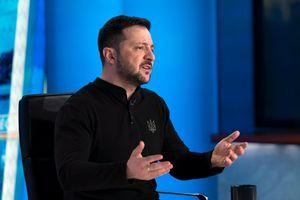
Zelensky: Putin Needs To Understand Crimean Bridge "Will Not Stay"
World News0:27
Most Watched
Hemingway: Dems Are Being Transparent About Plans For "Political Payback" Against Trump Allies
FOX News Channel
Obama to Jeffries: "You've Got To Figure Out How To Actually Get Sh*t Done With Your Colleagues"
White House
Rubio: The Idea That The U.S., Russia, & China Should Not Engage Is Absurd
White House
Victor Davis Hanson: Mysteriously, Gas Prices See Largest Drop In 18 Years Right After Midterms
Podcasts
David Brooks: China-U.S. Power Shift Mirrors Germany-Britain Dynamic Before World War I
PBS NewsHour
Rahm Emanuel: Democratic Voters Aren't Socialists, They're Angry
Bloomberg Politics