Senate Colorado Immigration
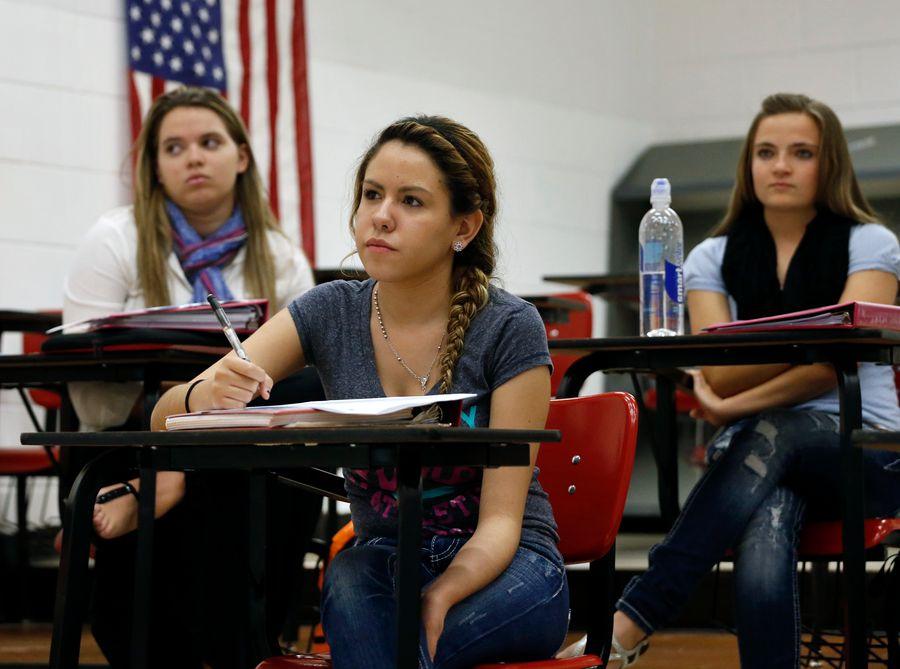
When Students Self-Censor, They Worry Most About Each Other
COMMENTARY
Published Sept. 16, 2026 • Read time: 4m
Last year, the Sandra Day O’Connor Institute reported that nearly 80% of civics teachers had self-censored or avoided certain topics in class because they feared pushback or controversy. This year, we talked to the students.
Fifty-eight percent of the recent high school graduates we surveyed said they had held back from saying what they really thought about a political or civic topic because they were concerned about how others might react. Most were not describing hostile classrooms: 73% said they were generally comfortable sharing their honest views. Yet 51% of even those comfortable students had still self-censored occasionally.
The striking finding was who they were worried about. Among students who self-censored, 91% cited classmates as a concern. Forty-one percent cited the teacher.
Why does that matter? Because discussion is not an optional extra in civics. Civic education has two related jobs. Students need to understand how American government works. They also need opportunities to practice the skills citizenship requires: making an argument, listening to an opposing one, and working through disagreement.
Not every decision to stay quiet is a problem. Listening is itself a civic skill. But silence driven by anticipated social cost is different. A view or question that never enters the discussion cannot be examined, challenged, defended, or revised. The student loses the chance to practice exactly what civic life demands.
That changes the shape of the problem. Debates over classroom speech usually begin with adults: teachers, administrators, parents, school boards, legislators. Those adults matter, of course. But the students pointed most often at one another. A classroom can be open to disagreement in principle while students still hesitate to take part in it.
As Many as 1 Million Kids Will Have School Choice This Year
Hypocrisy Behind the Campus Renaming Craze
Can Our Colleges Be Saved?
Hillary's Federal Education Jackboot Squad
Students are also reading the room – and they may misread it. They respond not only to what classmates actually believe but to what they think classmates will tolerate. A few visible reactions can make a class seem less open than it is.
Teachers remain central here because they help set the conditions in which peer pressure operates. Fifty-three percent of our respondents had sometimes or often seen a teacher avoid, cut short, or shut down a political discussion. Neither that number nor last year’s teacher findings reduce to a story about one group silencing the other. They may instead describe a room in which both groups are assessing risk: The teacher hesitates to open a hard discussion, students hesitate to enter it, and the room gets quieter without getting better at disagreement.
Safe does not mean comfortable. Serious civic discussion will be uncomfortable at times. A good civics classroom makes it possible for a student to lose an argument without losing social standing.
The students were not asking for less. They wanted more, and better, opportunities for discussion, debate, and current events.
States and districts should treat constructive disagreement as an explicit civic-learning outcome: Students should learn to make evidence-based arguments, represent opposing views accurately, ask good-faith questions, and distinguish criticism of ideas from criticism of people.
Schools should also make the peer norm visible. Ask students anonymously whether a hypothetical classmate who voices an unpopular opinion should still be treated with respect, and whether they think most classmates would agree. If students support that norm more strongly than they believe their peers do, show them the results.
Lower the social stakes without lowering the standards. Assigned positions, anonymous opening responses, and arguing a view one does not hold give practice before disagreement becomes personal. And because 26% of those who self-censored worried about being discussed or posted about on social media, set a plain rule: what a classmate says is not recorded or circulated out of context.
Finally, back the teacher. Fewer than 15% of the civics teachers we surveyed last year said their districts had given them clear, helpful guidance about what they could teach. School boards can supply it and say plainly that engaging contested civic questions is part of civic education.
Civics is not simply the study of government. It is preparation for citizenship with other people who think differently. Schools cannot prepare students for that work by teaching around disagreement; they must expect and encourage it, and then give students guided opportunities to practice.
Support Our Mission
The Internet provides an endless stream of content. Not all of it is worth your time. That's why, every day, RealClearPolitics curates the most essential news and information—from all sides and across mediums. The links, videos, and podcasts curated here are the product of human judgment, not algorithms or AI. Please help power our mission of presenting a thoughtful, balanced public discourse through a tax-deductible donation.
Would you consider supporting us today?

Newsom Defies Voters, Juries and Lawmakers To Spare Murderers While Defending Abortion
Curtis Hill • RealClearPolitics
The Algorithmic Tilt
Frank Filingeri • RealClearPolitics
A RealClear Thanksgiving: Investing in a Better Future
David DesRosiers • RealClearPolitics
Trump’s Newsom Problem: Antagonist-in-Chief
Carolina Lumetta • RealClearPolitics
America’s Free Spirit
John Maxwell Hamilton • RealClearPolitics
The GOP Majority Should Go Out in Glory
Daniel McCarthy • RealClearPolitics
RCP Today
Top stories on RealClearPolitics
The Takeaway
Polling intelligence and analysis delivered to your inbox
World News
Featuring the latest world news
Policy
Featuring the latest policy news
Support Our Mission
As part of RealClearPolitics, authors aim to provide balanced, non-partisan analysis by presenting top reporting and commentary from all sides of the political spectrum.
Trusted by policymakers and citizens alike since 2000