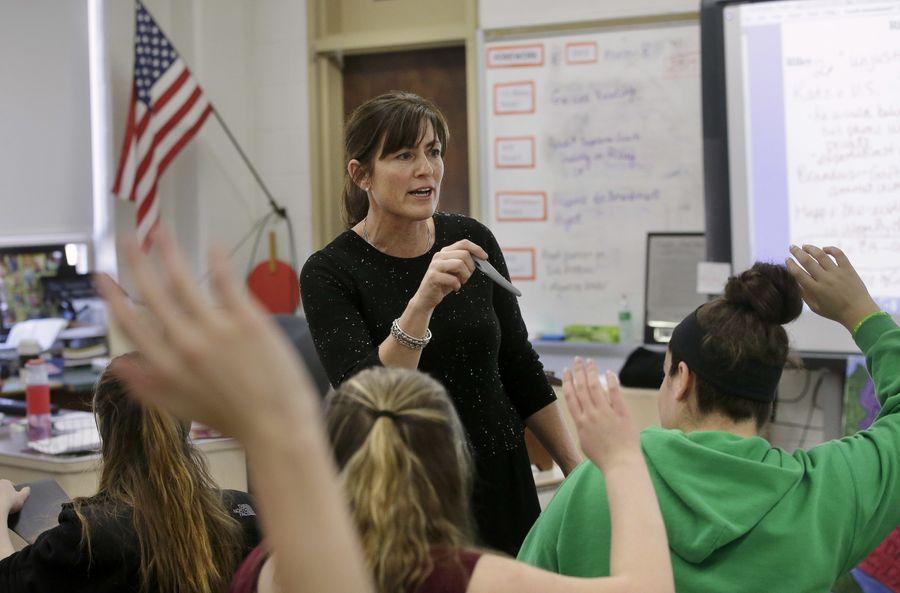
Teaching American Civics
Our Civics Teachers Are Afraid To Teach Civics
COMMENTARY
Published Sept. 9, 2025 • Read time: 4m
This fall, as millions of students return to school and America approaches its 250th birthday, something troubling is happening in classrooms across the country.
Our civics teachers are going silent.
A new report from the Sandra Day O’Connor Institute finds that nearly 80% of civics teachers say they have self-censored in the classroom out of worry that honest instruction could lead to professional or personal consequences. And 86% say that fear is one of the biggest challenges they face in doing their jobs.
Think about that. In the very subject that’s supposed to teach students how to engage in civil discourse – how to weigh arguments, navigate complexity, and speak across disagreement – we are leaving teachers afraid to even open their mouths.
This isn’t just about one state or region. The O’Connor Institute surveyed highly experienced civics educators across the country. The patterns were clear: Even the most committed civics teachers feel underprepared, under-supported, and increasingly unsure of what they’re allowed to say. Some described having to sidestep even core topics. Others said they eschew any discussion of current events. Many told us they have no real guidance on how to handle difficult questions.
These are the people we rely on to prepare the next generation of American citizens. And we’re failing them.
The problems start with preparation. Too many teacher training programs don’t require specific coursework in civics. Many civics teachers have never been taught how to lead a classroom discussion about the Constitution, or the Supreme Court, or civil rights. In one national study, nearly two-thirds of social studies teachers said they had received little or no professional development in how to teach civic content or handle politically sensitive conversations.
As Many as 1 Million Kids Will Have School Choice This Year
Hypocrisy Behind the Campus Renaming Craze
Can Our Colleges Be Saved?
Hillary's Federal Education Jackboot Squad
That means teachers are entering classrooms without the training they need to succeed.
But educators aren’t just underprepared in how to teach civics; they also often lack a strong foundation in civics content. In one study, civics teachers scored below 50% on a test of basic civic knowledge – things like the branches of government and constitutional rights. This isn’t a reflection of their intelligence or dedication. It’s a reflection of a system that stopped prioritizing civic education decades ago and has left a generation of teachers underprepared and exposed.
Then there’s the fear. In our survey, teachers described a chilling climate. One said, “I’m hyper-aware of how parents may respond to what students come home and say.” Another told us, “There are topics I feel I have to tiptoe around because they’ve become controversial.”
Relatively few schools or districts offer support. Most civics teachers told us they’ve received little or no guidance on what’s appropriate to teach. State standards are vague. Local policies are inconsistent. As a result, many teachers narrow their focus to overly safe, procedural topics while avoiding anything that could provoke contentious reactions.
This approach might reduce complaints. But it also reduces education.
It’s possible that students will leave these classrooms knowing how a bill becomes a law (though falling test scores in civics suggest otherwise), but they certainly won’t know how to talk to someone they disagree with. They might memorize dates and definitions yet never learn how to test ideas, ask hard questions, or forge compromise. Without a broader framework or sense of purpose, even the facts lose their meaning and are forgotten. Students are not learning how the American government actually functions, or what our society demands of them. In short, they’re not learning civics.
The O’Connor Institute was founded to carry on Justice Sandra Day O’Connor’s lifelong commitment to civic education, and our latest research not only identifies problems but also offers a path forward. We must strengthen teacher training. We must provide clear, content-rich civics standards. And we must support teachers when they responsibly do the hard but necessary work of guiding students through controversial civic terrain.
We don’t have time to waste. In less than a year, the United States will mark its 250th anniversary. If we want the next generation to understand, sustain, and improve this great country, then we need to give civics teachers the tools – and the trust – to teach their subject well.

Newsom Defies Voters, Juries and Lawmakers To Spare Murderers While Defending Abortion
Curtis Hill • RealClearPolitics
The Algorithmic Tilt
Frank Filingeri • RealClearPolitics
A RealClear Thanksgiving: Investing in a Better Future
David DesRosiers • RealClearPolitics
Trump’s Newsom Problem: Antagonist-in-Chief
Carolina Lumetta • RealClearPolitics
America’s Free Spirit
John Maxwell Hamilton • RealClearPolitics
The GOP Majority Should Go Out in Glory
Daniel McCarthy • RealClearPolitics
RCP Today
Top stories on RealClearPolitics
The Takeaway
Polling intelligence and analysis delivered to your inbox
World News
Featuring the latest world news
Policy
Featuring the latest policy news
Support Our Mission
As part of RealClearPolitics, authors aim to provide balanced, non-partisan analysis by presenting top reporting and commentary from all sides of the political spectrum.
Trusted by policymakers and citizens alike since 2000