
Race, Justice, and the Old-Fashioned Liberal Spirit
COMMENTARY
Published Dec. 12, 2021 • Read time: 7m
Join the Conversation
0The partisans going to the barricades on opposing sides of America’s gaping political divide are united in the conviction that the old-fashioned liberal spirit has outlived its usefulness. A system that is rotten to the core and requires a radical overhaul, say the rabble rousers on the left, precludes toleration, civility, and the disposition to consider the merits of contending perspectives. Meanwhile, the firebrands on the right respond that it’s pointless to speak of mutual respect and understanding in the face of those who insist that America is rotten to the core and requires a radical overhaul.
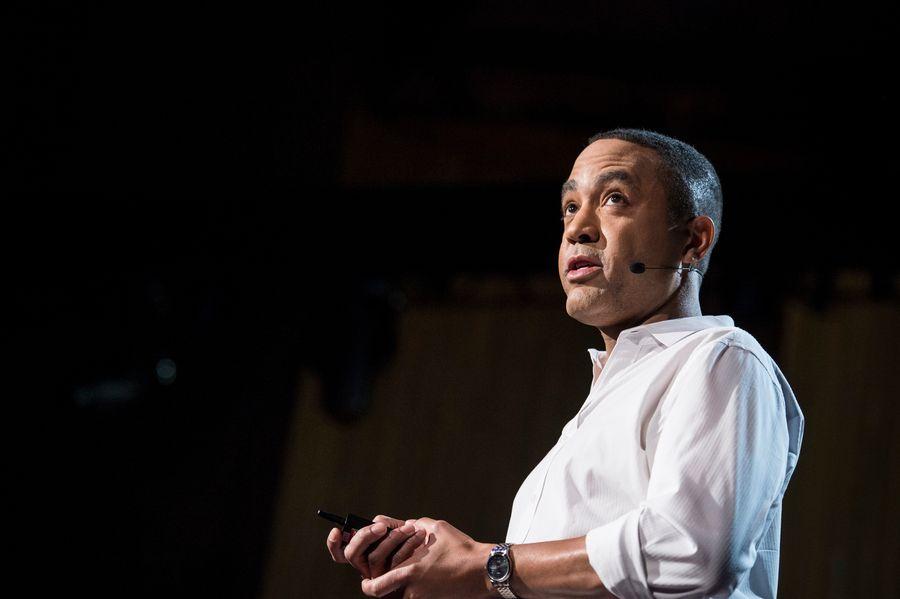
The scorn shared by belligerents on the left and right for the old-fashioned liberal spirit underscores the need to nurture it. John McWhorter leads the way in his new book, “Woke Racism: How a New Religion Has Betrayed Black America.” His hard-hitting critique of what he calls “Third Wave Antiracism” weaves together reasoned analysis, empirical evidence, common sense, and autobiographical reflection, and is set forth in engaging and colloquial prose. His underlying conviction is that dealing justly with issues of race depends on developing workable public policies within a framework that secures equal rights under the law. It’s a view, once championed across the political spectrum, that reflects a vote of confidence in the resilience of constitutional democracy in America.
A professor of linguistics at Columbia University, a New York Times columnist, and an accomplished podcaster (on linguistics and on race and justice with his "sparring partner” Glenn Loury), McWhorter draws on history and social science, keen observation of contemporary events, and his experience as a black American. He knows that, even as this country has come a long way in combating racism, the legacy of slavery and Jim Crow continues to burden African Americans. While stating “that I see myself as serving my race by writing” this book, he never uses his skin color to demand acquiescence to his thinking or to silence or vilify critics. Contrary to “antiracist” advocate Ibram X. Kendi, who tends to reduce critiques of his views to white supremacy, McWhorter stresses that the primary victims of the new antiracism’s demonization of those who disagree (and infantilization of those whom it mobilizes) are black people themselves.
Black and White, Left and Right
Liberals Exploit Race & Gender
Selma Snub vs. Eastwood Eclipse -- Who's the Victim of Discrimination?
The "NAACP Bombing" ... or The Barbershop Bang?
McWhorter explains that he was in part prompted to write the book to understand what kind of people shame and destroy others for utterances and actions that only a few years ago would have been seen as innocent infelicities of expression or perfectly legitimate contributions to the robust exchange of ideas in a free and democratic society. He provides no shortage of recent examples of woke vindictiveness: the New York Times food writer who in 2020 was set upon by a Twitter mob and chased from her job because she criticized two famous women— one half white and half Thai, the other a Japanese citizen — for commercialism; the University of Massachusetts-Lowell nursing school dean who was fired that year shortly after the killing of George Floyd because she wrote to colleagues and staff, “BLACK LIVES MATTER, but also, EVERYONE’S LIFE MATTERS”; and the progressive consulting-firm analyst, also fired in the aftermath of the killing of George Floyd, for mentioning in a tweet a scholarly paper demonstrating that protests for racial justice that involve incidents of violence — as opposed to protests that remain peaceful — drive voters to the Republican Party.
It wasn’t always like this. “First Wave Antiracism battled slavey and legalized segregation,” according to McWhorter. “Second Wave Antiracism, in the 1970s and ’80s, battled racist attitudes and taught America that being racist is a moral flaw.” Both were consistent with, indeed compelled by, the nation’s founding principles.
However, the third wave, the one through which we are living, attacks those founding principles while condemning America’s core institutions and public culture: “Third Wave Antiracism,” writes McWhorter, “becoming mainstream in the 2010s, teaches that because racism is baked into the structure of society, whites’ ‘complicity’ in living within it constitutes racism itself, while for black people, grappling with the racism surrounding them is the totality of experience and must condition exquisite sensitivity toward them, including a suspension of standards of achievement and conduct.”
McWhorter elaborates common-sense reasons for regarding Third Wave Antiracism as itself a debilitating form of racism. It bases the allocation of benefits and burdens on skin color. It demeans black people by insisting that they see themselves as weak and wounded, lacking agency, and unable to compete with white people. It buys off white people by satisfying them with virtue signaling through the shaming and ostracism of those who deviate from the rigid ideological strictures it propounds. And it distracts everyone from feasible political reforms that would improve the lives of the most vulnerable black Americans.
It cannot be because of the coherence of its tenets that the new antiracism has attracted a huge following at universities, in the media, among corporations, and throughout the government bureaucracy. After all, as McWhorter argues, the doctrine is fraught with contradictions. For example, Third Wave Antiracism teaches that one must not speak of “black culture” because each black person is a distinct individual while insisting that black people must not be expected to adopt “white” social norms since black people have their own culture. It demands that white people strive to understand black people even as it labels white people who think they understand the black experience as racist. And it proclaims that black people cannot be held accountable for the actions of black individuals even as it holds all white people responsible for the evil of “whiteness.”
To make sense of the harms that it inflicts and the inconsistencies with which it is riddled, maintains McWhorter, the “extremist version of antiracism today” must be understood as a new religion. He calls its members “the Elect.” Kendi, Robin DiAngelo, and Ta-Nehisi Coates are among its most eminent clergy. Their writings and workshops are delivered and received more as sermons than as arguments subject to empirical study and logical analysis. Their tone is evangelical. They and their parishioners traffic in conversion and demand confession. They enforce taboos, convene star chambers, punish blasphemies, and ban heretics.
It would have been better if McWhorter had characterized “the Elect” as religious fanatics because it is a mistake to equate religion with the intolerant, the irrational, and the cruel. Nevertheless, his perceptive exploration of Third Wave Antiracism’s zealotry persuades him that “the Elect” cannot be reasoned with. They can, though, be worked around.
“What ails black America in the twenty-first century,” writes McWhorter, “would yield considerably to exactly three real-world efforts that combine political feasibility with effectiveness.” First, the United States should end the war on drugs, which has created a thriving illicit market that draws inner-city black youth into a life of crime, increases their encounters with police, and, for those who land in jail, drastically diminishes their prospects.
Second, black children in low-income areas growing up in homes that give relatively less attention to books should be taught to read through phonics — sounding out letters and memorizing exceptions. “Since the 1960s,” reports McWhorter, “phonics has been unanimously demonstrated to be more effective at teaching poor kids to read.”
Third, we must reject the idea popularized by American elites that a four-year college degree is essential to “being a legitimate American.” Instead, opinion shapers and policy makers need to learn to appreciate that solid-paying working-class jobs like welding, plumbing, and carpentry — often obtainable with not more than two years at a vocational institution — form pillars of well-lived lives and in particular give people who grew up poor the opportunity to improve their condition.
To advance these salutary political reforms, McWhorter warns, we must stand up to the new antiracism’s “ideological reign of terror.” He asks us to summon the courage to show respect to all individuals, whatever their race, by calling out incoherence, historical falsification, and authoritarian conduct wherever we find them and whatever their source.
That is another way of saying that the struggle for racial justice in America depends on the rejuvenation of the old-fashioned liberal spirit.

The GOP Majority Should Go Out in Glory
Daniel McCarthy • RealClearPolitics
Republican Majorities Could Return Sooner Than Expected
J.T. Young • RealClearPolitics
The Danger Before the Attack
Leslie J. Sullivan • RealClearPolitics
Jon Finer’s Old and Dangerous ‘New Approach’ to Israel
Peter Berkowitz • RealClearPolitics
The President Deserves Better
John Ullyot • RealClearPolitics
Congress Doesn’t Need Another Blame Game. It Needs To Find What’s Broken
Jarrod Bernstein • RealClearPolitics
RCP Today
Top stories on RealClearPolitics
The Takeaway
Polling intelligence and analysis delivered to your inbox
World News
Featuring the latest world news
Policy
Featuring the latest policy news
Support Our Mission
As part of RealClearPolitics, authors aim to provide balanced, non-partisan analysis by presenting top reporting and commentary from all sides of the political spectrum.
Trusted by policymakers and citizens alike since 2000