
Shooters, Cops, and Skewed Racial Narratives
Published Dec. 3, 2015 • Read time: 8m
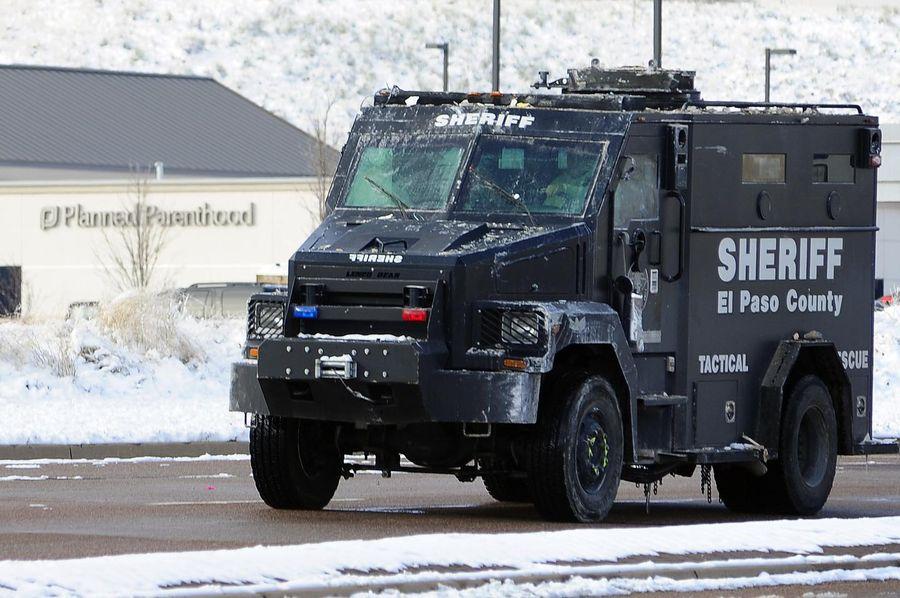
After Friday’s shootings at a Colorado Planned Parenthood clinic, passions over the attack were further inflamed by assertions that the alleged gunman, 57-year-old Robert Lewis Dear, was alive thanks to white privilege. “The #PlannedParenthood shooter is peacefully detained after shooting 5 officers. We've been killed for far less,” tweeted Black Lives Matter activist Deray McKesson. This was echoed by many other Twitter users, with some also asking why domestic “white terrorism” was not being trumpeted as much as the radical Islamic kind. Similar questions were raised last June about the treatment of Dylan Roof after the massacre that took nine lives in a black church in Charleston, S.C.
The media have picked up the issue as well. “Did ‘whiteness’ save the life of the alleged Planned Parenthood shooter?” asked The Washington Post in a survey of the Twitter reactions. New York magazine ran a long piece by Rebecca Traister, headlined “Why Do We Humanize White Guys Who Kill People?,” examining not only humane police treatment of white killers but the media’s tendency to portray them as three-dimensional, complex and even somewhat sympathetic individuals.
Valid concerns—or racial demagoguery? Or is the answer, as with many complex social issues, not quite that simple?
It’s an obvious temptation to contrast Dear’s peaceful surrender and the fatal police shootings of Tamir Rice, the 12-year-old black boy killed while holding a toy gun, or John Crawford III, the 22-year-old killed inside a Wal-Mart while carrying an air rifle he had picked up from a shelf. But these are cases with vastly different circumstances that cannot be reduced to race. Using the same logic, one could easily find a pair of cases in which the black suspect fared far better: for instance, Beltway snipers John Allen Muhammad and Lee Boyd Malvo, both black and taken alive after killing 17 people (and wounding 10 others) in 2002, vs. Zachary Hammond, a white teen fatally shot by the police in South Carolina last summer during a drug arrest that netted a small amount of marijuana.
There are other examples. Only last month, 32-year-old Joseph “Moe” Allen, a black man and a suspect in a shooting that left 17 wounded in a New Orleans park, surrendered peacefully to the police. In the same month in Louisiana, a 6-year-old white boy, Jeremy Mardis, died when two police officers fired repeatedly at a car driven by his father, Christopher Few, whose apparent offense was a loud argument with his girlfriend outside a bar. Granted, the two officers in that case (both black) were quickly charged with murder. But it’s hardly uncommon for police offers to walk after killing an unarmed white person. Just recently, Pennsylvania policewoman Lisa Mearkle was acquitted in the fatal shooting of an unarmed 59-year-old white man, David Kassick, after a routine traffic stop. In Salt Lake City last year, Officer Bron Cruz was cleared by prosecutors after he shot and killed 20-year-old white man Dillon Taylor, who police mistakenly believed had a gun.
Overall, data show that almost 32 percent of Americans fatally shot by police are black; as Harvard economist Sendhil Mullainathan wrote in the New York Times recently, this is vastly disproportionate to the share of African-Americans in the population but fairly close to the demographics of arrests and of crime (30 percent of reported offenders are black). Mullainathan concludes that, while racial bias is among the factors that drive the imbalances in criminal offending, police prejudice is responsible for at most a fraction of the race gap in police killings.
However, blogger and public policy analyst Howard Frant points out that 30 percent of blacks killed by police in the first five months of 2015 were unarmed, compared to 16 percent of whites. Frant believes this suggests racism: “It needn't mean that the police hate blacks; it could mean they’re more likely to perceive blacks as threatening.” In the New York article, Traister cites research showing that both police officers and college students tend to see black boys over the age of 10 as older and less innocent than white or Latino boys of a similar age.
The uncomfortable truth is that such stereotyping is based not only on prejudice but on the reality that blacks, especially young black males, are more likely to commit crimes. (Males of all races are also stereotyped as more dangerous than females.) It is equally true that such stereotyping creates a vicious cycle of prejudice, racial disadvantage, and resentment—a problem that defies easy remedies. Less aggressive law enforcement could reduce police harassment but also leave black neighborhoods more vulnerable to crime. It is useful to remember that the tough anti-crime, anti-drug measures that are now widely viewed as racist were once strongly advocated by black political leaders.
None of this is to deny that there are cops who actually do hate blacks. Just this week, shocking documents were released showing that about a dozen Alabama policemen in the 1990s belonged to a white supremacist group and systematically planted drugs and weapons on black men (and that local authorities covered up the matter).
Even aside from such blatant racism, there is strong evidence that police culture in many departments effectively condones abuse, with minorities often bearing the brunt of it. This is a matter of urgent concern. John McWhorter, a writer highly critical of the “white privilege” narrative, argues that negative interactions between the black community and the police are a principal source of racial tension today.
But this does not justify the simplistic and polarizing narrative offered by McKesson and Traister, especially since this narrative often relies on outright distortion of facts.
Thus, Traister notes that the New York Times story on Dear initially called him a “gentle loner who occasionally unleashed violence”—while Michael Brown, the black teenager killed in last year’s police shooting in Ferguson, Missouri, was described in the same paper as “no angel.” To Traister, this is a stark example of a white killer being viewed more sympathetically than a black victim.
Yet the Times story on Brown, which discussed “both problems and promise in his young life,” also had positive passages: “[H]e regularly flashed a broad smile that endeared those around him. He overcame early struggles in school to graduate on time. He was pointed toward a trade college and a career and, his parents hoped, toward a successful life.” (“No angel” was a reference to the article’s opening paragraph, which described Brown calling his father to tell him that he had seen an angel in the clouds.) Meanwhile, a headline in The St. Louis Post-Dispatch famously referred to Brown as a “gentle giant.”
Traister also ignores instances in which black killers, too, are “humanized” by the media. Malvo was the subject of a fairly sympathetic Washington Post profile on the 10th anniversary of the Beltway sniper shootings. Charles Lee Thornton, a black business owner who went on a shooting rampage at a city council meeting in a St. Louis suburb in 2008 and killed five people before dying in a shootout with police, was the subject of a Post-Dispatch story titled “Charles Lee 'Cookie' Thornton: Behind the smile.” The New York Times quoted a state representative who described Thornton as “such a friendly guy.” All the press reports chronicled Thornton’s frustration at what he saw as race-based injustices by local authorities.
Traister’s bias becomes especially glaring when she suggests that white male killers benefit not only from their race but from their gender, since our society is concerned only with “the humanity of white men.” Yet white female victims of violence attract well-known disproportionate attention from the media, and the criminal justice system tends to be especially harsh on violent offenders if their victims are female. And female offenders, especially if they are white, tend to benefit both from media sympathy and from judicial leniency.
Moreover, while Traister’s article opens with a discussion of racial bias in police treatment of black and white suspects and then shifts from racism to sexism, she forgets to mention an inconvenient fact: When it comes to police violence, the only gender bias is in women’s favor. Women account for 26 percent of all arrests and 20 percent of violent crime arrests in the United States—but they make up only 5 percent of Americans killed by police.
Police reform is a critical issue with no easy solutions. But, for starters, we should take this issue back from the wannabe revolutionaries who would hijack it for their struggle against the “white supremacist capitalist patriarchy.” Then, we can start the conversation we need.


RCP Today
Top stories on RealClearPolitics
The Takeaway
Polling intelligence and analysis delivered to your inbox
World News
Featuring the latest world news
Policy
Featuring the latest policy news
Support Our Mission
As part of RealClearPolitics, authors aim to provide balanced, non-partisan analysis by presenting top reporting and commentary from all sides of the political spectrum.
Trusted by policymakers and citizens alike since 2000