
Philadelphia Reflects Big Cities' Public-Safety Challenges
Published July 1, 2021 • Read time: 6m
In mid-1980s Philadelphia, the erection of One Liberty Place, which broke a long-standing “gentleman’s agreement” by surpassing City Hall’s height, ushered in widespread downtown development. At the time, though, Center City’s rising new skyscrapers opened in a metropolis facing significant headwinds. When commuters ascended elevators and then looked out their office windows, they beheld a vast, row-home-lined landscape beset by rising crime, a crack epidemic, population loss, and economic decline.
Now, amid the pandemic recovery, Philadelphia again confronts daunting challenges that leave Center City in an urban purgatory. Many downtown skyscrapers – emblematic of a years-long renaissance – remain sparsely occupied, leading to fewer pedestrians on city streets. As one recent survey found, among a sample of 18 office high-rises, “one building was 75% occupied, another was occupied in the 30% to 40% range, five were from 20% to 30% occupied, and 11 were below 20%.” Philadelphia’s plummeting transit ridership and tax revenue reflect this trend.
This past year’s pandemic restrictions hastened employers’ embrace of remote work. But another COVID-era trend – rising crime – is delaying suburban commuters’ return to big cities like Philadelphia, which is included in the Biden administration’s plan to address urban violence.
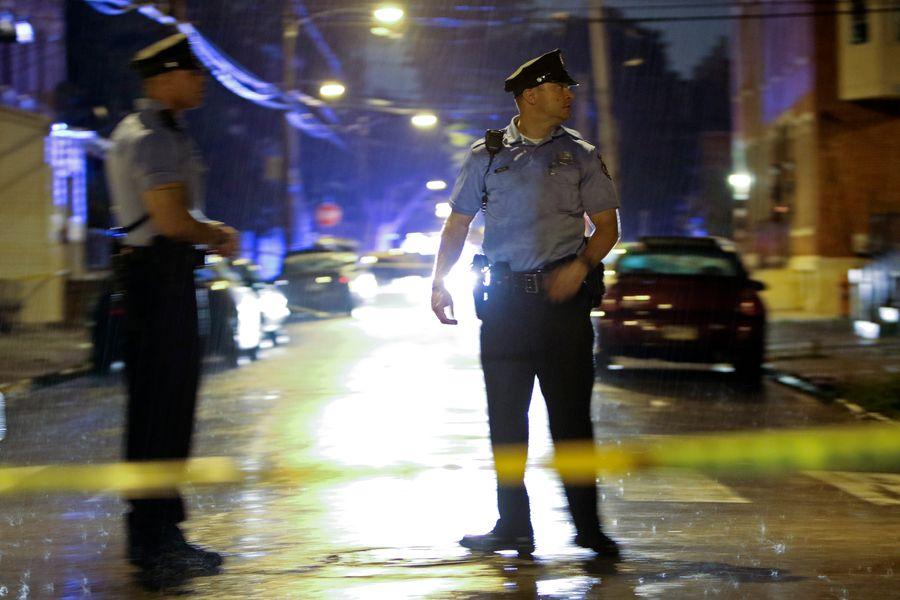
Commuters’ public-safety concerns aren’t just an issue of perception. Philadelphia faces a record homicide rate that is quite real. In Chicago, residents of the Loop are advised to avoid walking alone. Random shootings regularly occur in New York’s Times Square, where a 21-year-old U.S. Marine was shot in the back while standing outside Starbucks. In these cities, regional commuters read the news, hear the anecdotes, and, in many cases, recall the “bad old days” of the ’80s and early ’90s. In their view, why not skip an arduous commute, plug in at home, and eliminate the vulnerability?
Donald Trump's Useful Idiots
The Campus Affluenza Epidemic
Are Today's Millennials a New Victorian Generation?
A New Voice for Sexual Assault Victims in Uniform
Some level of street crime is an inescapable reality in big cities, but pre-pandemic, office workers were better conditioned to traverse busy urban streets, including in the downtown area. “When you’ve been home for over a year, you haven’t been in the city, and you hear these stories about crime and there’s a lot fewer people if you go into the city, your confidence … in navigating that landscape is lower,” Aaron Renn, a Governing columnist, told me. “The fact that people who previously worked downtown no longer feel like they have a direct mastery” of Philadelphia means “that anxiety will keep [them] from going into the city.”
But other factors are at play, too. Philadelphia’s uptick in crime and disorder is exacerbated by law-enforcement policies – emanating from the district attorney’s office – that embolden criminals. This past weekend alone, about two dozen people were shot and three died. As the Philadelphia Inquirer recently reported, “If the current pace holds, the city will record more shooting victims by early August than it did in all of 2017.”
Alarming trends apply to Center City, where illegal ATVs and dirt bikes disrupt neighborhood life, and in the city’s SEPTA transit trains, where one man was recently shot on the Market-Frankford line. In an interview, John MacDonald, a University of Pennsylvania criminologist, shared that he has observed more panhandling on his SEPTA commute – an uncommon site a few years before. “People aren’t looking [only] at the crime stats,” MacDonald said. “It’s the perception: When there’s more disorder apparent, such as panhandling in and around [transit] stations, it drives fear for people.”
Paul Levy, president and CEO of the Center City District, had told his staff “it’s 1990 all over again.” “Americans have a long history of being fearful of cities, and in the last 20 to 30 years we really changed that and all of that disappeared for a period of time,” he told me. “We need to be rebuilding public confidence in the public environment – and that’s key for cities in general.”
In 1991, when Levy became the founding head of CCD – a highly-regarded business improvement district – commuters maintained a dim view of Center City, where crime spiked in the late 1980s. At the time, the Inquirer reported how Philadelphians cited “the stigma of Center City” – even as downtown crime, by then, started to decline and skyscrapers continued to rise above City Hall’s William Penn statue. As one police officer observed, “I tell people, ‘Crime is down’ and they say, ‘That’s great, but my car just got stolen.”
As CCD’s director, Levy played a pivotal role in Center City’s ’90s-era revival. “First, Levy made Center City clean. Then he made Center City safe. From there, he remade Center City itself,” wrote Patrick Kerkstra in a 2013 Philadelphia magazine profile. “With apologies to Ed Rendell [the city’s then-mayor], no Philadelphian is more responsible than Levy for transforming downtown from the hellhole of the 1980s to the archetype of intimate, walkable urbanity it’s become.”
Quality-of-life policing, too, was crucial to Philadelphia’s resurgence – and improved commuters’ safety perceptions. This law-enforcement approach was evident as recent as 2012, when then-Mayor Michael Nutter said: “We combined a zero-tolerance attitude toward those who terrorize our neighborhoods with a community policing approach that built trust and a sense of partnership between citizens and the men and women whose job it is to protect us.”
But progressive governance now reigns in Philadelphia, where incumbent District Attorney Larry Krasner overwhelmingly won reelection last month. Meanwhile, the Inquirer recently reported that beginning this August in Northwest Philadelphia – thanks to a federal judge’s order – “police officers will no longer be permitted to stop, question or detain people for ‘quality of life’ violations, potentially including panhandling, smoking marijuana, urinating in public, or holding open liquor containers.” The policy move was opposed by Philadelphia’s police department, where many officers are retiring due to low morale.
Ideologically driven law-enforcement polices only signal challenges ahead for Center City, where remote working will create long-term disruptions. As Renn put it, when discussing office workers, “If even 5 or 10% don’t come back, that’s a big deal.”
Levy remains optimistic about the future of downtown, where the CCD’s wide-ranging work includes bike patrols and graffiti removal teams. “We have a lot of work to do but … we’ve done it once before here,” he said. Meanwhile, amid widespread vacant office space, landlords aim to attract life-sciences companies to downtown.
Overall, similar to the early 1990s, Center City’s future is largely dependent on Philadelphia’s public safety. As MacDonald noted, “What makes downtowns and commercial districts really attractive to people … isn’t the office building they’re sitting in, but the social vibrancy to be able to go out on the street, go to lunch with colleagues, and take in the hustle and bustle of street life.”
But, he added, “when there is abandonment and disorder, that’s not the place to go anymore.”
In the coming year, the issues of crime and public safety will figure largely in Pennsylvania politics – especially in the governor’s race. In last year’s election, suburbanites delivered the state to Biden, but this didn’t assure widespread down-ballot success for Democrats in Philadelphia’s collar counties. For now, as Krasner’s victory made clear, Philadelphia’s Democratic voters favor progressive policies. Their preference, though, may not be shared by the suburbs’ more moderate voters – many of whom may avoid the city commute for fear of Philadelphia’s safety.

The GOP Majority Should Go Out in Glory
Daniel McCarthy • RealClearPolitics
Republican Majorities Could Return Sooner Than Expected
J.T. Young • RealClearPolitics
The Danger Before the Attack
Leslie J. Sullivan • RealClearPolitics
Jon Finer’s Old and Dangerous ‘New Approach’ to Israel
Peter Berkowitz • RealClearPolitics
The President Deserves Better
John Ullyot • RealClearPolitics
Congress Doesn’t Need Another Blame Game. It Needs To Find What’s Broken
Jarrod Bernstein • RealClearPolitics
RCP Today
Top stories on RealClearPolitics
The Takeaway
Polling intelligence and analysis delivered to your inbox
World News
Featuring the latest world news
Policy
Featuring the latest policy news
Support Our Mission
As part of RealClearPolitics, authors aim to provide balanced, non-partisan analysis by presenting top reporting and commentary from all sides of the political spectrum.
Trusted by policymakers and citizens alike since 2000