
Reps. Peter King & Keith Ellison Debate Monitoring The Muslim Community
Published April 28, 2013
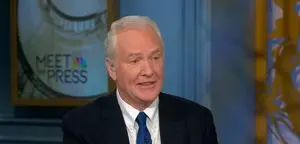
Reps. Peter King and Keith Ellison address recent threats made against the United States and the administration’s handling of such incidents.
DAVID GREGORY: Well, let's talk about the surveillance within the Muslim community. I mean, that's partly what you were talking about this week, Congressman King. You said this to The National Review, and this is how they reported it, quoting you: "Police have to be in the community. They have to build up as many sources as they can. And they have to realize that the threat is coming from the Muslim community, and increase surveillance there. We can't be bound by political correctness."
REP. PETER KING (R-NY): Absolutely. What the N.Y.P.D. is doing in New York with a thousand police officers focusing on this issue, knowing where the threat is coming from. Now, most Muslims are outstanding people, but the threat is coming from the Muslim community.
Just yesterday, Tom Friedman, who is certainly no conservative, said, "We must ask a question only Muslims can answer: What is going on in your community that a critical number of your youth believe that every American military action in the Middle East justifies a violent response?" It's coming from the community.
And in previous times, when certain elements in a community are the ones responsible for crime, the police focus on it. For instance, in Boston, the F.B.I. never spoke to the Boston police about the older brother. And afterwards, there were no intelligence files in Boston on these type of people, these people inclined to terrorism. The F.B.I. never even got to examining him.
DAVID GREGORY: Congressman, you're a Muslim. This concerns you on civil libertarian grounds and other areas.
REP. KEITH ELLISON (D-MN): Well, I'm an American, and I'm concerned about national safety, public safety, just like everyone is. But I think it's ineffective law enforcement to go after a particular community. I think what we need to do is look at behavior and follow those leads where they would lead.
So, like, if Tamerlan Tsarnaev is evidencing dangerous behavior, by all means, go after him. But once you start saying, "We're going to dragnet or surveil a community," what you do is you ignore dangerous threats that are not in that community and you go after people who don't have anything to do with it.
And so let me just finish up with this one point. And so this ricin attack, for example, that's an act of terrorism that doesn't come out of the Muslim community. We don't have enough law enforcement resources to just go after one community. And remember, we went after a community in World War II, and the Japanese internment is a national stain on our country, and we are still apologizing for it.
Latest Videos

In The News
Raskin Questions Trump, Lutnick, Cantor Fitzgerald, Nvidia Ties: "Megacorporate State"
CNBC
Sen. Elizabeth Warren: Jensen Huang’s Return Makes Investigating Him Even More Urgent
CNN
Trump on Jensen Huang: "Sex Sells, Fellas" — "We Want Him on Our Side"
CNBC
MIT's Max Tegmark: AI "Alignment" Means "The Machine God Will Be Nice"
World News
Jeffries: "Imagine How Angry People Will Be If We Fail"
Face the Nation
Zelensky: Putin Needs To Understand Crimean Bridge "Will Not Stay"
World News0:27
Most Watched
Hemingway: Dems Are Being Transparent About Plans For "Political Payback" Against Trump Allies
FOX News Channel
Obama to Jeffries: "You've Got To Figure Out How To Actually Get Sh*t Done With Your Colleagues"
White House
Rubio: The Idea That The U.S., Russia, & China Should Not Engage Is Absurd
White House
Victor Davis Hanson: Mysteriously, Gas Prices See Largest Drop In 18 Years Right After Midterms
Podcasts
David Brooks: China-U.S. Power Shift Mirrors Germany-Britain Dynamic Before World War I
PBS NewsHour
Rahm Emanuel: Democratic Voters Aren't Socialists, They're Angry
Bloomberg Politics