
David Brooks: Taylor's Testimony Was "The Smoking Gun," "Seals The Deal"
Published Oct. 26, 2019
PBS NEWSHOUR: Syndicated columnist Mark Shields and New York Times columnist David Brooks join Judy Woodruff to discuss the latest political news, including trends around the federal judges President Trump is appointing, the Department of Justice’s criminal probe of the Russia investigation, how the impeachment inquiry is evolving and campaign anxiety regarding 2020 Democratic candidates.
JUDY WOODRUFF, PBS NEWSHOUR HOST: In this week alone, the top U.S. diplomat for Ukraine told Congress that the president withheld military aid for personal political gain; Republican Congress members stormed a secure room at the Capitol, where many already had access, to dispute the impeachment process, but not the substance; and we have learned that the Department of Justice is investigating its own FBI for looking into Russia's interference in the 2016 election.
Amidst all this, the White House announced that the president has ordered the cancellation of all federal government subscriptions to The New York Times and The Washington Post.
That makes it a perfect moment to hear the analysis of Shields and Brooks.
(LAUGHTER)
That is syndicated columnist Mark Shields and New York Times columnist David Brooks.
So, David, no subscriptions to the White House from your newspaper.
DAVID BROOKS, NEW YORK TIMES: This explains why I have been getting no invites…
WOODRUFF: But you will soldier on.
But let's pick up first with Lisa's reporting on these federal judges that Trump has been able to nominate and get successfully confirmed, more judges than any of his predecessors.
What's the real significance of this?
BROOKS: Well, when you talk to conservative voters why they support Trump, that's the number one answer, the courts.
And so he's having an effect. He's nominating conventional Republican Federalist Society judges. They're not populists. I'm not sure I see the — quite the same transformation on the circuit court level, the level just under the Supreme Court.
Of the 13 appellate courts, only one may flip. So you have got Democratic seats staying — Democratic districts staying Democratic, Republicans getting a little redder. But you haven't seen a transformation from a more liberal court to a more conservative court.
And his impact on future on nominations may go down because Democratic judges are not retiring. They're waiting and hoping there's a Democrat. So they're — it's expected there will be relatively fewer openings over the next couple years than there were the previous...
WOODRUFF: Well, we know it flies under the radar, and that's why we thought it was so important to take a look at it. We are grateful for Lisa's reporting.
Impeachment.
David, there was virtually a development every day about that. We just learned today that a federal judge has said that the impeachment inquiry in the House, in his view, is legal. And that means that the Department of Justice is going to have to turn over grand jury material from the Mueller investigation.
But this follows a week of testimony behind closed doors, some of it, though, made public, by one public servant or diplomatic figure after another, including especially William Taylor, who served as the ambassador to Ukraine.
What is it adding up to at this point?
BROOKS: Yes.
When we first learned about the phone call, you could say, well, it was just Trump being Trump, a reckless phone call, and he was sort of elbowing the guy.
Now that's not the case. I think we have learned this was a three-month coordinated campaign, with a whole series of meetings, a lot of people involved, to try to get Ukraine to help Trump's reelection bid.
And so the Taylor testimony in particular was detailed, methodical. It was the smoking gun. It was clear quid pro quo, an order coming from the president hold up aid, unless Ukraine did this.
And so that seals the deal, I think. And I think Republicans — at least the Republican establishment — has to feel just beaten. And the question is, how do they find a way to stick with him?
But I think the Republican mood was, wow, this is bad. Wow, this is bad.
And so I think the key thing is to look for sort of an emotional crumbling, where they just say, we have to — we have — we can't sit by along this. I don't think we're at that place, but it was certainly a week that affected how Republican senators see this guy...
WOODRUFF: But, as we see, David, the White House continues to say — and the president is raging about this. We heard it again today.
He's saying, these people have no credibility. And he was saying yesterday they're part of the so-called deep state. And using a lot worse language than that.
BROOKS: Yes.
And, so far, that's holding. Impeachment is popular in the country, but it's very popular on the coastal parts of the country. Amy Walter pointed out this week that, in the swing states, its favorability rating is 10 points lower than unfavorable. People are against impeachment. In Wisconsin, it's minus seven.
And so for Democrats to think that they can swing Republican senators, they have to get those swing states, and they have to sell the message. And, so far, they have secret hearings, which I understand you don't learn anything in a public hearing. They have to learn what happened. And so you have to get away from TV cameras for that.
But, eventually, they're going to have to turn to public hearings in order to try to persuade the country. And whether they can do that in a month or two, whenever that happens, that, we will see...
BROOKS: It's — you have to — having thoroughly politicized the State Department, you have to go on the presumption Trump is trying to politicize the Department of Justice, and you have to go in prejudging against that.
The one mitigating factor is the guy they selected to do the investigation, this guy John Durham, who has been appointed by both parties, who has done — who has a sterling reputation. So at least we can rest, I think, in trust with him.
And that's — that's really — this goes to what Mark was saying. The whole question for the last two years, would our institutions hold? And I would say, given the testimonies of the last week and whatever Durham does, I think the institutions are sort of holding.
And the result is this impeachment, a guy who — president who doesn't go by any institutional logic, doesn't obey institutional rules, and yet the institutions are sort of standing up for those rules.
Latest Videos





In The News
Shapiro: Trump Is Disconnected From The American People, He Thinks He's Done Everything Beautifully
Ben Shapiro
Raskin Questions Trump, Lutnick, Cantor Fitzgerald, Nvidia Ties: "Megacorporate State"
CNBC
Sen. Elizabeth Warren: Jensen Huang’s Return Makes Investigating Him Even More Urgent
CNN
Trump on Jensen Huang: "Sex Sells, Fellas" — "We Want Him on Our Side"
CNBC
MIT's Max Tegmark: AI "Alignment" Means "The Machine God Will Be Nice"
World News
Jeffries: "Imagine How Angry People Will Be If We Fail"
Face the Nation
Most Watched
Hemingway: Dems Are Being Transparent About Plans For "Political Payback" Against Trump Allies
FOX News Channel
Obama to Jeffries: "You've Got To Figure Out How To Actually Get Sh*t Done With Your Colleagues"
White House
Rubio: The Idea That The U.S., Russia, & China Should Not Engage Is Absurd
White House
Victor Davis Hanson: Mysteriously, Gas Prices See Largest Drop In 18 Years Right After Midterms
Podcasts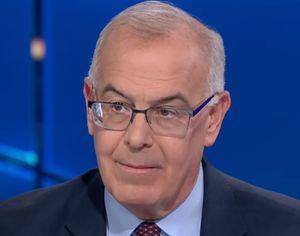
David Brooks: China-U.S. Power Shift Mirrors Germany-Britain Dynamic Before World War I
PBS NewsHour
Rahm Emanuel: Democratic Voters Aren't Socialists, They're Angry
Bloomberg Politics