Electoral College Protests
Gaming the Electoral College ... After the Election
COMMENTARY
Published Aug. 3, 2021 • Read time: 5m
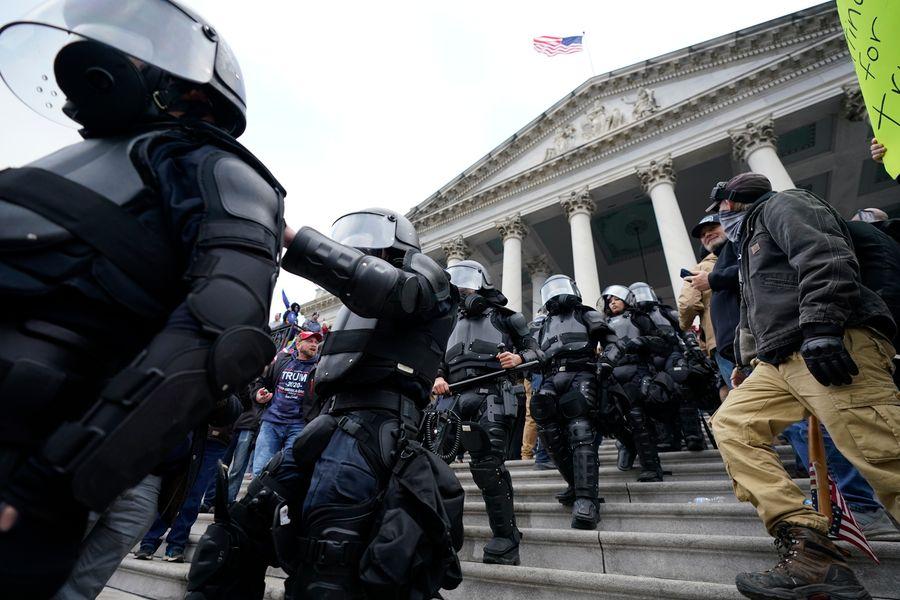
A House of Representatives select committee recently began its inquiry into events surrounding the Jan. 6 insurrection at the U.S. Capitol. The heart of this investigation concerns the “Stop the Steal” rally held that day. Rally organizers contended that the November election was rife with fraud, and that members of Congress could challenge Electoral College votes from key states in the hope that Donald Trump would emerge from the joint session of Congress victorious.
On that day, Trump proclaimed: “All of us here today do not want to see our election victory stolen by emboldened radical-left Democrats, which is what they’re doing. ... We will never give up, we will never concede. It doesn’t happen. You don’t concede when there’s theft involved.” He went on to say: “All Vice President Pence has to do is send it back to the states to recertify and we become president and you are the happiest people.”
Historically, the joint session of Congress has largely been ceremonial, with few challenges to electoral votes over the years. Though Republican members of the House and Senate indicated they would object to electoral votes, there was virtually no likelihood of their success. A month earlier, I predicted that we would probably see objections on Jan. 6, and that they would ultimately be unsuccessful due to the composition of the House and Senate. My article was aptly titled “Mike Pence is going to put the seal on Donald Trump’s defeat.” Indeed, moments before the joint session, Pence released a letter indicating that he had no authority to discount votes by himself.
McCain to Code Pink Protestors: Get Out of Here You Low Life Scum
AG Nominee Lynch Deflects Cruz Missile
Senate to Begin Hearings on Obama Attorney General Nominee
Democrats, Republicans Spar Over Benghazi Investigation
By the end of the day, however, the Capitol would be breached, the counting of electoral votes would be suspended, four people would die, there would be millions of dollars in damage, and ultimately not a single electoral vote would be discarded. The consequences of the campaign to change the Electoral College results were extraordinary – yet this was not the first time that the losers sought to undo the results of the November election.
The Electoral College process is a complicated one, and it provides many opportunities for chicanery in the days and weeks after the election. In fact, stealthy campaigns have become somewhat commonplace in recent history, enabled by the Electoral College process itself.
For years, I have warned about surreptitious efforts to alter outcomes through appeals to presidential electors. Recall that on Election Day, citizens vote for slates of electors who are expected to support their party’s ticket. Electors meet approximately six weeks after the general election to cast their votes. They are typically loyal partisans and rarely stray from their party’s ticket; on occasion, though, they do, and even more consider doing so. Despite the Supreme Court’s ruling in Chiafalo v. Washington, most states have no recourse to prevent so-called faithless electors.
I have discovered consistent campaigns to lobby electors to change their votes after the general election and have found that a significant number of electors have thought about going rogue. These campaigns have occurred in each election I have studied dating back to 2000. The 2016 election is particularly notable, as one in five Republican electors gave some thought to voting for someone other than Donald Trump. Ten electors attempted to go rogue, and eight were ultimately successful, including two Republicans. The 2016 faithless-elector effort was very public and even had a name: the Hamilton Elector movement.
The 2020 interregnum period represented a different type of campaign. Rather than trying to influence electors, a concerted effort was made to appeal to state legislators and state election officials to intervene in favor of the Trump-Pence ticket. In short, the post-election campaign sought to have state legislatures choose their own electors.
Two days after Nov. 3, talk show host Mark Levin floated the idea that state legislatures were empowered to choose presidential electors, giving them the right to choose electors irrespective of the general election results. State legislators in Pennsylvania, Michigan, Wisconsin, Arizona, and Georgia were repeatedly asked whether they would consider selecting electors other than those chosen on Election Day. Almost all indicated that the gambit was not under consideration. In the days leading up the Electoral College vote, Trump invited leaders from several state legislatures to the White House in what was viewed as an effort to get them to consider selecting alternate electors.
The Constitution does give state legislatures the power to determine how electors are chosen – and every state (and the District of Columbia as well) has decided to allow voters to directly select their electors. The last state to have its state legislature choose its electors was Colorado in 1876, just after it attained statehood. Ultimately, no state legislature chose its own electors for the 2020 election. But it’s clear that some legislators entertained the idea, and the notion has caught on as a longshot possibility for 2024.
For instance, Oklahoma’s state legislature brought forth a statute that would give it the ability to select electors unless a federal law is put in place to require voter identification. Similarly, Arizona introduced a bill that would give the state legislature the authority to revoke the certification of its electors and choose its own electors up until the inauguration of the next president. Recent data suggest that nearly half of Republicans might support these sorts of changes.
When it comes to elections, the rules of the game must be clear. Trust in our political system is broken. Post-election shenanigans have only worsened our collective loss of trust in the electoral process. Unfortunately, there has been little bipartisan appetite to eliminate the undemocratic post-election campaign attempts that I have described here. Until there is such cooperation, we can regrettably expect more of these efforts – with continued harmful effects on our civic health.

Newsom Defies Voters, Juries and Lawmakers To Spare Murderers While Defending Abortion
Curtis Hill • RealClearPolitics
The Algorithmic Tilt
Frank Filingeri • RealClearPolitics
A RealClear Thanksgiving: Investing in a Better Future
David DesRosiers • RealClearPolitics
Trump’s Newsom Problem: Antagonist-in-Chief
Carolina Lumetta • RealClearPolitics
America’s Free Spirit
John Maxwell Hamilton • RealClearPolitics
The GOP Majority Should Go Out in Glory
Daniel McCarthy • RealClearPolitics
RCP Today
Top stories on RealClearPolitics
The Takeaway
Polling intelligence and analysis delivered to your inbox
World News
Featuring the latest world news
Policy
Featuring the latest policy news
Support Our Mission
As part of RealClearPolitics, authors aim to provide balanced, non-partisan analysis by presenting top reporting and commentary from all sides of the political spectrum.
Trusted by policymakers and citizens alike since 2000