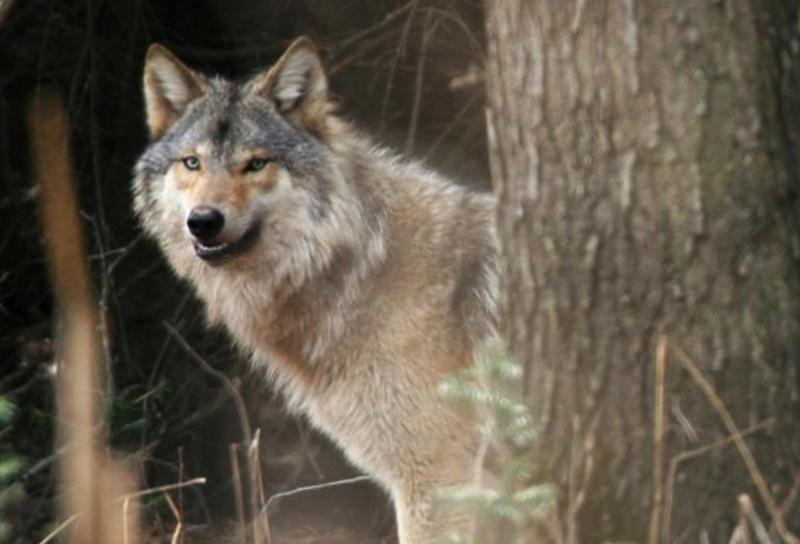
Plan to Remove Gray Wolf Protections Is Flawed
Published Feb. 20, 2014 • Read time: 3m
Wolves in the U.S. finally caught a break this month when news broke that an independent panel of peer review scientists reported to the U.S. Fish & Wildlife Service that its proposal to remove gray wolves from the list of protected animals across most of the continental United States was not based on the “best available science.”
The Endangered Species Act, enacted by Congress in 1973, expressly requires that listing and delisting decisions be made on the basis of the “best available science.” So a unanimous conclusion by independent experts that removing protections for wolves falls short on scientific grounds waves a major red flag in front of the Fish & Wildlife Service -- one it is required to address before moving forward with any final delisting proposal.
The wolf peer review scientists agreed unanimously that the proposal contained significant interpretation errors, key omissions, and a selective use of evidence. Peer reviewers criticized the agency for relying on just a single scientific report as a basis for its proposal, a report that was written by scientists from the Service itself and published only in a Fish & Wildlife publication.
This report omitted important sources of data, and evidence disagreeing with the decision to delist was criticized and dismissed in the paper, whereas evidence in agreement with delisting was accepted uncritically. Moreover, the peer reviewers felt that the conclusions in that report were shaky and unsettled -- “not universally accepted” in their words -- and that the agency’s conclusions on species classification and the historic range of wolves were wrong.
Being Eric Holder
Jack Lew & The Art of the Score
John McCain, Patrick Leahy & Ray LaHood on "State of the Union"
Team of Loyalists
I was director of the U.S. Fish & Wildlife Service from 1997-2001 and have over 30 years of hands-on experience studying and administering the Endangered Species Act. From my background, I know it is not uncommon for peer review panels to raise objections or note omissions during the review process. But I can’t remember ever seeing a panel unanimously agree that the science underpinning an ESA listing or delisting proposal was not up to par.
Secretary of the Interior Sally Jewell and current Fish & Wildlife Service Director Dan Ashe have repeatedly issued assurances that the Service will base the agency’s listing and delisting decisions on wolves on the best available science. Last week’s peer review conclusions indicate that the Service has not cleared this threshold.
So, with this lack of scientific support for the proposal, what will the Obama administration do? The peer reviewers’ report demonstrates that a serious mid-course correction is in order. And they need to start by withdrawing the current delisting proposal. Fish & Wildlife must put science first and apply it properly to chart a sustainable recovery plan for wolves throughout the United States. We all need to be holding the administration’s feet to the fire to ensure it does just that.

Newsom Defies Voters, Juries and Lawmakers To Spare Murderers While Defending Abortion
Curtis Hill • RealClearPolitics
The Algorithmic Tilt
Frank Filingeri • RealClearPolitics
A RealClear Thanksgiving: Investing in a Better Future
David DesRosiers • RealClearPolitics
Trump’s Newsom Problem: Antagonist-in-Chief
Carolina Lumetta • RealClearPolitics
America’s Free Spirit
John Maxwell Hamilton • RealClearPolitics
The GOP Majority Should Go Out in Glory
Daniel McCarthy • RealClearPolitics
RCP Today
Top stories on RealClearPolitics
The Takeaway
Polling intelligence and analysis delivered to your inbox
World News
Featuring the latest world news
Policy
Featuring the latest policy news
Support Our Mission
As part of RealClearPolitics, authors aim to provide balanced, non-partisan analysis by presenting top reporting and commentary from all sides of the political spectrum.
Trusted by policymakers and citizens alike since 2000