
Congress US Iran
Democrats, Stop Patting Yourselves on the Back
COMMENTARY
Published Dec. 3, 2022 • Read time: 5m
In the 2022 midterm elections, Democrats did better than everyone thought. History says the party in the White House loses seats in Congress when the first midterm election rolls around. But this time Democrats held the Senate and lost fewer seats in the House than expected.
So, that’s cause for celebration, no? No. Consider the facts:
- The election happened less than two years after an astonishing 139 House Republicans (and eight Senate Republicans) voted to overturn the 2020 election. For generations, America set the global standard for free and fair elections. Then one man, Donald Trump, used the word “rigged” incessantly (before and after elections, and without evidence) and suddenly tens of thousands of dedicated election workers became suspect.
- When the January 6 mob attacked the Capitol, spurred on by Trump, our cherished “peaceful transfer of power” process nearly failed.
- The midterm elections happened four months after Roe v. Wade was overturned, stripping American women of what had been a Constitutional right for a half-century.
For those and other reasons, Republicans should have been trounced at the polls. Instead, they received a limp slap on the wrist, and gained control of the House.
On the other side of the equation, the midterms took place during a period of robust economic growth, accompanied by historically low unemployment. Yes, there was inflation, but President Biden helped keep our inflation rate below that of most other industrialized nations. Biden and the Democrats passed the historic infrastructure bill, a once-in-a-generation investment to repair our bridges and roads, upgrade our ports and airports, and expand broadband access for everyone.
Then the Inflation Reduction Act lowered prescription drug costs for seniors, reformed the tax code, including making the ultra-wealthy and large corporations pay the taxes they already owe. Plus, for the millions of activists who are passionate about climate change, both of those bills gave them the largest direct investments ever in clean energy and boosted local clean energy initiatives.
The point here is that notwithstanding conventional wisdom, Democrats should have done better.
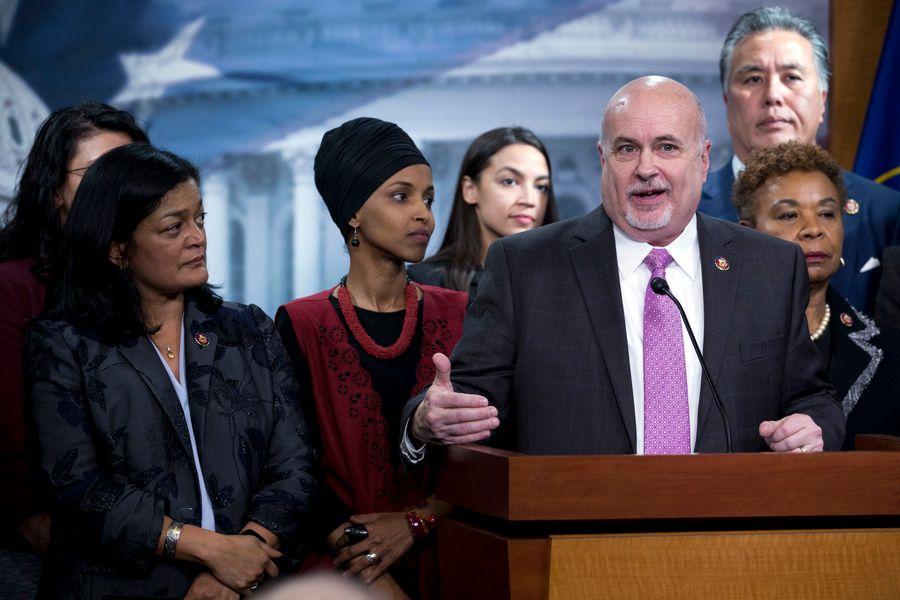
A few Democrats did quite well. Two, in particular, are interesting. Rep. Pramila Jayapal, running in Washington state, garnered more votes than any of the 435 congressional candidates. (House districts are drawn so that they all have approximately the same number of voters.) Rep. Jayapal chairs the Progressive Caucus. Ironically, and importantly, her former co-chair of the Caucus, Mark Pocan of Wisconsin, had the second most votes in the midterms.
Sanders Seeks Caucus Trifecta Win to Close Delegate Gap
Sanders Fighting Perception He Can't Overcome Clinton Edge
Clinton Targets Trump as Sanders Circles
Sanders, Clinton Differ Sharply at Flint Debate
It also happens that Pocan is the only candidate we know of who has read (and enthusiastically endorsed) our book, “Branding Democrats: A Top-to-Bottom Reimagining of Campaign Strategies.”
Coincidence? Perhaps. Or maybe he knows some things other politicians and party leaders should know. For brevity, we’ll just point to one concept that we stress in our book: he’s a proud Democrat. He never shies away from that label. He lets his constituents know that he stands by the long-held values of the Democratic Party.
Contrast that with what hundreds of other Democratic candidates (or more precisely, their consultants) did. They made the same mistakes they always make – they forced each candidate to battle on his or her own. Every metropolitan area was carpet-bombed in the media by all the Democratic candidates, each telling a similar story, but each unmoored to the larger Democratic Party brand. Why? That strategy not only failed miserably in New York (New York!), it did nothing to help the down-ballot candidates, the city or town council candidates, the judges, and so on.
The need for Democrats to change is urgent. Today’s high school juniors and seniors will be eligible to vote in 2024. Do they understand that Democrats, much more than Republicans, fight for the issues they care about – avoiding environmental disaster, women’s reproductive freedom, protecting LGBTQ rights, sane gun laws, and so many others? If so, they learned it on their own, with precious little help from the Democratic National Committee. The same can be said for senior citizens; Democrats still fight to protect Social Security and Medicare, while many GOP thought leaders question the worth of those sacrosanct programs.
Our book lays out a roadmap for effective branding of all Democrats. It argues that all elections should be about more than “our guy is great, your guy is terrible” partisan bickering. There are broad Democratic themes that override any specific candidate or any particular election. That’s what smart branding accomplishes.
The calendar is our enemy. Democrats desperately need to begin defining and boosting their brand, and we have no time to waste. In the 2024 election Democrats will be defending 23 Senate seats, compared to only 10 on the GOP side. And, of course, the House will be up for grabs. We urge the party to shift to smarter and more efficient messaging, and the change needs to start today.

The GOP Majority Should Go Out in Glory
Daniel McCarthy • RealClearPolitics
Republican Majorities Could Return Sooner Than Expected
J.T. Young • RealClearPolitics
The Danger Before the Attack
Leslie J. Sullivan • RealClearPolitics
Jon Finer’s Old and Dangerous ‘New Approach’ to Israel
Peter Berkowitz • RealClearPolitics
The President Deserves Better
John Ullyot • RealClearPolitics
Congress Doesn’t Need Another Blame Game. It Needs To Find What’s Broken
Jarrod Bernstein • RealClearPolitics
RCP Today
Top stories on RealClearPolitics
The Takeaway
Polling intelligence and analysis delivered to your inbox
World News
Featuring the latest world news
Policy
Featuring the latest policy news
Support Our Mission
As part of RealClearPolitics, authors aim to provide balanced, non-partisan analysis by presenting top reporting and commentary from all sides of the political spectrum.
Trusted by policymakers and citizens alike since 2000