Biden Student Loans
Student Loan Repayments Resume in May. But Who's Paying?
COMMENTARY
Published Feb. 16, 2022 • Read time: 4m
President Biden says that student loan payments, which federal officials paused during the pandemic, will resume in May. With little more than two months to go, however, his administration is doing everything it can to make the process of meeting this deadline look impossible – both for students and the Department of Education.
Do not be fooled: The May deadline cannot come soon enough for middle- and low-income taxpayers, who are among those who will be on the hook for $1.6 trillion in unpaid loans if borrowers are not required to repay. The bulk of loan debt is held by students in graduate schools, along with students from wealthier families. Many are looking forward to drawing substantial paychecks in law and medicine once they graduate.
During the pandemic, the government suspended student loan repayments, paused the interest accruing on accounts, and stopped collecting on accounts in default.
For now, federal officials want you to think the agency is simply not ready to collect. Department of Ed officials are using email as their “primary communication” method with borrowers, but the agency does not have email addresses for one in four borrowers now in default. That is the agency’s failing, though, and not an argument for slowing down or halting repayments.
Agency officials appear to be looking for ways to continue to suspend repayment or pass the buck to someone else. The GAO says the department will still pause reports about missed payments that usually go to credit reporting agencies and will not ask borrowers in income-driven repayment programs to recertify their income levels for at least six months. The agency is almost encouraging borrowers who are thinking of defaulting in May.
As Many as 1 Million Kids Will Have School Choice This Year
Hypocrisy Behind the Campus Renaming Craze
Can Our Colleges Be Saved?
Hillary's Federal Education Jackboot Squad
Federal education officials told the Government Accountability Office it will be a “challenge to motivate borrowers to resume repaying their loans.” Well. Old habits are hard to break, but bad habits – like welshing on debts – need to be broken. More than one in six of the nearly 46 million individuals with student loans were already in default before the Biden administration decreed a moratorium on payments.
The federal COVID spending packages sent billions to colleges, who have, in turn, been giving checks to students. Florida State University gave some $17.7 million in federal relief spending to 16,000 students. Checks to Penn State students were close to $2,000 per student. Colleges distributed funds based on student need according to student information found on financial aid applications, which means nearly all of them had loans. Essentially, colleges have been complicit in what amounts to a federal student loan money-laundering program.
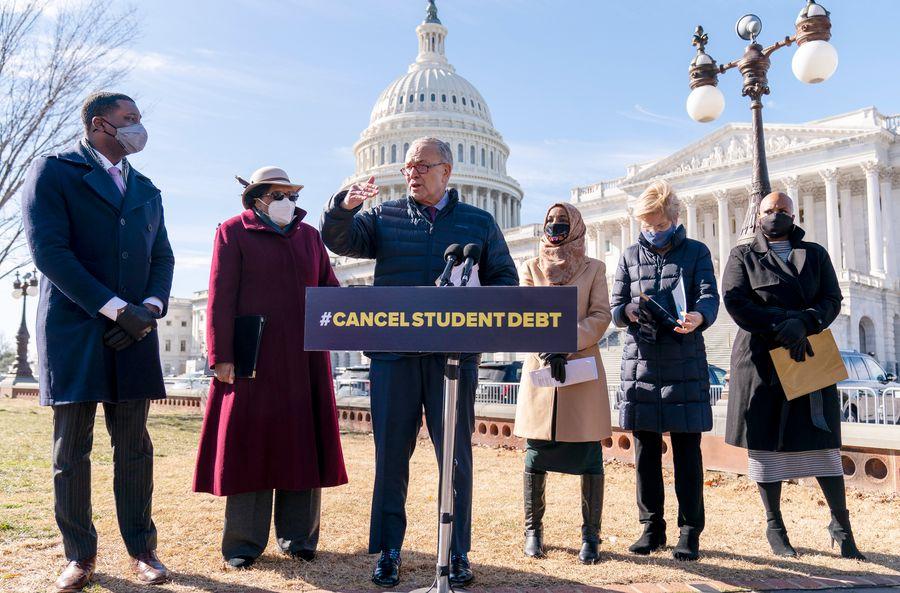
Pundits are howling that Biden talked about student loan forgiveness “every five minutes during the [presidential] campaign” and should wipe all student loans away with “a flick of his pen,” as Sen. Chuck Schumer suggested. The administration seems to be finding creative ways to do this without actually signing the legislation.
Who would benefit most from loan forgiveness? According to research, graduate students are borrowing, on average, $24,000 per year, while undergraduates are borrowing approximately $7,000. The wealthiest 40 percent of borrowers hold more than half – 60 percent – of all loan debt. As a result, student loan forgiveness would result in borrowers at the bottom of the income scale receiving the least amount of the benefits.
Researchers at the University of Pennsylvania and the University of Chicago find that full student loan cancellation would “accentuate inequality,” because the average individual in the highest income brackets would receive nearly five times more forgiveness in present value terms than the average individual in the lowest bracket. Again, student loan forgiveness would divide Americans by income.
In 2019, just before the onset of the pandemic, approximately two-thirds of Americans did not hold a bachelor’s degree. If students and graduates will not be required to pay their loans, taxpayers will be. The Biden administration is not trying to “forgive” student loans in the true sense of the word. They are just asking those without college degrees to cover the student debt payments for those who do.

Newsom Defies Voters, Juries and Lawmakers To Spare Murderers While Defending Abortion
Curtis Hill • RealClearPolitics
The Algorithmic Tilt
Frank Filingeri • RealClearPolitics
A RealClear Thanksgiving: Investing in a Better Future
David DesRosiers • RealClearPolitics
Trump’s Newsom Problem: Antagonist-in-Chief
Carolina Lumetta • RealClearPolitics
America’s Free Spirit
John Maxwell Hamilton • RealClearPolitics
The GOP Majority Should Go Out in Glory
Daniel McCarthy • RealClearPolitics
RCP Today
Top stories on RealClearPolitics
The Takeaway
Polling intelligence and analysis delivered to your inbox
World News
Featuring the latest world news
Policy
Featuring the latest policy news
Support Our Mission
As part of RealClearPolitics, authors aim to provide balanced, non-partisan analysis by presenting top reporting and commentary from all sides of the political spectrum.
Trusted by policymakers and citizens alike since 2000