Election 2020 Ballot Harvesting
How to Avoid Pitfalls in Detecting Election Fraud
COMMENTARY
Published Dec. 5, 2021 • Read time: 8m
Allegations of fraud during the 2020 election continue to surface on the media landscape. The most recent target of such claims is Meagan Wolfe, administrator of the Wisconsin Elections Commission. Wisconsin legislators continue to call for her resignation in the belief that she permitted fraud within the state. The story is illustrative of a larger movement in Republican-controlled states to crack down on personnel and policies blamed for the defeat of President Trump in the 2020 presidential election.
The truth, however, is that the election ran as well as it did because of Meagan Wolfe and many other election administrators like her. Where concerns over election legitimacy are warranted, states and localities can make fraud prohibitively expensive through criminal penalties and reliable election administrative data. Such measures have already been adopted in states like Wisconsin, and all we need to do is expand them.
Election experts and attorneys must meet four key criteria to demonstrate fraud at levels that warrant contesting an election. First, they must demonstrate that election irregularities or illegal activity occurred. Second, they must demonstrate that such irregularities or illegal activities likely affected the election outcome. Third, they must show that these irregularities or illegal activities were systematic in nature. And finally, they must demonstrate who is criminally liable for such conduct. The answers to each of these questions shape the potential legal and policy remedies.
Gavin Newsom's Misguided Redistricting Initiative
A Warning Against the Overuse of Sanctions
Open The Books on the California State Checkbook
Senate Passes Bill Addressing Heroin, Opioid Crisis
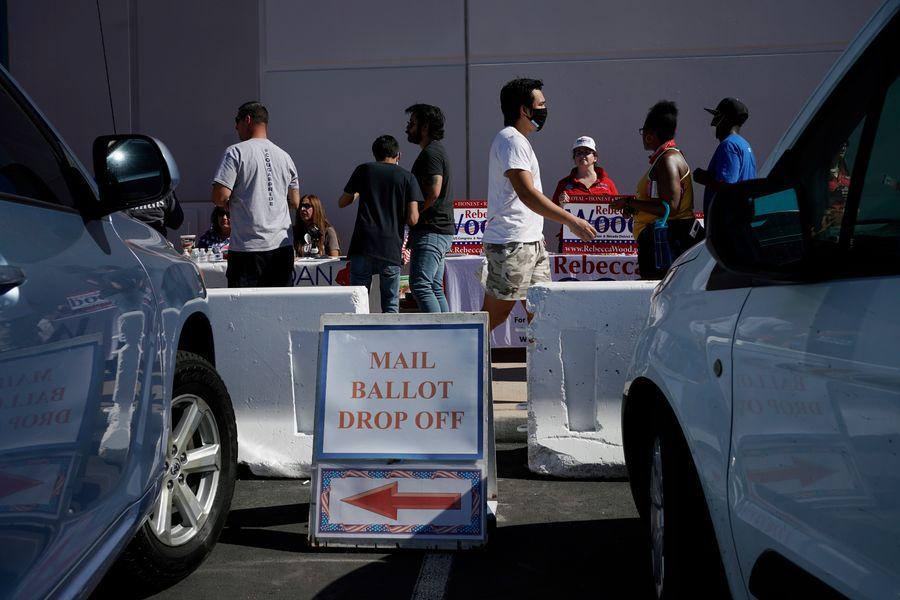
For example, the Arizona 2020 election turned up a maximum of 200 suspicious ballots, for which prosecutors secured the convictions of four people – not enough, needless to say, to change the outcome in the state. These cases appeared spurious and unrelated to any organized systematic criminal activity. Contrast such cases to North Carolina’s 9th Congressional District election in 2018; the election total had the Republican candidate winning with a 905-vote margin. An investigation revealed that the Republican campaign illegally ballot-harvested at least 600 ballots, with sworn affidavits by those directly involved in the process revealing that campaign workers also filled out these ballots. In such a close election, this investigation therefore revealed enough malfeasance that the state thought it best to redo the election.
When investigating election fraud, in-depth, on-the-ground investigation that directly uncovers the mechanics of a conspiracy will be necessary for remedial action. This is an area where fraud allegations during the 2020 election are woefully inadequate. The sole on-the-ground evidence offered during litigation amounted to people claiming that they “believe my vote for Donald J. Trump and Michael Pence was not counted” or mistakenly using election returns data from Minnesota in place of Michigan. Claims by people who “felt” their vote was not counted don’t even rise to the lowest level of allegation, which is mistaken election returns data – the type of elementary error that consultants catch by having an outside researcher replicate their results. Allegations of Dominion Voting machines fraudulently casting ballots in favor of Joe Biden in Philadelphia failed to account for the fact that Dominion Voting Machines are not used within this jurisdiction. Further, the “statistical” evidence brought to bear failed to find an association between Dominion Voting Machines and Biden’s vote share, and additional controls suggest their use is significantly associated with a change in favor of Trump’s vote share in 2020. If election fraud occurred in 2020, the ones hired to prove it in court were so egregiously incompetent in demonstrating it that it’s difficult to believe that they were acting in good faith.
Election fraud is a difficult activity for social scientists to measure quantitatively. No single accepted quantitative evidentiary standard exists that definitively “proves” election fraud, and what indicators we do have could theoretically be made meaningless by conspiratorial coverups. For example, political scientist Walter Mebane developed a statistical method derived from accounting forensics to identify when fraud at the election-tabulation stage is suspected, based on how non-random certain numbers are. But Russian election authorities apparently took note of Mebane’s research and simply set their election returns to be exactly equal to that of a random and fair tabulation, thereby thwarting the methodology. The same distortions could be applied to just about any type of indicator of fraud that we have, especially when the fraud conspirators are centralized and well-funded.
Those engaged in election fraud presumably choose this method because it is a cost-effective way to win elections. But past a certain point, the cost of concealing fraudulent activities could become so much that it would be cheaper to take one’s chances in an honest election. Political scientists Donald Green, Alan Gerber, and David Nickerson conducted randomized experiments and found the estimated cost of earning one vote through door-to-door canvassing to be approximately $24 today, after accounting for inflation. All election administrators and lawmakers need to do is make the cost of engaging in election fraud so high that it becomes irrational to do so. These ends can be accomplished by increasing the penalties associated with fraud and making it more difficult to evade investigators.
The most severe penalties associated with fraud arise from federal law. Someone can face up to five years in prison for corrupting either the voter-registration or voting process for any election where a federal candidate is on the ballot. Any election purely local in nature – such as an odd-year election in most states – is not subject to these penalties. This is why major cases of election fraud tend to be primarily in local races – such as the mail-ballot manufacturing in Miami’s 1993 mayoral election, or the ballot-initiative signature-gathering in Washington state, where paid campaigners frequently submit fake signatures yet face no prosecution. The absence of penalties comparable to federal law increases the likelihood of fraud in these local settings.
Catching fraud in the first place is of paramount importance. In this regard, state and local election administrators can ensure a seamless chain of custody through the entire election process. This can be done by states keeping careful track of when ballots are created, where they are transported to, who receives the ballots, and so on. These principles can be applied to mail-in voting so effectively that it might prove even easier to catch mail-ballot fraud than in-person. States with absentee-ballot files know when voters registered for mail ballots, received the ballot, sent it back in – and where all these delivery points took place. North Carolina’s State Board of Elections gathers such information, which contributed to detecting the fraud in 2018.
The primary obstacle to such enforcement is a combination of a lack of centralized election administration within states and knowledge on the part of election administrators. For the most part, localities entirely pay for and administer elections without much oversight from state authorities. Wisconsin and Michigan have the most election jurisdictions in the country, making it exceedingly challenging for state officials to ensure consistency in election procedures. Wisconsin, under WEC Commissioner Meagan Wolfe, worked with the National State Geographic Information Council (NSGIC) to centralize and incorporate geographic information into the state’s voter database. With such information, the WEC knows when and where ballots are throughout the entire process, and more importantly, can flag any suspicious activity for in-depth investigation. For example, the WEC caught 2,693 mail ballots during the April 2020 primary that failed to get to voters due to an administrative error on the part of the Milwaukee Election Commission and found out where they wound up, ensuring no loose ballots could be released that might allow for fraud.
Similarly, by working with the Electronic Registration Information Center (ERIC), Wisconsin can compare voter-registration records against those of other states, identify people who likely moved, and engage in special scrutiny should any of these flagged likely movers vote in a Wisconsin election. With these improvements, to commit fraud in Wisconsin would be an extraordinarily costly task, given that the WEC can track the movement of election materials in real time and then flag and report any irregularities. In this regard, Wisconsin has much to offer in guiding other states with similarly decentralized election administrative structures. States could likewise pass laws ensuring money trails via strict and mandatory campaign-finance reporting regulations, allowing for forensics accounting investigations.
Though it might remain challenging to ensure that American elections are fair and legitimate, it is more than possible so long as we approach the issue procedurally. Those interested in contesting elections should be certain to ensure that transparent standards of evidence are met. Keep in mind that while quantitative research can narrow the scope of an in-depth, on-the-ground forensics investigation, an investigation is still necessary. If you rely on hearsay evidence, ensure that you can find the original and credible source of such information prior to getting to court.
Further, lawmakers and administrators need to make the attempt to commit fraud as costly as possible. These costs can be increased through ensuring penalties are in place and through state-of-the-art election databases, making it nearly impossible for fraudulent actors to evade the spatial and temporal patterns they leave in the wake of their illegal activities. While adhering to these best practices will require investment, all these changes can be made at the state and local levels. Lawmakers can join inter-state agreements such as ERIC and learn the best practices for running clean elections from organizations like NSGIC. Ensuring the integrity of, and confidence in, elections will always remain an important aspect in election administration – and we have the tools to do so.

Newsom Defies Voters, Juries and Lawmakers To Spare Murderers While Defending Abortion
Curtis Hill • RealClearPolitics
The Algorithmic Tilt
Frank Filingeri • RealClearPolitics
A RealClear Thanksgiving: Investing in a Better Future
David DesRosiers • RealClearPolitics
Trump’s Newsom Problem: Antagonist-in-Chief
Carolina Lumetta • RealClearPolitics
America’s Free Spirit
John Maxwell Hamilton • RealClearPolitics
The GOP Majority Should Go Out in Glory
Daniel McCarthy • RealClearPolitics
RCP Today
Top stories on RealClearPolitics
The Takeaway
Polling intelligence and analysis delivered to your inbox
World News
Featuring the latest world news
Policy
Featuring the latest policy news
Support Our Mission
As part of RealClearPolitics, authors aim to provide balanced, non-partisan analysis by presenting top reporting and commentary from all sides of the political spectrum.
Trusted by policymakers and citizens alike since 2000