Congress Budget
Could Biden's Legislative 2021 Have Been Better?
COMMENTARY
Published Nov. 22, 2021 • Read time: 5m
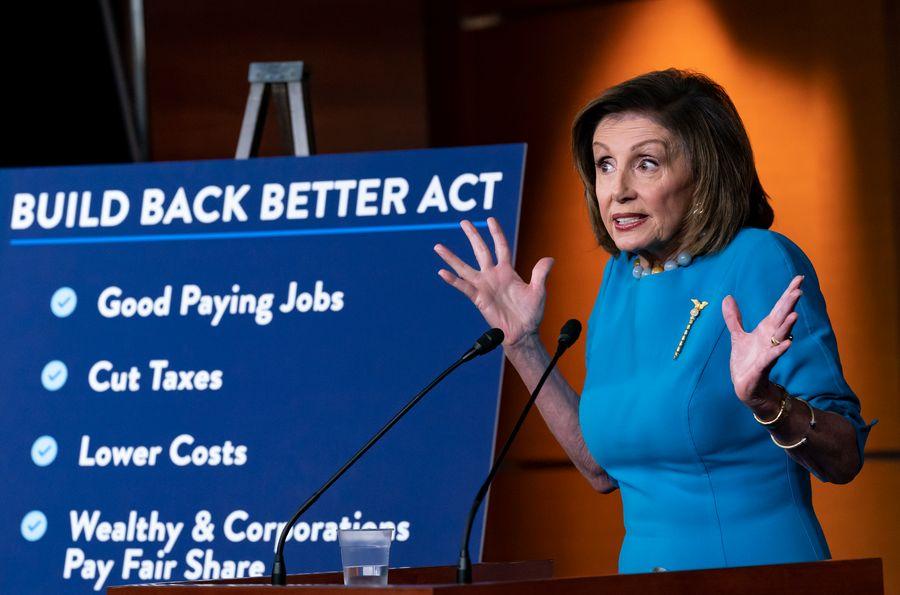
Joe Biden began his presidency with a $1.9 trillion pandemic relief package. This month he signed a $1.2 trillion, five-year infrastructure bill. And after last week’s House vote, he’s on the verge of securing the wide-ranging “Build Back Better” bill that includes investments in education, climate, health care and housing, as well as progressive tax reform.
Assuming Build Back Better is enacted before the end of December, Biden will have built a hugely successful legislative record for a president after one year in office.
But could it have been better?
Could the protracted period of legislative sausage-making between March passage of pandemic relief and November passage of infrastructure been compressed? Could the amount of intra-party bickering that frustrated and confused voters have been reduced? Could more legislation have passed before the Nov. 2 election, giving Democrats enough of a lift to hold on to the governorship of Virginia, and better position Democrats for the 2022 midterms?
What could have been different? Biden could have started the year on a strong bipartisan note, sending his presidency on an entirely different trajectory.
Instead of passing a partisan pandemic relief bill using the filibuster-proof budget reconciliation process, he could have struck a bipartisan compromise. The relief bill would have been smaller, but proof that bipartisanship is possible would have been established faster. Then Biden could have more easily pursued a bipartisan infrastructure bill, without wasting months trying — and eventually failing — to yoke it to the partisan Build Back Better bill.
Gavin Newsom's Misguided Redistricting Initiative
A Warning Against the Overuse of Sanctions
Open The Books on the California State Checkbook
Senate Passes Bill Addressing Heroin, Opioid Crisis
And considering that the Senate moderates appear poised to follow their House counterparts to pass Build Back Better next month, even though the bill has been fully delinked from the infrastructure bill, there’s no reason to assume Build Back Better would have died if there had been no attempt to link it to infrastructure in the first place.
But was a bipartisan pandemic relief even possible in the first place? Most likely, yes. Recall that after Biden proposed a $1.9 trillion bill in January, a group of 10 Senate Republicans on Feb. 1 made a counteroffer of $618 billion.
Most Democrats treated this as an unserious proposal from an untrustworthy source. New York Times columnist Paul Krugman captured the prevailing view at the time: “…it seems as if Democrats understand what Lucy will do with that football and won’t be fooled again.” However, we now know that Republicans did not yank the football when it came to infrastructure; Republicans, taking the cue of Senate Minority Leader Mitch McConnell, provided the margin of victory for that bill in both chambers of the Congress. House Republicans even did so when Biden’s political capital was sapped by low job approval and the Democrats’ humiliating losses in Virginia.
Biden himself, one month after passage of the pandemic relief bill, publicly said he had been willing to accept an offer as low as $1.2 trillion: “If they come forward with a plan that did the bulk of it and it was a [trillion, point] three or four, two or three — that allowed me to have pieces of all that was in there, I would have been — I would’ve been prepared to compromise, but they didn’t. They didn’t move an inch. Not an inch.”
But Biden didn’t give Republicans much opportunity to move an inch. One member of the GOP group, Sen. Bill Cassidy, said on Feb. 7, “We all made it clear that we are willing to negotiate. That [offer] wasn't our end point.” Yet no formal bipartisan talks were held after that, and the House floor vote occurred three weeks later. In contrast, bipartisan Senate negotiators took about three months to hammer out their infrastructure bill, even though the initial Republican counteroffer was similarly low: only $250 billion in new spending above what was already being spent annually, compared to Biden’s ask of $1 trillion. (The final bill met in the middle, with $550 billion in new spending.)
In February, olive branch comments like Cassidy’s weren’t taken seriously. But in retrospect, considering how Cassidy and other relatively moderate Republicans followed through on infrastructure, they should have been.
The logic behind dismissing the Republican counteroffer for pandemic relief was: Democrats had the votes to get more, so why take less? But in this case, less may have been more. One argument, pushed by former Obama administration economic adviser Larry Summers, is that the $1.9 trillion was more relief than was needed and, in turn, fueled inflation.
There are counterarguments, such as from Krugman and others, that pandemic-related stress on the global supply chain has been the main source of inflation and the relief money helped to mitigate the effects of economic disruption. Even if that’s true, a more targeted relief bill of about half the size of the American Rescue Plan still could have been sufficient, while posing less inflationary risk.
At least one voter is switching her party affiliation from Democratic to independent because Democrats in Congress held up the infrastructure bill in a failed attempt to reduce moderate leverage over the size and scope of Build Back Better. Judith Steele told ABC News: “They should have gotten the infrastructure bill done months ago. They had the votes to do it. But they had to push. I do like the second bill, but they should have gotten the first one passed and signed, and started putting people back to work at decent union jobs.”
Granted, it’s far too soon to turn single anecdotes into final judgments. By 2024, or even 2022, Biden’s strategy may have paid off in spades. Inflation may have subsided, the pandemic may have lifted, and public frustration with legislative sausage-making may have been replaced with public satisfaction with the legislative benefits.
But as we track Biden’s presidency, we should recognize that he began it with a significant strategic choice. If Biden continues to struggle in the polls, we may always wonder if things could have been different with a different approach on pandemic relief, and a warmer embrace of bipartisanship.

Newsom Defies Voters, Juries and Lawmakers To Spare Murderers While Defending Abortion
Curtis Hill • RealClearPolitics
The Algorithmic Tilt
Frank Filingeri • RealClearPolitics
A RealClear Thanksgiving: Investing in a Better Future
David DesRosiers • RealClearPolitics
Trump’s Newsom Problem: Antagonist-in-Chief
Carolina Lumetta • RealClearPolitics
America’s Free Spirit
John Maxwell Hamilton • RealClearPolitics
The GOP Majority Should Go Out in Glory
Daniel McCarthy • RealClearPolitics
RCP Today
Top stories on RealClearPolitics
The Takeaway
Polling intelligence and analysis delivered to your inbox
World News
Featuring the latest world news
Policy
Featuring the latest policy news
Support Our Mission
As part of RealClearPolitics, authors aim to provide balanced, non-partisan analysis by presenting top reporting and commentary from all sides of the political spectrum.
Trusted by policymakers and citizens alike since 2000