
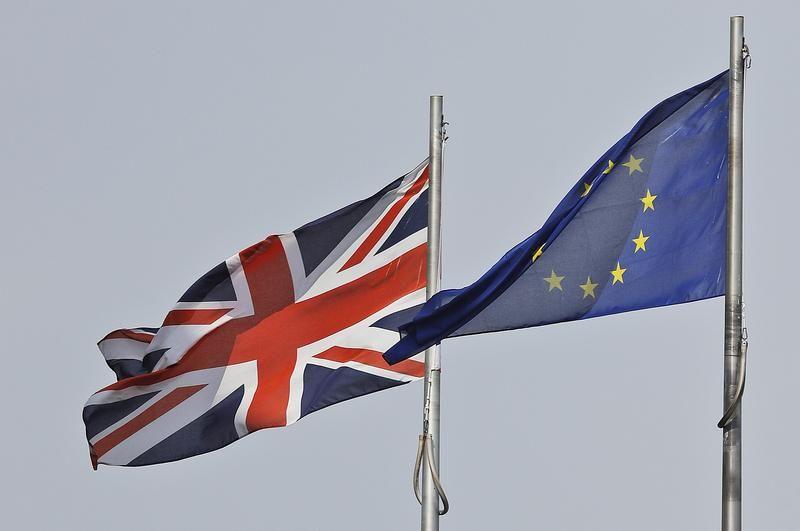
Brexit Surprise Due to Analysts' Bias, Not Numbers
Published Nov. 1, 2016 • Read time: 3m
Join the Conversation
0With the presidential race narrowing again, people have begun to wonder about poll failures we’ve encountered worldwide. In particular, some – namely Donald Trump – have suggested the United States would have a Brexit outcome.
I certainly think it is possible Trump will outperform the polls, and we’ll discuss that possibility in the coming days. But I also think it is important to keep the idea of a polling failure separate from what happened with Brexit. Because I do think some Brexit comparisons are apt, but probably not in the way you think.
The truth is the Brexit polls weren’t awful for Remain in the European Union movement. In fact, The Economist’s tracker concluded that Remain and Leave the EU were tied. Other aggregations showed larger leads for Remain but clustered around a one- or two-point Remain win.
In other words, the polls weren’t terrible for the United Kingdom referendum on EU membership. They had a bias, but it was relatively small – well within the universe of polling errors we sometimes see in the United States.
What happened in England was instead a failure of prognostication. Betting markets showed Remain as a heavy favorite. Most columnists thought Leave would lose. Even analysts looked at the data and came up with rationales as to why Remain would emerge victorious.
The problem, in retrospect, was that the socioeconomic class to which columnists, analysts, and speculators in political markets belonged had a heavy pro-Remain tilt to it. This infiltrated their analysis, as the supposedly objective measurements that they chose turned out to be massive exercises in confirmation bias.
Lies, Assault and Cover-ups Don't Stop Donald Trump
Trump Stands by His Man; Obama on a Health Scourge; Hayden Interview; Reagan's Courage
Analysis: For Trump, Few Limits to Win-At-Any-Cost Approach
What If Clinton Isn't Indicted?
As I put it at the time:
This is the intellectual equivalent of pundits declaring (correctly) that the first possession in the Super Bowl will be decided by coin toss, but then unanimously asserting that the coin will come up heads.
What happened was a massive outbreak of “unthinkability bias.” To the class of people who engage on Twitter, advise banks, or bet on outcomes, Brexit wasn’t just a bad idea. It was catastrophic. It operated as a rejection of an ideal that transnational elites hold dear, regardless of whether they are on the right or the left, one we might just call the idea of “Europe.” A rejection of this idea was not something upper-middle-class analysts could accept, absent absolutely compelling evidence that “Remain” was going to lose.
To be clear, there is plenty of this going on with this election. On Twitter, pushback to the suggestion that the polls were closing last week was ferocious and plainly wrong. Analysis of early voting in particular has been riddled with wishful thinking. I do think Hillary Clinton is the favorite, but I think the data right now is not consistent with this being a done deal.
But that is an article for another time. For now, analysts just need to remember, the Brexit miss wasn’t on the polls. It was on us.

Congress Doesn’t Need Another Blame Game. It Needs To Find What’s Broken
Jarrod Bernstein • RealClearPolitics
Democrats Won the Midterms. Common Sense Won, Too
Jordanne Kemper • RealClearPolitics
The 120th Congress Shapes Up
Carolina Lumetta • RealClearPolitics
Flooding GOP Primaries With Democrats
Robert Natelson • RealClearPolitics
Washington Keeps Rewarding Oracle—Veterans Keep Paying the Price
Darin Gaub • RealClearPolitics
The Seeds of Unrestricted Warfare
John Teichert • RealClearPolitics
RCP Today
Top stories on RealClearPolitics
The Takeaway
Polling intelligence and analysis delivered to your inbox
World News
Featuring the latest world news
Policy
Featuring the latest policy news
Support Our Mission
As part of RealClearPolitics, authors aim to provide balanced, non-partisan analysis by presenting top reporting and commentary from all sides of the political spectrum.
Trusted by policymakers and citizens alike since 2000