
Deal to Avoid GOP Convention Floor Fights Collapses
Published July 15, 2016 • Read time: 5m
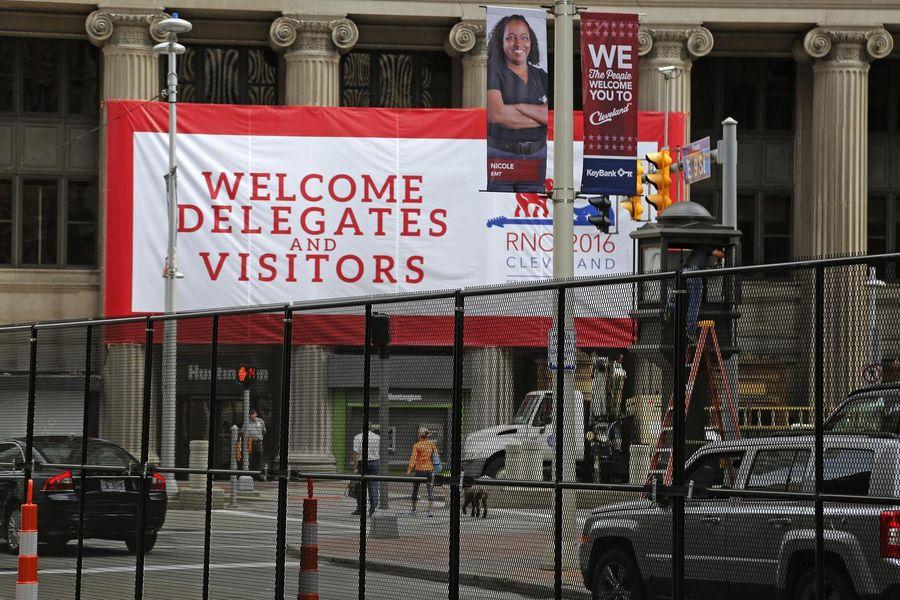
CLEVELAND – A deal aimed at averting contentious floor fights at next week’s GOP convention fell apart Thursday and threw the first meeting of the Republican National Committee’s powerful rules committee into chaos.
Members of the conservative grassroots movement met with RNC leadership for hours Thursday morning to discuss making the party’s primaries closed – meaning only registered Republicans could vote for a presidential nominee – in exchange for not gumming up the rules committee meeting with multiple votes.
And the drama continued late into Thursday night as the rules committee decided to power through its final series of amendments to the convention rules, including one that would allow delegates to vote their consciences. If approved, the conscience clause would unbind delegates from voting for the party’s presumptive nominee when the nomination process begins on the convention floor. The debate was expected to go late into the night and into Friday morning.
The backroom negotiations Thursday morning led to a three-hour break in the middle of the committee meeting – a break that was originally blamed on a broken printer, though Enid Mickelsen, chair of the committee, later admitted, “Obviously, we did not adjourn for three hours because of a jammed copier.”
Ken Cuccinelli, the former attorney general of Virginia and a close ally of Sen. Ted Cruz, the runner-up to Donald Trump in this year’s primary, led the negotiations with RNC officials. Cuccinelli doesn’t sit on the rules committee but is allied with several delegates who do, and they pushed for the closed primaries with the addition of providing a bonus of extra delegates for states that made the switch. RNC officials, including Chairman Reince Priebus, who has been supportive of closing primaries, negotiated with Cuccinelli but ultimately declined the offer.
Cruz's Path to Nomination
Trump Stands by His Manager
With Tweets on Heidi Cruz, Trump Sinks to New Depths
A Vote for Kasich Is a Vote for Trump
“Nothing was outright rejected. I think we just got to a point where this is futile,” Sean Spicer, an RNC chief strategist and spokesman, told reporters.
Cuccinelli, who was a top delegate wrangler for Cruz during this year’s primary, said that he proposed the 20 percent delegate bonus. The rules committee soundly defeated the amendment, 73 to 32, but there were enough yes votes to potentially bring the issue to the convention floor.
“I would not say they were not negotiating in good faith,” Cuccinelli said. “I think the nature of the end of the negotiation was less than favorable, but I don’t think they showed up to talk with the notion that ultimately we’re not doing a deal. I don’t think it was insincere.”
Saul Azunis, a former chairman of the Michigan GOP and backer of Cruz – who has since said he will support Trump – insisted that the effort was not meant to boost Cruz in a potential 2020 run for president, but simply to allow Republican voters to pick their nominee.
Responding to the claim it was intended as a boost to Cruz, Azunis said, “That’s just not true. I would argue that would help any conservative… Conservatives are saying let Republicans nominate Republicans, let Democrats nominate Democrats, and we go to the general election and let everybody fight it out."
The collapse of the talks led to several heated debates and votes during the opening meeting of the rules committee, which proposes the rules for running the convention. The battle was between delegates who wanted to pull power away from the RNC to disperse it among the grassroots, and delegates loyal to Priebus who opposed those changes.
One of the main issues involved Rule 12 of the RNC rules, added in 2012, which allows the committee to make changes to its primary process between nominating conventions. Those who supported removing the rule argued it consolidated power within the RNC and took it away from convention delegates and grassroots Republicans. Those who opposed removing the amendment argued the rule gives the RNC flexibility to make necessary changes to the primary process between elections.
To argue their side, the latter group used the example of the change to the presidential primary debate structure after 2012. Most Republicans believe the structure wounded eventual nominee Mitt Romney in the 2012 primary, so the RNC consolidated and limited debates in this year’s primary.
Removing the rule “would limit the ability of the Republican National Committee to deal with emerging situations that need attention between conventions,” New Hampshire Delegate Steve Dupree said.
Utah Sen. Mike Lee, the only senator serving on the rules committee, made a passionate speech against Rule 12, which he argued, “seems to tend to allow one group of people or one person to accumulate power.”
“I think we’ve got to be very skeptical of things that help facilitate the accumulation of power in the hands of a few, especially given that we aspire to be a party that is more inclusive, a party that brings people in, that encourages grassroots activity,” Lee said in his only remarks during the rules debates.
The effort failed by a vote of 86 to 23, a strong show of support for the RNC and Priebus.
Another issue raised by conservatives – which Cuccinelli said would have been avoided had the deal not collapsed – was an effort to ban corporate lobbyists from serving in the RNC. The committee debated that question for more than 40 minutes, but ultimately rejected it by a voice vote.
Though some delegates were eager to depart after 12 hours and reconvene on Friday, the majority voted to power through the night to get to the most contentious issue of the evening: whether to unbind delegates and allow them to vote their conscience against Trump as the nominee. Delegates loyal to Trump and the RNC overwhelmingly defeated the long-shot bid to unbind, effectively ending the attempt to deny Trump the nomination.
Trump’s team insisted earlier in the day it wasn’t concerned about the effort to unbind the delegates, and took a victory lap after the effort failed. Trump’s top strategist, Paul Manafort, tweeted, "Anti-Trump people get crushed at Rules Committee. It was never in doubt: Convention will honor will of people & nominate @realDonaldTrump.”

Congress Doesn’t Need Another Blame Game. It Needs To Find What’s Broken
Jarrod Bernstein • RealClearPolitics
Democrats Won the Midterms. Common Sense Won, Too
Jordanne Kemper • RealClearPolitics
The 120th Congress Shapes Up
Carolina Lumetta • RealClearPolitics
Flooding GOP Primaries With Democrats
Robert Natelson • RealClearPolitics
Washington Keeps Rewarding Oracle—Veterans Keep Paying the Price
Darin Gaub • RealClearPolitics
The Seeds of Unrestricted Warfare
John Teichert • RealClearPolitics
RCP Today
Top stories on RealClearPolitics
The Takeaway
Polling intelligence and analysis delivered to your inbox
World News
Featuring the latest world news
Policy
Featuring the latest policy news
Support Our Mission
As part of RealClearPolitics, authors aim to provide balanced, non-partisan analysis by presenting top reporting and commentary from all sides of the political spectrum.
Trusted by policymakers and citizens alike since 2000