
Why Trump Isn't the Inevitable Nominee
Published Feb. 24, 2016 • Read time: 4m
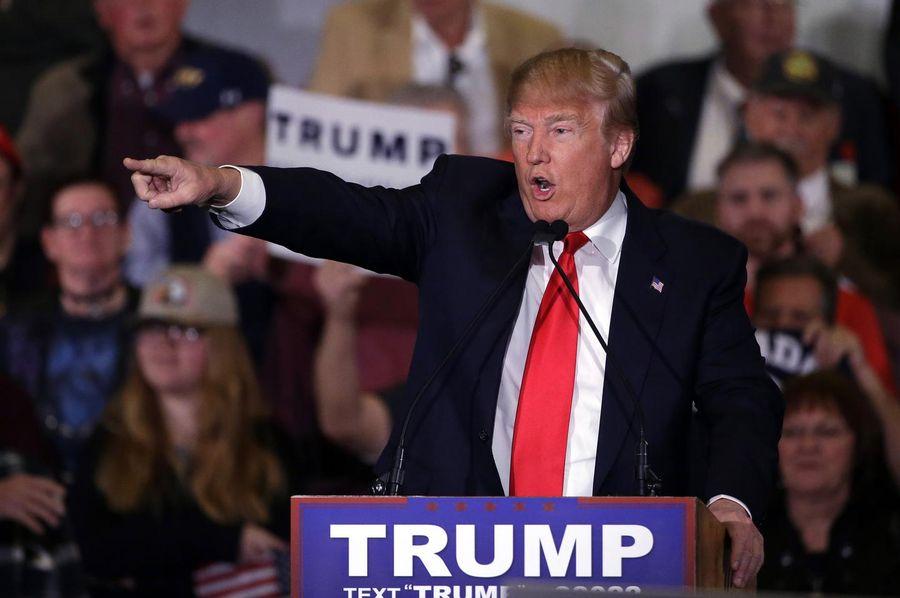
After months of dismissing Donald Trump, many pundits are now anointing him with the Republican presidential nomination. I find this premature. With Tuesday night’s win in the Nevada caucuses, Trump has only 79 of the 1,237 delegates needed. He is "stuck" in the mid-30s of support, sufficient to win primaries with a platoon of candidates but not in a head-to-head race. Dan Balz of The Washington Post points to vulnerabilities: Trump had the lowest percentage of any South Carolina primary winner in the last 10 contests. Late-deciding voters broke against the billionaire businessman, giving him a victory margin less than his lead in pre-primary polls.
Jeb Bush's withdrawal helps Trump's opponents. Although Trump claims that some of Bush's support will go to him, it's hard to see that happening. Bush, whatever his deficiencies, was the most outspoken Trump critic of any Republican candidate. A vote for him, not that there were many of them, was a vote against Trump.
Trump has a solid and seemingly unshakable populist base among working-class voters without a college education. But he also has sky-high unfavorable ratings, with 28 percent of Republicans saying they’d never vote for him. Indeed, Gallup's surveys show Trump has the highest unfavorables of any presidential candidate in modern history, a net minus 70 among Democrats and a net minus 27 among independents.
He is now seen in some quarters as a lock for the nomination because his surviving opponents are more intent on advancing their own candidacies than stopping him and will likely split the anti-Trump vote. But GOP nominating rules, which (with tiny exceptions) require proportional representation in the primaries before March 15 and winner-take-all from then on give Trump’s rivals times to maneuver.
Cruz's Path to Nomination
Trump Stands by His Manager
With Tweets on Heidi Cruz, Trump Sinks to New Depths
A Vote for Kasich Is a Vote for Trump
The Republican candidates will split 595 delegates in a dozen Super Tuesday primaries on March 1. If Trump were to continue at his present pace, he’d win a little more than 200 of them. But on March 15 the Florida and Ohio primaries alone will yield 165 delegates. If Trump or anyone else wins both these primaries, he would likely jump to the top of the delegate count no matter what happens on Super Tuesday and become a prohibitive favorite for the nomination.
How likely is that? Trump will face his three principal opponents in their home-state primaries in the next three weeks. In Texas, part of the Super Tuesday slate, Trump trails Texas Sen. Ted Cruz by 9.3 points in the RealClearPolitics average of polls.
In Ohio, the latest poll cited by RCP was released this week and showed Trump ahead of Ohio Gov. John Kasich by five points. Kasich has a high approval rating in his home state and could win the primary if he’s still part of the conversation by March 15.
Only in Florida among these three states does Trump have a solid lead in the RCP averages, by more than 20 points against Cruz and Florida Sen. Marco Rubio.
It’s hard to see how Cruz, Kasich or Rubio could continue if they can’t even win their home states. If Trump wins only two of the three, the Republican race could become a two-man affair with more than a third of the delegates remaining to be chosen. It will be interesting to see if Trump can win then.
I covered Ronald Reagan for The Washington Post in 1976 when, challenging President Gerald Ford, he lost the first six primaries. The situation was so bleak in the Reagan camp that some aides were privately exploring jobs in Ford’s fall campaign. But Reagan did not quit on Reagan. He won a North Carolina primary he’d been expected to lose and battled Ford all the way to the Republican National Convention in Kansas City, giving himself a flying head start for 1980.
There’s no Reagan in this campaign, although Kasich is similarly level-headed, but there’s no presidential incumbent either. It’s really silly to anoint Trump, who has yet to be tested in a big-state primary against a smaller field, as the Republican nominee on the basis of a loss in Iowa and victories in New Hampshire and South Carolina.
Let’s see what happens when the field narrows.

Jon Finer’s Old and Dangerous ‘New Approach’ to Israel
Peter Berkowitz • RealClearPolitics
The President Deserves Better
John Ullyot • RealClearPolitics
Congress Doesn’t Need Another Blame Game. It Needs To Find What’s Broken
Jarrod Bernstein • RealClearPolitics
Democrats Won the Midterms. Common Sense Won, Too
Jordanne Kemper • RealClearPolitics
The 120th Congress Shapes Up
Carolina Lumetta • RealClearPolitics
Flooding GOP Primaries With Democrats
Robert Natelson • RealClearPolitics
RCP Today
Top stories on RealClearPolitics
The Takeaway
Polling intelligence and analysis delivered to your inbox
World News
Featuring the latest world news
Policy
Featuring the latest policy news
Support Our Mission
As part of RealClearPolitics, authors aim to provide balanced, non-partisan analysis by presenting top reporting and commentary from all sides of the political spectrum.
Trusted by policymakers and citizens alike since 2000