
Free Speech vs. the Thought Police
Published Dec. 6, 2015 • Read time: 4m
All that's left of Richmond College is a sign on Ohio Route 43 and a single file box of information at Western Reserve Historical Society in Cleveland.
Otherwise, the small nonsectarian institution — which opened its doors to poor rural students in 1843 in a village 10 miles northwest of Steubenville and closed 60 years later — is gone from America's memory.
It was a beginning thread of opportunity for young people whose parents lived in nearby villages or on farms, working in a local rolling mill or in coal mines.
To achieve a better life and a higher education was — and still is — at the core of the American dream of expanding opportunities for the disadvantaged.
In the mid-19th century, the Ohio Valley was predominantly rural families. Today, it is a mix of rural poor and urban minorities, among the most economically disadvantaged, for whom attending college always has been a bridge out of poverty.
Throughout our history, going to college never meant going to a place of comfort. It meant being discomforted, forced to debate and examine your most cherished beliefs; it was intended to challenge students to see complexity instead of binary choices in life.
It was never meant to be a place to demand thought police in the guise of “social justice” or to create safe zones from hurt feelings.
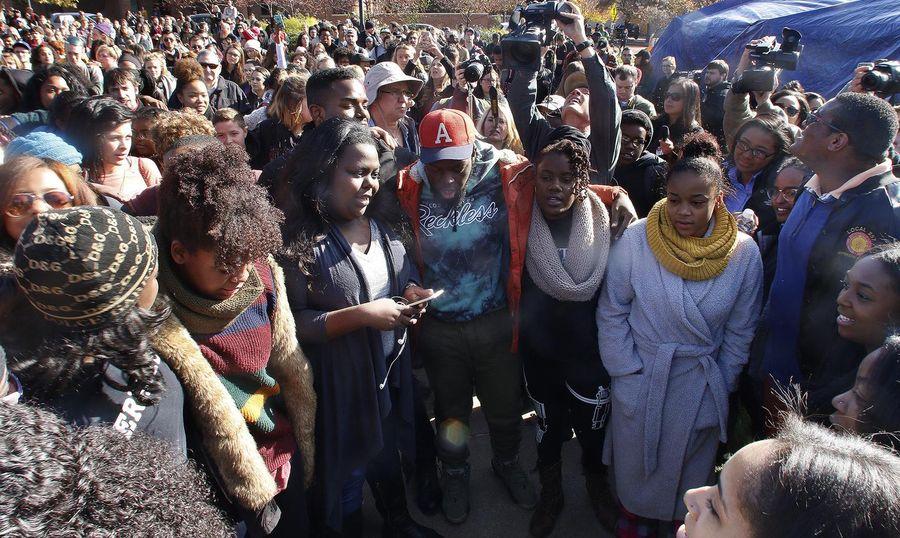
Yet that is exactly what is happening at some of our universities, where leftist faculties are marching toward the destruction of free speech, a free society and freedom of inquiry.
We cannot curb everyone's thoughts — and we shouldn't; we don't need to send everyone off to be re-educated. Instead, we need to emphasize treating everyone with mutual respect and the Golden Rule is a worthy precept for that.
When Protesters Trample Trump's Rights
Donald Trump Should Read Up on Libel Laws
The Left May Well Get Trump Nominated
Trump Foes Should Stay Off His Stage
Limits exist to what we can or should do: People inherently have different comfort zones, and there is no way to make everyone perfectly comfortable (perhaps a better word would be “complacent”) unless everyone is tongue-tied for fear of saying something that may offend someone with delicate sensibilities.
Any attempt to intimidate free speech is extremely dangerous, yet that is exactly the intent of all the micro-aggression at our universities and, increasingly, on social media.
The speech-controllers try to intimidate people by making them so fearful of crossing some boundary of propriety that they will say nothing that is not utterly bland.
The unrest on our college campuses is a reflection of the political micro-aggression that is rampant on social media — the trend of aggressively attacking people with conflicting viewpoints. Both are dangerous and encourage our inclination to run for cover and live within our own echo chambers.
Last week, in the hours after the terror attack in San Bernardino, Calif., a coordinated effort by progressive lawmakers and their bullies exploited the ghastliness of the event by using social media to go after people and politicians who offered thoughts and prayers to the attack's victims and survivors.
Like those university students who try to shame free-speech advocates, these social-media posters “prayer-shamed” people and harangued them into pushing a political discussion about guns.
Harassing people who offer up prayer after a tragedy is a bridge too far for a nation that is splintered nearly beyond repair.
Our culture is rapidly becoming a series of micro-aggressive attacks against anyone or anything that we perceive as offending us or our beliefs. From free speech on campuses to prayer for the fallen, everything is becoming a division between “us” and “them.”
The formation on social media of micro-aggressive gangs that attack each other hasn't just stayed within the singular dimension of the Internet; it has spilled over into our lives, the most recent example being university unrest. Unless we make hard decisions to reverse all of this, we will wind up living in the world we created — without free speech, without prayer, without compassion or tolerance for other viewpoints.
A nation locked into separate echo chambers, segregated from everyone who might hold a different view, would be devastating.
Yet it already is forming — not just online, but in the very places where generations of parents have struggled to afford to send their children so they could achieve the American dream.

The GOP Majority Should Go Out in Glory
Daniel McCarthy • RealClearPolitics
Republican Majorities Could Return Sooner Than Expected
J.T. Young • RealClearPolitics
The Danger Before the Attack
Leslie J. Sullivan • RealClearPolitics
Jon Finer’s Old and Dangerous ‘New Approach’ to Israel
Peter Berkowitz • RealClearPolitics
The President Deserves Better
John Ullyot • RealClearPolitics
Congress Doesn’t Need Another Blame Game. It Needs To Find What’s Broken
Jarrod Bernstein • RealClearPolitics
RCP Today
Top stories on RealClearPolitics
The Takeaway
Polling intelligence and analysis delivered to your inbox
World News
Featuring the latest world news
Policy
Featuring the latest policy news
Support Our Mission
As part of RealClearPolitics, authors aim to provide balanced, non-partisan analysis by presenting top reporting and commentary from all sides of the political spectrum.
Trusted by policymakers and citizens alike since 2000