
Battling ISIS: The Talk From Iowa to Paris
Published Nov. 16, 2015 • Read time: 7m
Join the Conversation
0DES MOINES – Hours after the Democratic presidential debate concluded with a discussion of crises relevant to Oval Office decision-making, voters awoke to fresh reminders about why that question late Saturday night was so important.
By next spring, one of three Democratic candidates will likely face an emerging Republican frontrunner for the nomination. And within a year, one of the two nominees will be transitioning to become America’s next commander-in-chief.
The 45th president will inherit a global war against organized and freelance terrorists who live in the West, in the Middle East, in Asia, and in Africa. Islamic State fighters and their fan clubs are not regionally contained, despite President Obama’s assertions to the contrary during an interview broadcast hours before the terror attacks in France.
And whether core ISIS fighters or sympathizers are responsible for killing at least 129 people in Paris late Friday, the violence reawakened old worries about terrorist sleeper cells, flawed intelligence gathering, porous Western borders and Trojan horse refugee penetration, as well as deep skepticism that Islamic extremism will ever really be extinguished.
Déjà vu reminders, such as shock and awe bombings by France Sunday, reprised tough lessons learned at the hands of al-Qaeda after 9/11. More than 14 years after the 2001 terror attacks, Americans are dismayed by endless war and violence, critical of Obama’s approach to Syria and ISIS, and torn between the costs of intervention and the risks of isolation.
Nuclear Jihad: The Threats Are Inside Our Tent
Israel's "Sorrow of the Left"
Signs of Progress Against Extremists in Syria
The World Is Getting Worse, But This Time America Won't Save It
Ben Rhodes, Obama’s deputy national security adviser, agreed Sunday with French President Francois Hollande that “war” is the correct description of the global posture triggered after the grisly attacks in Paris, where one American was killed and four were injured.
“We absolutely agree that this was an act of war by ISIL,” he told ABC News. “Anytime you have this type of indiscriminate targeting of innocent civilians, we see that as an act of war by a terrorist group.”
But what the war has become, and what exactly Obama will hand off to the next president in 14 months, are question marks.
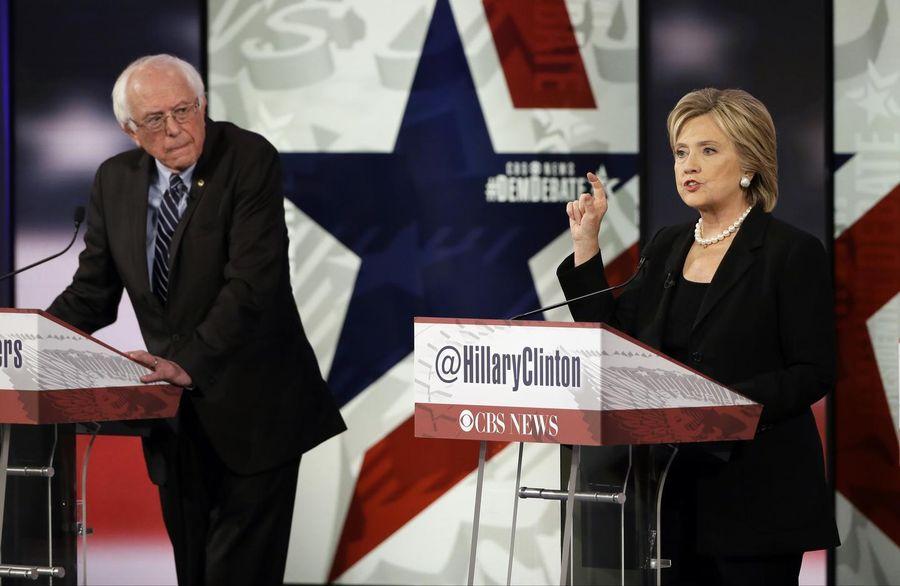
If the 8.6 million people who watched the Democratic debate thought Hillary Clinton, Bernie Sanders or Martin O’Malley might offer a strategic blueprint to defeat ISIS, they were likely disappointed. Clinton said it is not America’s fight, but the United States can assist; O’Malley disagreed and said defeating ISIS is indeed America’s fight; and Sanders said it’s up to governments in the region to figure it out.
GOP presidential candidates on Sunday recommended more, or more intensified versions, of what the administration has pursued. And some, including Jeb Bush and Marco Rubio, criticized the administration for its references to political extremism by the Islamic State, rather than by “radical Islam,” a term the administration avoids because Islam, the world’s fastest growing religion, is a peaceful faith.
If there was any bipartisan agreement by Sunday, it seemed to be consensus that battling ISIS became a war of more urgent proportions; that intelligence gathering and intelligence sharing should improve; and that deploying U.S. troops in large numbers to Iraq and Syria to vanquish ISIS fighters is untenable.
At a summit of a group of 20 world leaders meeting in Turkey over the weekend, discussions in the wake of the Paris attacks traveled along two tracks: how best to militarily squeeze ISIS in Syria and Iraq, and how to propel Syria’s governing regime into a peaceful political transition that could end the civil war and the resulting refugee crisis.
Obama, who conferred with Russian President Vladimir Putin for 35 minutes Sunday, will hold a news conference in Turkey Monday afternoon. The administration offered no hints of strategic adjustments against ISIS, also known as ISIL or Daesh (the transliteration of the acronym for the group’s full Arabic name). The president has deployed up to 50 special operations forces to Syria, but has ruled out combat troops and has resisted calls for a no-fly zone over Syria.
Russia, an ally of Syrian President Bashar al Assad, to date has rejected allied efforts to escort the Assad government out of power. Russia, under the guise of battling terrorists, is engaging in airstrikes in Syria to defend Assad.
For all those reasons, the Democrats’ scrappy disagreements over Wall Street reforms and the corrosive influence of money in politics, however lively, paled in importance to the War on Terror 3.0.
“This is an incredibly complicated region of the world,” Clinton said in Iowa, unfurling her former Situation Room bona fides while avoiding significant policy differences with Obama. Responding to the president’s earlier remarks to ABC News, Clinton emphasized that ISIS “cannot be contained; it must be defeated.”
She did not say how.
“It's become more complicated. And many of the fights that are going on are not ones that the United States has either started or [has] a role in,” she added. “It cannot be an American fight. We will support those who take the fight to ISIS.”
O’Malley, a former Maryland governor and Baltimore mayor who conceded he has no comparable foreign policy experience, sees the situation differently. “This actually is America's fight. It cannot solely be America's fight,” he said.
Sanders, whose campaign focus is primarily domestic and economic, said, “We have to understand that the Muslim nations in the region, Saudi Arabia, Iran, Turkey, Jordan, all of these nations, they're gonna just have to get their hands dirty, their boots on the ground. They are gonna have to take on ISIS.”
So eager was Sanders to pivot away from the discussion of terrorism that he suggested Americans were, and should be, preoccupied by their economic woes.
“This country will rid our planet of this barbarous organization called ISIS,” the Vermont senator said. “I'm running for president because as I go around this nation I talk to a lot of people. And what I hear is people concerned that the economy we have is a rigged economy.”
The first 30 minutes of the Democrats’ second official primary debate dealt with international policy, leaving ample room for what Clinton, in her opening statement, promised would be her plan to keep America “secure and strong.”
“I will be laying out in detail what I think we need to do with our friends and allies in Europe and elsewhere to do a better job of coordinating efforts against the scourge of terrorism,” she said. Yet, such details of alliances and coordination did not emerge.
The former secretary of state agreed with O’Malley when he said, “We must anticipate these threats before they happen.”
O’Malley put his finger on what became, a day later, a robust topic among government leaders, the FBI and law enforcement agencies, and counterterrorism experts: Was there no actionable intelligence about the Paris attackers or their coordinated targets before the carnage on Friday night? Or, was some intelligence shared by Iraq prior to the attacks, as reported by the Associated Press?
The connect-the-dots debate is reminiscent of U.S. frustrations and recriminations following 9/11. Since then, governments have invested heavily in intelligence gathering, surveillance, data mining, spying and teamwork.
The Obama administration shared some intelligence to enable French fighter jets to hit reported ISIS targets Sunday near the group’s base in Raqqa, in retaliation for the Paris attacks, the Wall Street Journal and other media organizations reported.
“The great failing of these last 10 or 15 years has been our failing of human intelligence on the ground,” O’Malley continued. “We must rise to this occasion in collaboration and with alliances to confront it, and invest in the future much better human intelligence so we know what the next steps are.”
For another year, Obama must gauge what those next measured steps will be.
Voters, many wary of accepting Syrian refugees into this country and horrified that Americans are being recruited to join ISIS, are not so preoccupied by their own horizons that they aren’t worried about events in the rest of the world.
Recent polls suggest voters are taking stock of candidates’ judgment, in addition to experience, as they search for their next president.
ISIS, the spawn of al-Qaeda and the undertow of the Iraq War will be on his or her desk.
Correction: This story was updated at 9:48 a.m. to correct a transcription error in a debate quote from Sen. Bernie Sanders.

Congress Doesn’t Need Another Blame Game. It Needs To Find What’s Broken
Jarrod Bernstein • RealClearPolitics
Democrats Won the Midterms. Common Sense Won, Too
Jordanne Kemper • RealClearPolitics
The 120th Congress Shapes Up
Carolina Lumetta • RealClearPolitics
Flooding GOP Primaries With Democrats
Robert Natelson • RealClearPolitics
Washington Keeps Rewarding Oracle—Veterans Keep Paying the Price
Darin Gaub • RealClearPolitics
The Seeds of Unrestricted Warfare
John Teichert • RealClearPolitics
RCP Today
Top stories on RealClearPolitics
The Takeaway
Polling intelligence and analysis delivered to your inbox
World News
Featuring the latest world news
Policy
Featuring the latest policy news
Support Our Mission
As part of RealClearPolitics, authors aim to provide balanced, non-partisan analysis by presenting top reporting and commentary from all sides of the political spectrum.
Trusted by policymakers and citizens alike since 2000