
Drug Crisis Plays Key Role in N.H. Senate Race
Published Nov. 15, 2015 • Read time: 10m
New Hampshire is in the midst of a drug epidemic, with one of the highest addiction rates in the country, prompting voters in the nation's first primary contest to consistently question presidential candidates on the issue of substance abuse. Addiction, and how to stem the increasing tide of overdose deaths, is also poised to play a major part in next year’s hotly contested New Hampshire Senate race.
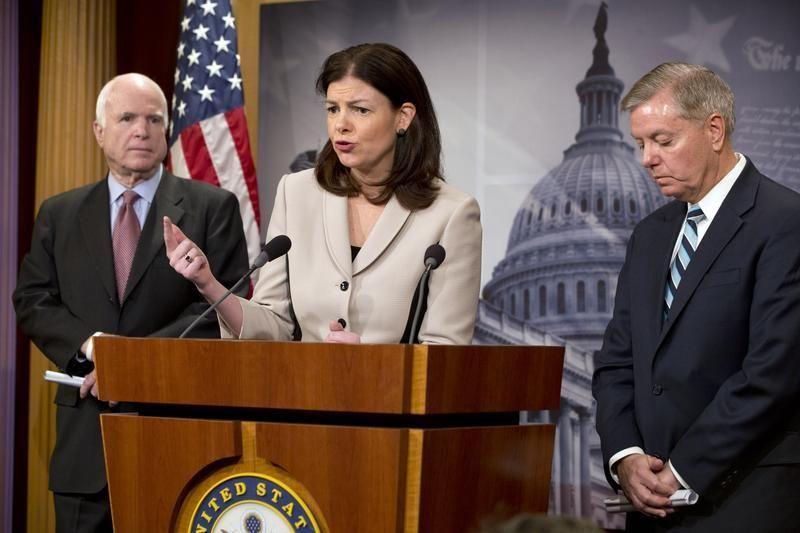
The Granite State election between first-term incumbent Sen. Kelly Ayotte and second-term Gov. Maggie Hassan will be one of the most closely watched races in 2016, and could help determine which party controls the Senate. With both candidates occupying powerful offices in the small state, their responses to the drug crisis could play an outsize role in the election’s outcome.
By all accounts, the drug problem in New Hampshire has become an epidemic. More than 300 people -- in a state with a population of just 1.3 million -- died from drug-related causes last year, including nearly 100 deaths related to heroin and nearly 150 related to the painkiller fentanyl, according to the New Hampshire Union Leader. The total surpassed the tally of traffic deaths, suicides and homicides in the state, and has already claimed more than 270 lives in 2015.
Given those statistics, which have been rapidly increasing, sources in the state say that most residents have been personally impacted by drug abuse or know someone who has. In a recent poll, voters labeled drugs the most important issue facing their state, above jobs and the economy. Eighty-eight percent called the problem “very serious.”
“Everybody in our state at least knows of someone who has a child or a student or someone they’re connected to who has a drug problem or has overdosed, and it feels like every day we are hearing [about] someone else who has died of an overdose,” said Jennifer Horn, chairman of the state Republican Party.
That’s made the epidemic a top priority for both Hassan and Ayotte.
In the Senate, Ayotte has sponsored or co-sponsored nearly a dozen different measures aimed at addressing different aspects of the problem. Recently, a bill dealing with complications suffered by infants born addicted to drugs -- due to their mothers’ drug use during pregnancy -- passed the Senate unanimously and will be voted on by the House this week (a different version unanimously passed the lower chamber earlier this year). She also sponsored a bill reauthorizing residential treatment programs for pregnant and postpartum women struggling with substance abuse.
“I see this not only as a public health epidemic in New Hampshire that is killing too many people and ruining too many lives, but this is also an issue that has touched certainly well beyond New Hampshire,” Ayotte said in an interview with RealClearPolitics. “It’s a national issue that deserves federal action.”
Ayotte also helped reintroduce the Comprehensive Addiction and Recovery Act, which has 20 co-sponsors – 13 Democrats, 6 Republicans and one independent. The bill, as its name suggests, would attack the problem from multiple angles, including prevention, treatment and support for first responders dealing with overdose cases. Ayotte said she’s been pushing to hold a hearing on the bill in the Senate Judiciary Committee and move it forward sometime soon; a spokeswoman for Sen. Chuck Grassley, the committee chairman, said he agreed to consider scheduling a hearing early next year.
Ayotte also sponsored a bill with Indiana Democrat Joe Donnelly aimed at the law enforcement side of the issue, which would create a task force for multiple government agencies to study painkiller addiction issues.
In the interview with RCP, Ayotte also highlighted an amendment to the National Defense Authorization Act, which passed both the House and the Senate this month and is expected to be signed by President Obama (despite his veto of an earlier version in October). Her amendment calls for additional resources for drug interdiction on the U.S. border.
“There’s no one solution,” she said. “What we need to look at is the whole picture, and the whole picture involves the interdiction piece to go after the cartels; it’s about making sure we get help to those that are addicted; and obviously treatment and recovery support. That means also a prevention campaign so that people understand not only the addictive nature of heroin and how it can destroy your life, but also so that people understand the connection between prescription drug overuse and those who then transition to heroin."
In New Hampshire, Hassan highlighted substance abuse coverage for Medicaid patients in her budget address shortly after taking office in 2013 and increased money for mental health services in the state budget that year. In 2014, she pushed the state to expand Medicaid through the Affordable Care Act, which added resources for recipients to get access to drug treatments. She also declared a state of emergency regarding overdoses from synthetic marijuana and created a monitoring program for prescription drugs.
This year, the governor created a rule to allow trained police officers to administer an emergency treatment for drug overdoses, appointed a “drug czar” in January to lead the state in seeking solutions to the problem (a list of initial recommendations came over the summer), called on the Board of Medicine to update its rules on dealing with substance abuse (some rule changes came earlier this month) and added funding for two additional police detectives to help deal with the opioid crisis.
“We know that we cannot arrest our way out of this crisis, and that’s why I have focused on a comprehensive approach, including working to increase treatment capacity through the reauthorization of our state’s bipartisan Medicaid expansion program, improving provider training, increasing the safe and effective use of [overdose treatment] Narcan, and strengthening youth prevention and education efforts,” Hassan said in a statement to RCP.
Indeed, some of the policy ideas the two candidates have pushed are exactly the same. Ayotte sponsored a bill to increase penalties for trafficking in fentanyl, and legislation Hassan sent to the state legislature would make penalties for distribution and sale of the painkiller equal to those for heroin.
Though they are facing each other in an election, both Ayotte and Hassan expressed a desire to keep partisan politics out of the drug discussion. Hassan told RCP in her statement that politicizing the issue does “a disservice to the people of New Hampshire” and Ayotte similarly said she believes “strongly that we should not politicize this issue.”
Despite their rhetoric, however, the issue has already been decidedly politicized.
In July, after Hassan vetoed the state budget and began a three-month spending fight with opposition legislators, the New Hampshire Republican Party sent out a release in which Horn, the GOP chairman, complained that “millions of dollars in funding to combat substance abuse are being held hostage” by the governor. Two weeks later, the National Republican Senatorial Committee said Hassan had “disconnected herself from the community” regarding the overdose problem.
Ryan Williams, a Republican strategist with ties to New Hampshire, criticized the governor’s drug czar as “detached and ineffective” and said that “no one is satisfied with the state’s response to this point to the heroin epidemic. It’s not getting better, it’s getting worse.”
Earlier this month, Hassan called for a special state legislative session, set for this week, to tackle a comprehensive bill she crafted to deal with the problem on several different levels, including additional funding for law enforcement, for the prescription drug monitoring system and for community-based treatment and prevention efforts.
Republicans argued the special session didn’t give lawmakers enough time to sufficiently study the issue, and pushed instead for a task force to review legislation in the coming months. Horn criticized the session as “the most transparently political ploy I’ve ever seen.”
“It’s a serious issue that’s got to be dealt with thoughtfully, that has to include the voices of law enforcement and the medical community, and the right way to do this is get all those people at the table and deal with this thoughtfully rather than a PR stunt for the governor,” Horn said.
Ultimately, the legislature agreed to hold the special session and lawmakers said they would take action early next year on policy proposals. Hassan said she was “encouraged” by the commitment and noted that she will “continue pushing for and working with the legislature and stakeholders from all sectors on a comprehensive, bipartisan legislative package to help save lives and give our communities the support they need."
On the other side, Democrats have also been quick to criticize Ayotte on the issue. In August, the Democratic Senatorial Campaign Committee attacked her support of Senate Republicans’ budget earlier this year, which they said would cut $150 million for drug abuse and treatment. Last week, the state Democratic Party criticized the first-term senator over her opposition to the Affordable Care Act, tying the law’s Medicaid expansion to the drug issue.
“Public health and safety experts have made clear that reauthorizing New Hampshire’s successful Medicaid expansion program is the single most important thing our state can do to combat the substance abuse crisis,” state Democratic Party Chairman Raymond Buckley said. “Now more than ever, New Hampshire needs a Senator who will fight to expand coverage, not work to repeal it.”
Ayotte called those charges false, and pointed out that she included a provision in the budget to deal with the heroin epidemic (the budget agreements, though voted on by lawmakers, advance policy and spending priorities but do not have the power of law).
Interestingly, in interviews with RCP, both parties used the exact same line of attack against their opponent: that the other side was late to the substance-abuse effort, taking it up only when it became politically important to do so.
“Any effort should be applauded and encouraged, but the fact remains that while [Ayotte has] decided to get involved in this issue over the last six months, there are others like Gov. Hassan that’s been involved over the last couple of years,” Buckley told RCP. “Kelly is the one late to the effort.”
Horn reversed that criticism, saying of Hassan: “It’s not just incompetence, but that lack of care or connection to the issue earlier this year. We’re very pleased that the governor is willing to give it the attention that it requires, we’re just disappointed it took her running for U.S. Senate to make her connect to this.”
Given the attention this issue has garnered in the presidential primary and from the two Senate candidates, it’s clear that addressing the drug problem is a major priority for voters in the state. Barring a significant improvement in the situation over the next 12 months, it will likely still be a priority when voters head to the polls in November 2016.
The outcome has implications beyond New Hampshire. The Granite State election is rated as a tossup by Larry Sabato of the University of Virginia, and is one of the states Democrats have targeted in their quest to flip the Senate majority back in their favor, along with Ohio, Illinois and Wisconsin. As for the GOP, winning New Hampshire would be a major boost for Republican hopes of maintaining their majority in the upper chamber.
Some observers in the state, however, don’t see the drug issue, divisive though it may be, as having a major effect on the race. Fergus Cullen, a former state Republican Party chairman, said he is “a little disgusted” by both sides using the drug epidemic for political attack purposes, and that if he were still the party leader it would have been “an uncomfortable argument” to make against Hassan. He said he hopes cooler heads will prevail in the months ahead.
“I just posit that both Gov. Hassan and Sen. Ayotte are very concerned about this issue,” Cullen told RCP. “The idea that one side thinks they’ve got a political advantage is ugly and unfortunate and probably not where the issue is going to be 11 months from now.”




RCP Today
Top stories on RealClearPolitics
The Takeaway
Polling intelligence and analysis delivered to your inbox
World News
Featuring the latest world news
Policy
Featuring the latest policy news
Support Our Mission
As part of RealClearPolitics, authors aim to provide balanced, non-partisan analysis by presenting top reporting and commentary from all sides of the political spectrum.
Trusted by policymakers and citizens alike since 2000