Congressman Physicist Weighs Iran Deal
Published July 27, 2015 • Read time: 6m
When President Obama announced the historic nuclear agreement with Iran earlier this month, many lawmakers said they planned to carefully study the document to see if they could support it. A deeply detailed and technical nuclear agreement may be beyond the expertise of most members of Congress. But for one Illinois Democrat, it’s his bread and butter.
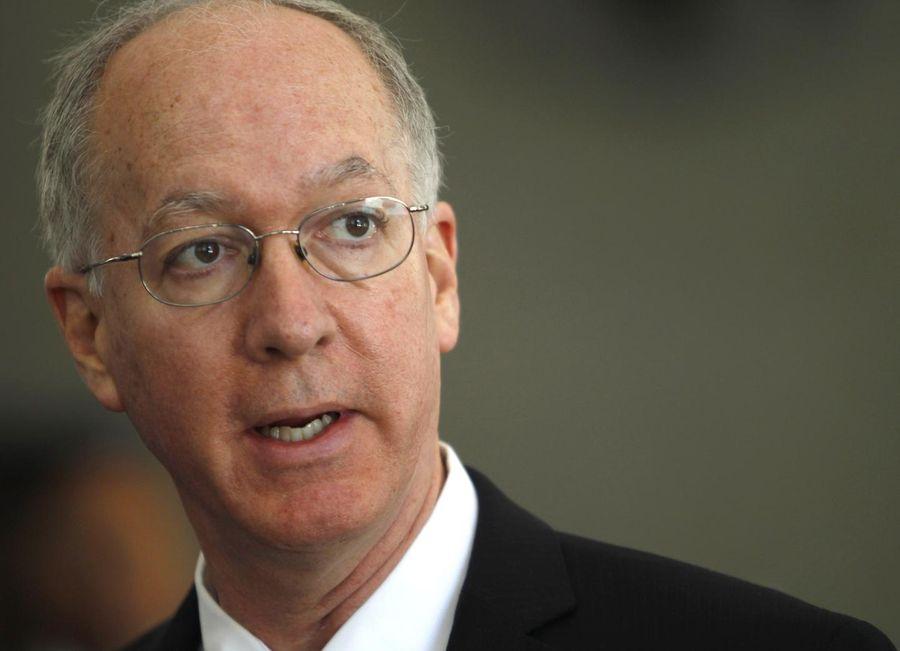
Rep. Bill Foster earned a doctorate in physics from Harvard University, making him the only Ph.D. scientist in the 114th Congress (another member has a Ph.D. in mathematics). Given his background and expertise, Foster said he feels a “special responsibility” to carefully study the technical aspects of the agreement.
In an interview with RealClearPolitics in his Capitol Hill office, Foster said he’s still undecided on the agreement and is weighing the details carefully before Congress takes a vote on it. The deal could be halted in its tracks if enough lawmakers vote against it next month, though they are just more than a week into a 60-day review period, and Foster appears likely to take his time.
In addition to the slew of briefings for large groups of lawmakers from the key negotiators, Secretary of State John Kerry and Energy Secretary Ernest Moniz, Foster has received a number of individual classified briefings. They’ve come from both State Department and Department of Energy officials, and he’s spoken privately with Moniz about the deal. Foster said he’s known the energy secretary for two decades, since Moniz was a faculty member at the Massachusetts Institute of Technology.
McCain to Code Pink Protestors: Get Out of Here You Low Life Scum
AG Nominee Lynch Deflects Cruz Missile
Senate to Begin Hearings on Obama Attorney General Nominee
Democrats, Republicans Spar Over Benghazi Investigation
He told RCP he’s only about halfway through the classified briefings he’s hoping to receive.
One part of the deal he’s focused on is the accuracy of the Obama administration’s assertion that this agreement would leave Iran with a one-year breakout time for developing a nuclear weapon and the number of potential pathways for that weapon. While many are focused on the pathway of enriching uranium with a centrifuge, Foster said there are a number of other possibilities he is considering carefully. He’s also looking closely at the number and capability of the Iranian centrifuges that will remain as part of the deal.
Foster said he’s been impressed so far with the job the negotiators have done in answering even the most specific of questions. He said Moniz assured him that experts at the national laboratories were involved in the “nuts and bolts” of the negotiation.
“When I have asked questions in classified settings – ‘Well, what if they try this, what if they try this, what if they try this?’ – the answer is ‘Oh yes, we’ve studied that, there’s a report, we can make it available to you at some subsequent classified briefing,’” Foster said. He also said a number of nuclear and nonproliferation experts have been following the issue closely and have been feeding him important questions.
“There have been, directly and indirectly, a lot of very competent technical eyes on this agreement, and that’s something that I feel very positive about,” Foster said.
He also sees some positives in the agreement itself. One specific area he mentioned is the cap on partially enriched uranium at 300 kilograms, which he called “significant.”
“I believe the Iranians are going to have a hard time living with that, even to conduct their normal, planned nuclear program, and that is less than they would need to make even one nuclear weapon, so that’s very significant,” Foster said.
Foster has served his current district since 2013 and previously served as the representative of a different Illinois district from 2008-2011. Before his political career, Foster spent two decades as a high-energy physicist at Fermi National Accelerator Laboratory in Illinois, and that expertise has not escaped the notice of his colleagues.
Foster said other members ask him questions “all the time” about the agreement, and they’re both “microscopic” and more general. He hasn’t been asked by the administration or leadership to field inquires. Instead, lawmakers just know who to go to with a scientific query.
Or, in some cases, they know whom to sit with during the classified briefings. In one briefing from Kerry and Moniz, Foster said he was sitting next to a Republican colleague who continually leaned forward to ask him questions as the information came in.
For the most part, Foster said he restricts his answers to technical issues, not wanting to portray himself as a master of the diplomatic side of the agreement. Questions often concern the breakout time, the ability to find weapons-related research, or the ability to detect any nuclear activity if Iran cheats on the agreement. One area of deep lawmaker concern has been the 24-day period before inspectors can gain access to some Iranian nuclear sites, but Foster dispelled that notion with a similar answer to the one Moniz has given in the past.
“If you’re dealing with live nuclear material and you do anything that disperses them, it is very hard to hide, even after a 24-day cleanup period, the fact that there was nuclear material in this facility,” he said.
In the end, it remains unclear how Foster will vote on the agreement, and he declined to hint which way he is leaning. Perhaps his most telling statement during the nearly half-hour interview was that his “general reaction is positive in terms of the technical competence of our negotiating team on this.”
His support or opposition may prove crucial. If Congress passes and Obama vetoes a resolution disapproving of the deal, Democrats will have to work hard to muster the necessary votes to allow the deal to move forward, while Republicans will work equally hard to convince Democrats to vote against the president.
Don’t expect any lobbying or persuasion tactics to work on Foster.
“This will be a career-defining vote for everyone who takes it,” he said. “I think unfortunately, many members of Congress view it through a partisan lens and say, ‘Oh, we have to vote one way because we don’t trust the president or another way because we must support the president.’ The scientist in me rebels against that. We should start with the technical facts of the agreement, and then proceed to a very complicated diplomatic and psychological judgment call of what the world looks like if Congress does vote this agreement down.”
So will Congress vote it down? He’s fielded plenty of questions about the Iran agreement in recent weeks, but that’s one query Foster’s not prepared to answer.
“I’ve been spending too much time understanding the usability of reactor grade plutonium for making nuclear weapons and issues like that than engaging in a whip count of how it’s going to go,” he said.

A RealClear Thanksgiving: Investing in a Better Future
David DesRosiers • RealClearPolitics
Trump’s Newsom Problem: Antagonist-in-Chief
Carolina Lumetta • RealClearPolitics
America’s Free Spirit
John Maxwell Hamilton • RealClearPolitics
The GOP Majority Should Go Out in Glory
Daniel McCarthy • RealClearPolitics
Republican Majorities Could Return Sooner Than Expected
J.T. Young • RealClearPolitics
The Danger Before the Attack
Leslie J. Sullivan • RealClearPolitics
RCP Today
Top stories on RealClearPolitics
The Takeaway
Polling intelligence and analysis delivered to your inbox
World News
Featuring the latest world news
Policy
Featuring the latest policy news
Support Our Mission
As part of RealClearPolitics, authors aim to provide balanced, non-partisan analysis by presenting top reporting and commentary from all sides of the political spectrum.
Trusted by policymakers and citizens alike since 2000