
An Upbeat Ending to Obama's Gulf Summit
Published May 15, 2015 • Read time: 3m
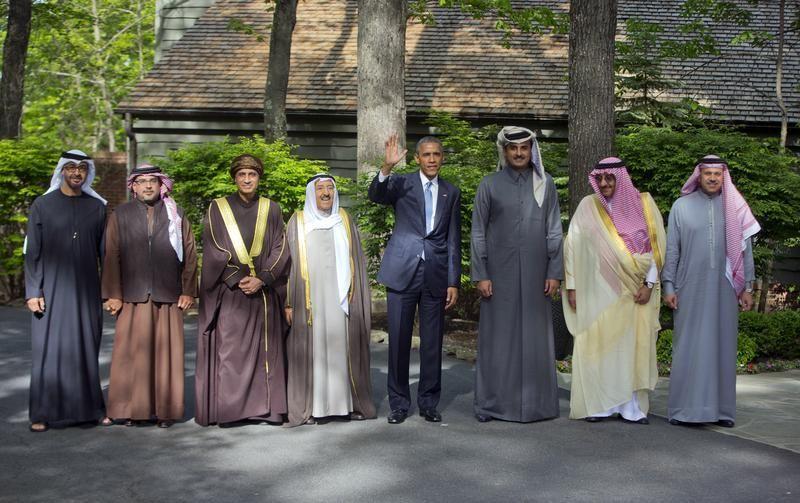
WASHINGTON -- President Obama's meeting with Arab leaders of the Gulf Cooperation Council at Camp David ended with surprisingly upbeat statements and an "unequivocal" U.S. commitment "to deter and confront" any future aggression from Iran.
"The U.S-G.C.C. relationship has just been elevated to a new level," said Yousef al-Otaiba, the United Arab Emirates' ambassador to Washington, in a telephone interview after the summit ended. "The potential for collaboration has just taken a new step."
Coming after months of hand-wringing about deteriorating relations with Saudi Arabia, the U.A.E. and other Gulf countries, the Camp David meeting was seen as a potential arena for confrontation. But it apparently proved the opposite. The Arabs got what they wanted, in assurances of American willingness to challenge Iranian meddling in the region, and Obama got an endorsement of his effort to negotiate a nuclear deal with Tehran.
Mutual suspicions will remain, but the meeting represented an important consolidation of ties with Sunni Arab powers as the U.S. heads toward a potential breakthrough agreement with Shiite Iran. Obama, in effect, is adopting a strategy of riding two horses at once -- an approach Iran, Saudi Arabia and other regional powers have often adopted.
The Camp David setting seems to have helped lighten the atmosphere. After a somewhat stiff morning session devoted to briefing the leaders on the progress of the Iran talks, the leaders adjourned to lunch. After that, the mood changed. During the afternoon, the leaders talked informally about regional challenges in Syria, Iran and Libya, with Saudi, Emirati and Qatari leaders raising their hands to interject and offer comments and suggestions.
Nuclear Jihad: The Threats Are Inside Our Tent
Israel's "Sorrow of the Left"
Signs of Progress Against Extremists in Syria
The World Is Getting Worse, But This Time America Won't Save It
The mood in this afternoon session was "really, really positive," said one attendee. "We came away with a collective spirit we didn't have before the meeting."
Secretary of State John Kerry told the group about his visit this week with Russian President Vladimir Putin, and the U.S. hope that the Russians will join in sponsoring a process of political transition away from the regime of Syrian President Bashar al-Assad. Other U.S. officials urged Gulf leaders who are funding the opposition to keep control of their clients, so that a post-Assad regime isn't controlled by extremists from the Islamic State or al-Qaeda.
A joint statement issued by the group took an anti-Assad line, but without the emphatic "Assad must go" tone used by Obama three years ago. This time, the communique "reaffirmed that Assad has no legitimacy and has no role in Syria's future." How this change will be accomplished wasn't explained, and probably hasn't yet been agreed upon.
The importance of the meeting was symbolic, but that's not a trivial matter. In contrast to Israeli Prime Minister Benjamin Netanyahu, who harangued Obama and lobbied against the Iran nuclear deal from the floor of Congress, the Gulf Arab leaders have said, in effect, that they'll support the deal so long as Obama keeps Iranian proxies from advancing further in the Sunni world.
For once, in the theater of the Middle East, the Arabs have opted to be the good guys, compared with an unyielding Israeli government. And Obama has responded with the sentiment conveyed by the Arabic expression, "Ahlan wa Sahlan." You are welcome.
(c) 2015, Washington Post Writers Group

Jon Finer’s Old and Dangerous ‘New Approach’ to Israel
Peter Berkowitz • RealClearPolitics
The President Deserves Better
John Ullyot • RealClearPolitics
Congress Doesn’t Need Another Blame Game. It Needs To Find What’s Broken
Jarrod Bernstein • RealClearPolitics
Democrats Won the Midterms. Common Sense Won, Too
Jordanne Kemper • RealClearPolitics
The 120th Congress Shapes Up
Carolina Lumetta • RealClearPolitics
Flooding GOP Primaries With Democrats
Robert Natelson • RealClearPolitics
RCP Today
Top stories on RealClearPolitics
The Takeaway
Polling intelligence and analysis delivered to your inbox
World News
Featuring the latest world news
Policy
Featuring the latest policy news
Support Our Mission
As part of RealClearPolitics, authors aim to provide balanced, non-partisan analysis by presenting top reporting and commentary from all sides of the political spectrum.
Trusted by policymakers and citizens alike since 2000