The Best and Worst Campaign Ads of 2014
Published Nov. 5, 2014 • Read time: 9m
Four billion dollars …
This has been the most expensive midterm election ever. And with unprecedented spending comes unprecedented influence and impact of those 30-second vignettes designed to inform and enrage, enlighten and destroy. Effective ads beget effective campaigns. And, of course, vice versa.
Reading the ads is like reading tea leaves -- it’s the narrative that matters. Americans are fed up, and across the country, pollsters, pundits and on-air personalities have called this election a referendum on Obama. But that’s not the case. The 2014 election is a referendum on Washington -- on out-of-control spending, on a lack of accountability, on fighting for special interests instead of the people’s interests.
That’s why Americans told us in a September survey that (though knowing nothing else about a candidate) they’d support a challenger -- a Washington outsider over an incumbent -- by a two to one margin (68 percent to 32 percent). Sure, most incumbents survive elections, but a larger than average number aren’t expected to this year. And a major reason is those pesky little ads.
What follows are the most important, the most impactful, the most persuasive ads from 2014. Each video features our Luntz Global Instant-Response Dial Lines that represent how swing voters from across the country responded to each ad on a scale from 0 to 100. The GOP red line represents the average response of Republican-leaning swing voters, while the DEM green line represents the average response from Democratic-leaning swing voters. The higher and faster the lines climb, the more persuasive and impactful the ad is. If an ad doesn’t reach 50, it’s a failure. If it gets above a 70, it’s a home run. And if the lines disappear beyond 80 -- it’s truly a powerhouse.
Where "Obama Republicans" Split With Party
Curbelo Gives Spanish-Language Response to State of the Union
Rep. Bachmann Says She Won't Run For Re-Election
No, We Don't All Sin Like Mark Sanford
So here we go …
1. Kentucky: Mitch McConnell’s “Strong Voice”
The ad features a former coal miner who lost his voice due to exposure to radiation at his job. He endorses McConnell, declaring that the senator “fought for us” by providing early cancer screenings and compensation. But that’s not what makes the ad special.
What you notice first is that the man is whispering. He talks about McConnell being a strong voice, and yet the man is whispering. The ad -- because of its narration -- makes you lean in and strain to listen more closely to its strong message, as told by a most sympathetic figure. Incredible.
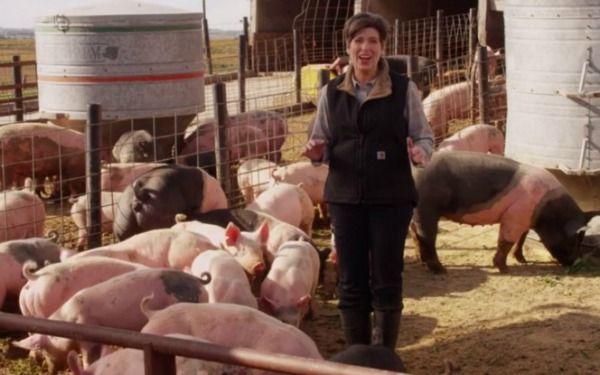
2. Iowa: Joni Ernst’s “Squeal”
In her first ad, Ernst takes a comical look at Washington spending and links her experience growing up “castrating hogs” to “cutting pork in Washington.” For weeks after it first aired, the news media asked why “castrating hogs” was on Ernst’s political resume, and the answer lay squarely in the coverage the ad generated. It vaulted her into the national spotlight amid a tough Iowa Republican primary, giving her momentum that she’s carried right up until the end. While other candidates were attacking their opponents on whether they did or did not vote for the Affordable Care Act, Ernst astutely took aim at the very thing Americans were most angry about -- Washington spending -- and did so in a lighthearted but serious way.
3. North Carolina: Kay Hagan’s “Most Moderate Senator”
The reason that Americans are so angry with incumbents is because they’re so focused on Washington politics that they’ve forgotten whom they represent and where they came from. Voting records play heavily into this perception, and there were a slew of ads that attacked Democrats for how often they voted with Obama. Hagan’s message hit the bull’s-eye by positioning herself as the most moderate senator in Washington. Her actual voting record is certainly left-leaning, voting with the president nearly 95 percent of the time, but what North Carolina voters heard is that she is willing to listen to common sense, compromise to get things done, and willing to work with anyone to deliver results.
4. Colorado: Cory Gardner’s “Nice Guy”
You never hear a candidate say anything positive about his opponent -- ever! So when Cory Gardner looked straight into the camera and called his opponent a “nice guy,” everything else he said had genuine credibility. Sure, he used the rest of the ad to attack his opponent as an out-of-touch Washington insider who’s made a career out of being a politician. But hey, at least he’s a nice guy. This ad does two things right -- and they’re essential. The first is that it starts with a positive. For Gardner, that was critical because he was being attacked as a fire-breathing right-wing zealot. And second, there are no gimmicks or visual tricks or any of that silly stuff that ruins an ad’s credibility. By talking straight to camera, Gardner communicated sincerity, honesty, and authenticity.
5. Kansas: Greg Orman’s “Tug-of-War”
Sometimes an analogy is so powerful and so effective that it can shift the entire momentum of an election. That’s the case with Independent Greg Orman’s depiction of Republicans and Democrats playing a literal game of tug-of-war -- with America trapped in the middle. Orman’s language, similar to Ross Perot’s in 1992, not only appealed to political independents but his anti-Washington message had disaffected Republicans cheering.
6. Alaska: Americans for Prosperity’s “Alaskan Work Ethic”
Voters are sick of politicians ignoring their issues, their struggles and their concerns and not being represented in Washington. And so an ad that attacks Democrat Mark Begich for missing more votes than 80 percent of all U.S. senators really hits the mark. The question voters asked was “How can he say he cares about hardworking taxpayers when he’s hardly working?” -- especially in Alaska, where work ethic is sacrosanct. And using a real person instead of an actor gave the ad the credibility and authenticity it needed to cut through the clutter.
From the examples above, it’s clear that political ads (when done right) have the power to define a campaign, change voter behavior, and change an election. But the flip side is also true. When an ad’s message misses the mark -- when it’s done so poorly that it backfires -- it can have dramatic and dire consequences for a candidate. Here are some of the worst ads from 2014:
1. Michigan: Terri Lynn Land’s “Coffee”
If you’re going to pay the extremely high price to write, produce, and buy air time for an ad, it had better have a message worth promoting. In this one, Land takes roughly 12 seconds out of a 30-second spot to say, literally, nothing. She was trying to refute her opponent’s claims that she was “waging a war on women” by asking the viewer to “think about that for a moment,” while she sips coffee, checks her watch and shakes her head. The implication is that simply because she’s a woman, she would fight for women. But she gives no reason why. She was tied for the lead early in the campaign -- but fell behind well before election night.
2. Minnesota: Mike McFadden’s “Coach”
Not only does this ad break one of the cardinal rules of political advertising (don’t use kids as props) and not only does it focus on the wrong issues (Obamacare instead of wasteful Washington spending) and not only does it feature a youth football coach encouraging his players to “get out there and hit somebody” (to the horror of every mom in our focus group), this ad ends with a sophomoric hit-a-guy-in-the-crotch joke that’s right off of “America’s Funniest Home Videos” from the 1980s. Terrible message. Terrible approach. Terrible ad.
3. Connecticut: Tom Foley’s “Pinocchio”
This ad attempts to show that Democratic Gov. Dan Malloy has a problem with the truth by depicting him with a growing nose. We get it. You have Photoshop. Congratulations. What our voters didn’t get was why this ad would try to take a humorous approach to depict issues that are decidedly not funny. What’s more, this attack ad looks like every other attack ad: grainy footage and/or still images of a candidate, and a sinister-sounding voice-over detailing facts about a candidate that are so badly presented that the viewer doubts their accuracy. Tom Foley may still win, but it won’t be because of this ad.
4. Republican National Committee’s “Crying Baby”
What do you get when you mix two things people hate (political ads and 30 seconds of one of the most ear-grating sounds every created: a crying baby)? The answer is this ad. Now this may have only been intended for the Web, but the reaction was powerful. Our dial session of swing voters kept asking why the cameraman didn’t put down the camera and come to the baby’s aid. As for me, I wondered how many times they had to pinch the kid to get her so upset. Either way, this ad just made viewers mad.
5. Iowa Primary: Bob Quast “Shoot Your Balls Off”
For those who actual read to this point, you’re in for a treat: a real political ad that is so ridiculous, so amateurish, and so wrong in every way that it wins our distinction as the weirdest ad of 2014. Quast is seen literally running with his child as he tells us he’s running for U.S. Senate. He tells us that he supports all of the constitutional amendments (especially the Second Amendment). Then things then takes a pretty drastic turn when he states, “If you’re the socio-path and sexual predator who murdered my sister Lynette, and you come to my front door to do harm to my girls, I’m going to use my Glock to blow your balls off.” He looks insane. Based on this ad, he may be.
***
This cycle has been easily the most volatile of any we’ve seen in years. Political ads have certainly defined many of the key races -- and as you see from the examples cited, they can make or break someone’s chances of winning. So it’s important that candidates get their message right and deliver it in a compelling way.
As I’ve always said, it’s not what you say, it’s what people hear. Every time a candidate airs an ad with the wrong message, the effects are immediate and long-lasting. But similarly, ads with the right message and the right visuals can persuade and promote even the most obscure candidate. The Senate is filled with them.

A RealClear Thanksgiving: Investing in a Better Future
David DesRosiers • RealClearPolitics
Trump’s Newsom Problem: Antagonist-in-Chief
Carolina Lumetta • RealClearPolitics
America’s Free Spirit
John Maxwell Hamilton • RealClearPolitics
The GOP Majority Should Go Out in Glory
Daniel McCarthy • RealClearPolitics
Republican Majorities Could Return Sooner Than Expected
J.T. Young • RealClearPolitics
The Danger Before the Attack
Leslie J. Sullivan • RealClearPolitics
RCP Today
Top stories on RealClearPolitics
The Takeaway
Polling intelligence and analysis delivered to your inbox
World News
Featuring the latest world news
Policy
Featuring the latest policy news
Support Our Mission
As part of RealClearPolitics, authors aim to provide balanced, non-partisan analysis by presenting top reporting and commentary from all sides of the political spectrum.
Trusted by policymakers and citizens alike since 2000