Is It Time for a Special Prosecutor?
Published June 20, 2014 • Read time: 7m
Join the Conversation
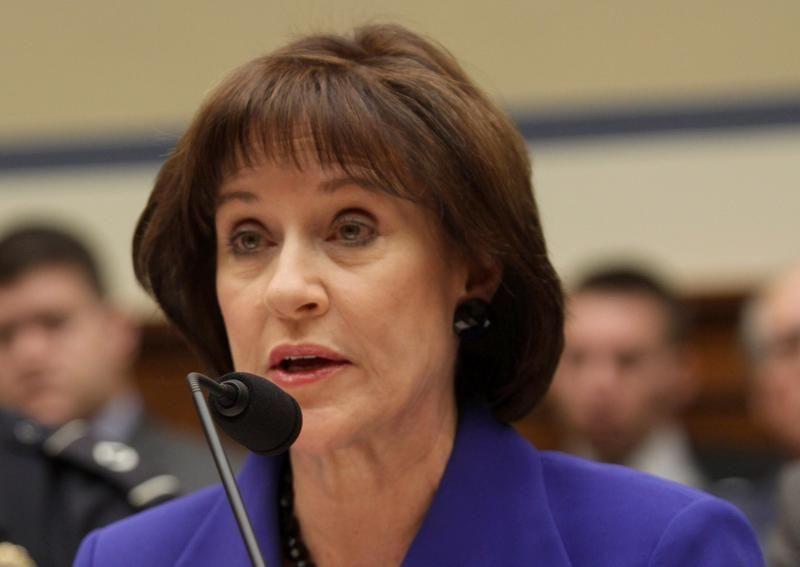
0The anniversary of the Watergate burglary arrived this week, along with the disquieting revelation that it’s not just disgraced former Internal Revenue Service official Lois Lerner who’s taking the Fifth. Her email is clamming up, too.
More than a year into the controversy over the tax agency’s targeting of conservative non-profit groups, IRS officials casually told congressional investigators last week that a 2011 computer crash caused thousands of sought-after Lerner emails to disappear.
So, can the mess at the IRS now objectively be called an Obama administration scandal?
Hillary Clinton seemed to acknowledge as much. “I think that anytime the IRS is involved,” she told Fox News host Greta Van Susteren, “for many people it’s a real scandal.”
White House officials don’t concede the point. “You’ve never heard of a computer crashing before?” presidential spokesman Josh Earnest told reporters. “The far-fetched skepticism expressed by some Republican members of Congress,” he added, “I think is not at all surprising and not particularly believable.”
With its unprecedented abuse of executive power, no modern scandal was ever like Watergate, but this was a passable imitation of Richard Nixon’s press secretary Ron Ziegler, who said two days after five suspects were arrested in the Watergate break-in that “certain elements may try to stretch this beyond what it is.”
President Obama himself hasn’t been above channeling Nixon, either. When the story first broke that the IRS was targeting groups with “Tea Party” or “Patriot” in their names, he told reporters aboard Air Force One that these machinations were all the work of a few rogue agents in an Ohio IRS office -- “two Dilberts in Cincinnati” was the president’s phrase.
Charge Against Trump Campaign Manager Eclipses Wisconsin Race
Arizona's Voting Rights Fire Bell
Judge Garland and the Left's Disdain for Truth
Military Has Wide Discretion on Bergdahl Charges
After it turned out that the Washington office was actually calling the shots, Obama didn’t change his story. Yes, some “bone-headed decisions” were made, he told Fox News host Bill O’Reilly -- but it didn’t entail “even a smidgen of corruption.”
Perhaps that’s true. But the question is how the American people are supposed to discern the truth. One way to get those missing emails would be with a federal inspector general complete with subpoena powers. Another -- and God help me for saying this -- would be a special prosecutor.
Watergate begat the independent counsel system, enacted by law as a post-Watergate reform by a Congress burned by the memory of the “Saturday Night Massacre” -- Nixon’s firing of one attorney general after another until he found someone willing to sack special prosecutor Archibald Cox. It was only a temporary victory for the beleaguered president, but it convinced most Americans -- and not just Democrats -- that the Justice Department couldn’t be trusted to investigate executive branch wrongdoing.
Problems with the new reform arose from the start, however. Theoretically, special prosecutors were subject to judicial oversight, but in practice they were on their own. With no bosses, no time constraints, and no limitations on the scope of their probe, special prosecutors tended to turn into Inspector Javiers -- if the villain of “Les Misérables” had had an unlimited budget and no superior.
As the abuse of executive power gave way to the abuse of prosecutors with more power than British kings wielded at the time of the American Revolution, it became clear that the reform-minded liberals swept into power in the post-Watergate Democratic landslide of 1974 didn’t actually know more than the Framers.
It took a while for Democrats to fathom the problem, which was that many of the independent counsels appointed in the 1980s lack the trait known as “prosecutorial discretion.” This was understandable: many of them had never been prosecutors. And as independent counsels they contended with none of the normal checks and balances in courthouse politics -- because they never had to face the voters. Accountable to no one, they didn’t balance the alleged transgressions of their target with more serious cases -- because they didn’t have other cases.
“A one-case lawyer with nobody to question what is done in the investigation is a dangerous person," observed noted Washington attorney Jacob Stein, who served as both an independent counsel -- he didn’t indict -- and a lawyer representing a client caught up in a notorious example, the investigation of prominent Republican Theodore B. Olson.
A top legal official in the Reagan administration, Olson was investigated by a zealous special prosecutor named Alexia Morrison. Tasked with determining whether Olson lied to Congress over an EPA decision (he hadn’t), she took 28 months -- and several million taxpayers’ dollars -- before simply deciding to do nothing.
Olson responded by challenging the constitutionality of the law. The case went all the way to the Supreme Court, before Olson lost. But he left us with a tidy summation of the distorted incentives in the system: “If you are given a fishing license which has the name of a fish on it, and you don’t come back with that fish, you’ve failed.”
For years, Republicans complained that congressional Democrats were abusing the law by demanding independent counsels for Republicans in the executive branch who thwarted their policy goals. Every Republican had their favorite horror story. One of the most egregious involved Lawrence Walsh. His zealous Iran-contra probe produced an October surprise -- the indictment of former Defense Secretary Caspar Weinberger and sliming of GOP presidential candidate George H.W. Bush a week before the 1992 presidential election.
For the better part of two decades these GOP complaints fell on deaf ears. All that changed when Bill Clinton was elected president, and congressional Republicans began using the independent counsel statute -- with its absurdly low standard of proof for triggering a special prosecutor -- against administration officials. Initially, Attorney General Janet Reno defended the statute, but as the 1990s rolled by Democrats began compiling their own list of fanatical special prosecutors.
Even before Kenneth Starr brought the Clinton presidency to a virtual standstill, an independent counsel named David M. Barrett spent $21 million and 10 years investigating HUD secretary Henry Cisneros for not telling the FBI about payments he’d made as a private citizen to a former mistress. In the end, he succeeded in jailing his star witness -- the girlfriend -- for fudging on housing loan forms. She is the only person ever known to do prison time for this offense.
Then there was Donald C. Smaltz, who spent four years and $17.5 million prosecuting Secretary of Agriculture Mike Espy for allegedly accepting $35,000 worth of gifts from agribusiness interests. Espy was acquitted by a disgusted and perplexed jury.
In the midst of this kind of thing, even before Ken Starr’s far-reaching investigation into dodgy Clinton real estate deals in Arkansas unearthed a White House intern named Monica Lewinsky, Democrats began seeing the problem. “They’re criminalizing policy differences!” Clinton political adviser James Carville complained to me one night on the phone. I replied that Republicans had been making this same complaint for years, to little effect.
Eventually, the law was allowed to lapse during the Clinton administration. Many of us thought this was a good thing. Now, many executive branch observers are second-guessing themselves. Technically, this is probably third-guessing.
The current scandal has featured lying to Congress and stonewalling, and now missing evidence. The very fact that it appears to involve the Internal Revenue Service infuriates Republicans, as it should. Once upon a time, liberals were outraged by this sort of behavior, too -- one in particular.
On July 27, 1974, the Democratic-controlled House Judiciary Committee completed work on three articles of impeachment. The first informational item in Article II included the charge that the president had caused “in violation of the constitutional rights of citizens income tax audits or other income tax investigations to be initiated or conducted in a discriminatory manner.”
Article I accused the president of “withholding relevant and material evidence or information from lawfully authorized investigative officers and employees of the United States.”
Forty years later, one of the House Judiciary Committee staff attorneys who helped prepare that brief is pondering presidential ambitions of her own. That Democrat, Hillary Rodham Clinton, was asked about the current IRS matter this week by Van Susteren. While Clinton didn’t call for a special prosecutor, she didn’t minimize the situation, either.
“It’s important to get back to very professional inquiries that can’t be accused of politicizing things,” she said. “Let’s try and find out what the facts are.”

A RealClear Thanksgiving: Investing in a Better Future
David DesRosiers • RealClearPolitics
Trump’s Newsom Problem: Antagonist-in-Chief
Carolina Lumetta • RealClearPolitics
America’s Free Spirit
John Maxwell Hamilton • RealClearPolitics
The GOP Majority Should Go Out in Glory
Daniel McCarthy • RealClearPolitics
Republican Majorities Could Return Sooner Than Expected
J.T. Young • RealClearPolitics
The Danger Before the Attack
Leslie J. Sullivan • RealClearPolitics
RCP Today
Top stories on RealClearPolitics
The Takeaway
Polling intelligence and analysis delivered to your inbox
World News
Featuring the latest world news
Policy
Featuring the latest policy news
Support Our Mission
As part of RealClearPolitics, authors aim to provide balanced, non-partisan analysis by presenting top reporting and commentary from all sides of the political spectrum.
Trusted by policymakers and citizens alike since 2000