Jobless Benefits Halt May Be Key Issue in Midterms
Published Dec. 29, 2013 • Read time: 4m
Join the Conversation
0If lawmakers decide next month to end a high-stakes impasse over extending long-term unemployment insurance benefits that expired Saturday, an estimated 1.3 million jobless Americans may receive compensation for three additional months or longer.
However, in allowing the federal benefits to lapse this weekend -- after extending the support 11 times since the recession of 2008 -- Congress may have severed help to nearly 5 million people by the end of 2014, according to the Obama administration.
The battle has become the starter’s pistol of the midterm election year, pitting Democrats’ belief that the benefits are necessary and help buoy a still-wobbly economy, against Republican arguments that growth and hiring would gain strength more quickly if Washington keeps its spigot turned off and leaves unemployment compensation to the states.
Recent polling suggests Democrats have the stronger argument with the public across regions, genders and age groups. A majority of voters say they want Congress and the president to maintain the benefits, according to a survey of 811 registered voters conducted Dec. 18-22 by Hart Research Associates. The poll found that 55 percent of voters think the federal emergency program should continue, while 34 percent say benefits should cease.
In urging an end to the federal program, in part because of a belief that it feeds dependency, many Republicans are playing with fire heading toward midterm political contests, the Hart pollsters said Dec. 26.
“Voters with a history of voting in off-year elections embrace an extension by a 20-point margin, suggesting that the 2014 elections will be contested within a strongly pro-benefit electorate,” they wrote. “Moreover, some of the demographic groups that built the GOP’s 2010 majority oppose the party’s policy of ending unemployment benefits,” including seniors 65 and older, white women, and white non-college-educated voters.
The Empty Promises of Trump and Sanders
Good News for Discouraged Workers
A Vote for Trump Is a Vote Against American Consumers
First Lady Honors Pioneering Female Air Force Officer
Senate Majority Leader Harry Reid said he would make unemployment insurance the first order of business in January, after Congress failed before the Christmas holiday to adopt an extension as part of a two-year budget accord signed by President Obama.
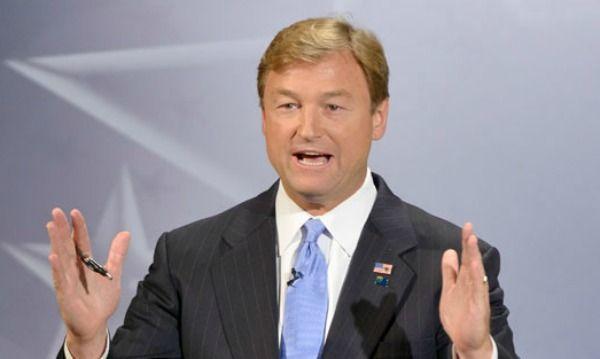
The president supports a bipartisan measure sponsored by Democratic Sen. Jack Reed of Rhode Island and Republican Sen. Dean Heller (pictured) of Nevada. Their plan would extend the benefits for 12 weeks and Obama would sign it, White House National Economic Adviser Gene Sperling said in a statement issued Friday.
“Never before have we abruptly cut off emergency unemployment insurance when we faced this level of long-term unemployment,” Sperling added.
According to federal data, 37.3 percent of the 10.9 million people who are unemployed have been searching for jobs for 27 weeks or longer. This represents 2.6 percent of the total labor force, a number twice as high as it was when lawmakers enacted and extended emergency federal unemployment insurance programs during seven previous major recessions, according to the left-leaning Center for Budget and Policy Priorities.
The senators’ proposal would not be paid for with other cuts and is intended as a grace period for the unemployed while lawmakers take more time to see if they can hammer out a longer-term agreement in the new year. Each senator represents states tied for the highest unemployment rate in the nation -- 9 percent. At the height of the 2008 recession, the jobless rate nationally topped 10 percent, underscoring the damage still being felt in Rhode Island and Nevada.
“Providing a safety net for those in need is one of the most important functions of the federal government,” Heller said in Dec. 18 statement. “As Nevada’s unemployment rate continues to top the charts nationwide, many families and individuals back home do not know how they are going to meet their basic needs.”
House Speaker John Boehner told the president early in December that he and his fellow Republicans are amenable to an extension of benefits that is offset in the budget, and tied to other provisions conservatives favor. In Boehner’s home state of Ohio, unemployment of 7.4 percent continues to exceed the national level.
Some Republicans have pressed Democrats for a tradeoff of new entitlement constraints or other budget cuts, for example. Republicans earlier this month opposed a three-month extension that proposed to tap farm program spending as offsets.
If lawmakers break their impasse during the week of Jan. 9 and agree to a three-month extension of benefits, they would add at least $6.5 billion to federal spending. If they decide an economy that began 2013 with a 7.9 percent national unemployment rate and enters 2014 near or at 7 percent merits a one-year cushion for the long-term unemployed, the budgetary price tag rises close to $26 billion.
Since President Bush and Congress enacted the emergency unemployment payouts beginning in 2008, the price tag has exceeded $250 billion.

Newsom Defies Voters, Juries and Lawmakers To Spare Murderers While Defending Abortion
Curtis Hill • RealClearPolitics
The Algorithmic Tilt
Frank Filingeri • RealClearPolitics
A RealClear Thanksgiving: Investing in a Better Future
David DesRosiers • RealClearPolitics
Trump’s Newsom Problem: Antagonist-in-Chief
Carolina Lumetta • RealClearPolitics
America’s Free Spirit
John Maxwell Hamilton • RealClearPolitics
The GOP Majority Should Go Out in Glory
Daniel McCarthy • RealClearPolitics
RCP Today
Top stories on RealClearPolitics
The Takeaway
Polling intelligence and analysis delivered to your inbox
World News
Featuring the latest world news
Policy
Featuring the latest policy news
Support Our Mission
As part of RealClearPolitics, authors aim to provide balanced, non-partisan analysis by presenting top reporting and commentary from all sides of the political spectrum.
Trusted by policymakers and citizens alike since 2000