
Time to Pull the Plug on MSNBC?
Published Nov. 22, 2013 • Read time: 9m
Join the Conversation
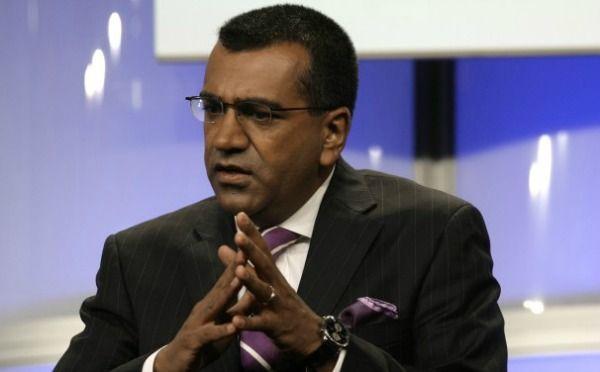
0Last Friday, MSNBC anchorman Martin Bashir suggested that anyone who uses the word “slavery” too lightly should be forced to eat human feces. Although Bashir had Sarah Palin in mind for this torture, his own standard might have necessitated its infliction closer to home -- as Bashir has used the same metaphor himself.
Bashir’s detractors immediately pointed out this inconsistency. Several of these critics said this disgusting punishment would be more befitting Bashir.
I have a better idea. NBC could just yank this kind of programming. If it did, the network that provides its anchors a platform for crude daily rants would be honoring its own legacy, which harks back to the very beginning of the medium.
NBC’s roots date to 1916, when a Russian immigrant named David Sarnoff wrote a prescient memo to his boss, Edward J. Nally. Both men were up-and-coming executives with the Marconi Wireless Telegraph Co. of America, a firm founded by Italian inventor Guglielmo Marconi. Initially, Marconi hoped the telegraph would improve maritime safety. (Two of his operators -- only one of whom survived the voyage -- were aboard the Titanic the night it sunk 101 years ago. Their last message: “We are sinking fast, passengers being put into boats.”)
From the start, visionaries saw wider applications for this technology. In May 1914, shortly before World War I made sailing the Atlantic a dangerous undertaking, Wanamaker’s department store in New York used the technology to transmit music to ships at sea. One of those who heard those tunes was David Sarnoff.
The Media Did Not Create the Trump Phenomenon
Media Malpractice 2016
Oscar Night: Hypocrisy Dressed to the Nines
Media Cowards and the Cartoon Jihad
Subsequently, he began communicating with Nally about his “music box scheme,” by which he meant using the airwaves to transmit sound around the country instead of just sending messages in Morse code. After the war, Marconi’s company was bought out by General Electric, which formed RCA. It spun off the National Broadcasting Co. in 1926.
While the golden age of radio was still in its heyday, Sarnoff foresaw the possibility of transmitting images over the airwaves. On April 20, 1939, at the dedication of the RCA building at the New York World’s Fair, he said, “Now we add sight to sound.”
“It is with a feeling of humbleness that I come to this moment of announcing the birth, in this country, of a new art so important that is bound to affect all society,” Sarnoff added. “It is an art which shines like a torch in a troubled world. It is a creative force which we must learn to utilize for the benefit of all mankind.”
More than seven decades later, at least on commercial cable news programs, Sarnoff’s “torch” is often employed more like an arsonist’s weapon than a beacon.
Success Breeds . . . Vitriol
Change occurred gradually, but the eventual runaway commercial success of Fox News Channel left rival cable networks scrambling to adjust. Fox’s roster of talk show hosts was undeniably conservative. The same was true, said critics, of its news reporting. Although Fox executives asserted they were presenting a “fair and balanced” report, occasionally they would concede that they see themselves as the counterweight to an overwhelmingly liberal media establishment.
But the suits at those traditional news outlets soon confronted a problem of their own.
Although their newsrooms were indeed full of liberals, these organizations attempted to present opposing views. But cable technology had splintered the public into niche audiences. This implied a new economic paradigm. Fox surpassed cable news pioneer CNN, attracting huge audiences (at least by cable television standards). These viewers were loyal, too. They watched Fox every day, meaning that advertisers could count on them. “Branded” news programming became profitable.
Third-place MSNBC took note and, in 2008, it emerged as a reliably sympathetic outlet for Barack Obama. The same year, MSNBC veteran Phil Griffin was made network president, and he began stocking MSNBC’s airwaves with commentators who were not only liberal Democrats, but openly hostile to Republicans.
Publicly, Griffin sounded like the newsman he was trained to be -- even when announcing a new network motto, “Lean Forward,” that was barely distinguishable from a 2012 Obama re-election slogan. “‘Lean Forward’ captures the spirit of everything we do and everything we believe,” Griffin said. “It’s about celebrating the best ideas, no matter where they come from.”
But Sharon Otterman, the network’s chief marketing officer, was more edifying. “We’re not just creating advertisements,” she said. “We are building a stronger consumer brand that differentiates us from the competition.”
And so, MSNBC blazed its own path, encouraging Chris Matthews to channel his inner advocate and hiring people such as Keith Olbermann, Rachel Maddow, Martin Bashir, even Al Sharpton. Not unintelligent people, certainly, but not reporters, either -- and in some cases, not journalists at all. Meanwhile, except for the successful “Morning Joe” program, MSNBC dropped its token conservative voices and for the most part eschewed original reporting in lieu of talking heads.
The upshot has been uneven. More money for MSNBC, as it slipped by CNN in the ratings, but more controversy, too. Griffin likes to tell people MSNBC is not the mirror image of Fox, and he is right, but not in the way he means. It’s worse.
An analysis of programming on the three main cable news networks by the Pew Research Center in November and December of 2012 found that Fox and CNN distributed airtime pretty evenly between reporting and opinion. CNN featured more newsgathering than opinion (54 percent to 46 percent), while the Fox News Channel reversed this ratio.
MSNBC was the outlier. Fully 85 percent of its airtime was devoted to commentary -- virtually all of it left-leaning -- while only 15 percent went to news reporting. Even allowing that this approach is driven by business considerations (newsgathering being more expensive than bloviating), there are a couple of intrinsic problems with this approach.
The first is that relentless partisan criticism invariably leads to name-calling. It’s like a drug addiction -- you need more and more. Once you’ve called George W. Bush stupid a hundred times, audiences want something a little different, so you graduate to “worst president in history,” and finally, as Olbermann often did, a demented war criminal. Sometimes on that network, conservatives are labeled “Hitlerian.”
Sarah Palin starts out in 2008 as someone who can’t tell Katie Couric what newspapers and magazines she reads and is then spoofed as a provincial by Tina Fey for saying something she never said (“I can see Russia from my house!”). She ends up last Friday, at least in Martin Bashir’s telling, as “America’s resident dunce” with a reputation as a “world-class idiot” -- all as a buildup to that weird riff on defecation.
To his credit, Bashir apologized profusely on Monday, rightfully describing his remarks as “wholly unacceptable” and “unworthy of anyone who would claim to have an interest in politics.”
He seemed sincere, but this is the latest in a string of such conduct at MSNBC, and it’s not an accident. It’s almost an occupational hazard. It’s difficult to vilify people 24 hours a day because their priorities for federal spending differ from yours or because they’d be happier if we called gay marriages “civil unions.” So Republicans have to be demonized.
On MSNBC, conservatives are racist, sexist, homophobic, and moronic. That would be dubious enough, except that it turns out that if you view so many of your fellow human beings this way it spills out at the edges. You make sexist comments of your own, homophobic comments, dumb comments. You race-bait in the editing room.
Bashir’s apology, you see, was only the latest at MSNBC.
There was the time host Ed Schultz was suspended for a week for calling conservative author Laura Ingraham a “right-wing sl*t.” (“I used vile and inappropriate language,” he said.) Or when MSNBC repeatedly played a slyly edited tape of George Zimmerman’s 911 call to make it look, inaccurately, as though Zimmerman had disparaged Trayvon Martin for being black.
In fact, the Bashir episode came while another MSNBC talk show host, actor Alex Baldwin, was on suspension for calling a photographer a nasty homophobic slur. Baldwin’s apology, if one can call it that, was kind of sketchy. Bashir’s, by contrast, was poignant. His comments about Palin, he noted, “were neither accurate nor fair.”
“They were unworthy of anyone who would claim to have an interest in politics,” Bashir added. “My hope is that it will renew in me a spirit of humility and humanity, that looks for the good and that builds upon the great things that this country has to offer to all of us, regardless of our political persuasion. This will be my guiding light and compass in the days ahead.”
That would be an uplifting outcome, one that would encourage the ghosts of Guglielmo Marconi and David Sarnoff.
Marconi, for one, lived long enough to see the medium he helped invent misused to profoundly evil purposes by the real Hitler. When he died in 1937, Marconi was working on a speech he called “The Path of the Inventor.” It was never delivered, but he sent a draft to Sir James Irvine, a prominent Scottish scientist and educator. Recalling that his original inspiration was for ship-to-ship conversations, Marconi posed this question: “Have I done the world a good or have I added a menace?”
It’s a question the suits at MSNBC might ask themselves today. A cable network informed with progressive sensibilities devoted to unearthing hard truths about this society is something people might watch. They did watch it in the 1950s and 1960s. It was NBC’s “The Huntley-Brinkley Report,” anchored by two newsmen with great gravitas, Chet Huntley and David Brinkley.
In those days, NBC hired regional reporters with talent, people such as Frank McGee, John Chancellor, and Tom Brokaw, who would go on to become anchors themselves. The network distinguished itself covering the civil rights movement.
Their politics surely skewed liberal, but they told their stories with shoe-leather reporting that required physical courage when they went to the Deep South and good humor when going into the hornets’ nest of Republican politics.
Chancellor, covering the 1964 GOP convention in San Francisco, once set up camp in an aisle in the convention hall. Sen. Barry Goldwater’s supporters, not keen on NBC anyway, told him to make way for the delegates. When he didn’t move fast enough, he was ejected from the hall by security guards.
“I've been promised bail, ladies and gentlemen, by my office,” he said on-air. His sign-off that night was, “This is John Chancellor, somewhere in custody.”
I can see Chuck Todd -- or Rachel Maddow or Alex Wagner -- saying something similar. And that’s a news show I’d watch.

The Danger Before the Attack
Leslie J. Sullivan • RealClearPolitics
Jon Finer’s Old and Dangerous ‘New Approach’ to Israel
Peter Berkowitz • RealClearPolitics
The President Deserves Better
John Ullyot • RealClearPolitics
Congress Doesn’t Need Another Blame Game. It Needs To Find What’s Broken
Jarrod Bernstein • RealClearPolitics
Democrats Won the Midterms. Common Sense Won, Too
Jordanne Kemper • RealClearPolitics
The 120th Congress Shapes Up
Carolina Lumetta • RealClearPolitics
RCP Today
Top stories on RealClearPolitics
The Takeaway
Polling intelligence and analysis delivered to your inbox
World News
Featuring the latest world news
Policy
Featuring the latest policy news
Support Our Mission
As part of RealClearPolitics, authors aim to provide balanced, non-partisan analysis by presenting top reporting and commentary from all sides of the political spectrum.
Trusted by policymakers and citizens alike since 2000