
Projecting Obamacare's Early Enrollment Numbers
Published Nov. 1, 2013 • Read time: 4m
Join the Conversation
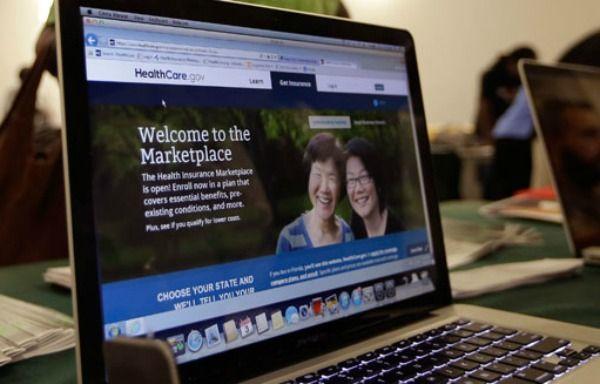
0Obamacare expects to need about 7 million enrollees on the newly created insurance exchanges to make the program work. To meet this goal, the administration had hoped it would have between 400,000 and 500,000 enrollees in the first month, at a minimum, since enrollment was expected to accelerate later.
Given the problems with the federal exchanges, the total will almost certainly be much lower. But state exchanges have been much more successful at collecting data and transmitting them to insurers. If we look at those numbers, we might get an indication of how well the federal entities would have done had they functioned properly. And this might provide a better benchmark for the expected efficacy of the law in the long run.
So I’ve taken the state numbers from enrollmaven.com, which breaks out the number of private enrollments by state. (I looked only at states with actual enrollment numbers, not just applications.) I’ve excluded Hawaii, which apparently doesn’t have a functioning website yet. You can see that data in the first two columns in the chart here:
The data were reported at different points in the month. Nevada, for instance, provides numbers through Oct. 10, while Colorado’s reporting is fairly up-to-date (it’s current as of the 28th). Regardless, I prorated the numbers through the 31st. This probably understates the growth of enrollment, given that some states have worked out the bugs in their websites and people have become more aware of the programs.
Next, I looked at each state’s share of the national population. I then divided total enrollment in the state by the state’s share of the national population. This allows us to extrapolate how many people might have enrolled if a given state’s exchange had been a national one (or, if you prefer, if a given state had the population of the country as a whole).
The numbers vary by a fair amount. If exchanges had functioned and attracted customers nationally at the same rate as Minnesota, they would have attracted some 53,000 customers. On the other hand, if they had functioned like Kentucky’s, they would have attracted around 450,000, which would be close to the administration’s low-end estimate. On average, it works out to about 280,000 customers nationally.
President Calls Drug Addiction a Health Problem
Lawmakers Hail New Opioid Rules -- But Call for More
No Opiates for the Masses?
Obamacare's Tax-Time Torment
Now, we need some caveats here, and they cut both ways. First, different states have different risk pools, different insurance rates, and different numbers of uninsured. You can’t literally extrapolate from a state to the nation as a whole. The above is meant as an estimate. That said, we have a decent cross-section of states, if perhaps a bit skewed to the Northeast. Second, there is a high degree of variance in the performance of state exchanges; some are functioning okay, some are terrible, and some are doing well. Third, these numbers might be depressed due to the negative publicity surrounding the national exchanges.
Fourth, and perhaps most importantly, we need to remember that 400,000 to 500,000 enrollees represented a bare minimum for what the administration expected at the start. The fact that only two states prorate into that range (and Vermont’s website is having problems now), the picture isn’t particularly encouraging.
The bottom line is this: If the national exchanges were functioning as well as the best-functioning state exchange -- and encountering the same demand -- we’d probably be on the low end of the administration’s acceptable enrollment range. If the middle state were representative of the country as a whole, we’d be below it, but not by an overwhelming amount. That’s not much, but it’s probably the best news supporters of the law have received in a while.
UPDATE: To clarify, the numbers above are private enrollment only. They exclude those who sign up for Medicaid.

The GOP Majority Should Go Out in Glory
Daniel McCarthy • RealClearPolitics
Republican Majorities Could Return Sooner Than Expected
J.T. Young • RealClearPolitics
The Danger Before the Attack
Leslie J. Sullivan • RealClearPolitics
Jon Finer’s Old and Dangerous ‘New Approach’ to Israel
Peter Berkowitz • RealClearPolitics
The President Deserves Better
John Ullyot • RealClearPolitics
Congress Doesn’t Need Another Blame Game. It Needs To Find What’s Broken
Jarrod Bernstein • RealClearPolitics
RCP Today
Top stories on RealClearPolitics
The Takeaway
Polling intelligence and analysis delivered to your inbox
World News
Featuring the latest world news
Policy
Featuring the latest policy news
Support Our Mission
As part of RealClearPolitics, authors aim to provide balanced, non-partisan analysis by presenting top reporting and commentary from all sides of the political spectrum.
Trusted by policymakers and citizens alike since 2000