
Sandy's Lesson: U.S. Needs American-Made Response
Published Oct. 30, 2013 • Read time: 3m
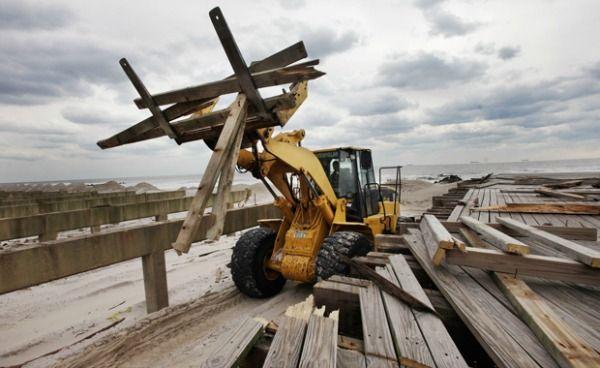
A year out from Hurricane Sandy, the storm’s damage remains visible along the shorelines of New York and New Jersey.
I suppose there’s nothing like a catastrophe courtesy of Mother Nature to remind us of who’s the boss. But few would argue that those who were affected by the storm deserved a speedy rebuild. Nonetheless, aid still hasn’t flowed down to many displaced homeowners. And while we have plenty of officials urging resiliency in the aftermath of this natural disaster, many of our response plans lack a key ingredient: the ability to quickly supply items needed in the aftermath of such destruction.
And that’s a real concern. After all, if your sole supplier for a crucial item is located on the other side of the world, it’s going to take weeks -- not days or hours -- to get something replaced.
That can be a serious problem, and our last two Homeland Security secretaries have said as much. Outgoing DHS chief Janet Napolitano, for example, cited damaged electrical transformers used by utility companies that are no longer made in the United States. And former secretary Tom Ridge pointed to a report that cautions about America’s steady loss of manufacturing over the last few decades, and the troubling implications for future emergencies.
It is worrisome that, in the aftermath of Sandy, we were able to tweet videos of devastated beach communities, but were unable to quickly provide any made-in-America transformers to supply power to those who desperately needed it.
That’s because our domestic capacity to respond to a crisis has become tenuous due to an increasing reliance on foreign suppliers. The United States depends heavily on overseas producers for everything from steel, cement, batteries, and high-technology components to everyday medical supplies like antibiotics. The risks resulting from this include limited access to construction materials, delayed delivery times, and the questionable quality of imported items.
BART Is Not a Homeless Shelter
Thank Gridlock for Economic Turnaround
Infrastructure Is Not the Problem
Take the Public-Private Road to Efficiency
This loss of production capacity, combined with a crumbling infrastructure, forms a natural weakness in America’s ability to respond quickly to a disaster.
Still, we’re only tied to this fate as long as we allow ourselves to be. As the saying goes: Never let a crisis go to waste. So let’s not. Let’s press our elected officials for a future disaster-preparedness strategy, and make sure a strong manufacturing sector is a key component.
We should commit to:
· Rebuilding damaged (and upgrading existing) public infrastructure with American-made materials;
· Upgrading an idled American workforce with vocational and technical skills programs so the labor needed to rebuild our bridges and roads is available;
· Incentivizing American manufacturing via domestic-content preferences when using federal procurement funds; and
· Enforcing trade laws so American manufacturers and workers can compete on a level playing field with foreign, state-owned enterprises.
These proposals can serve to direct the conversation about what disaster preparedness means in 21st century America. It should mean that the United States -- as the largest, wealthiest economy in the world -- is able to take care of its own after a crisis. And we should question a status quo that leaves more communities at risk in future crises.

Jon Finer’s Old and Dangerous ‘New Approach’ to Israel
Peter Berkowitz • RealClearPolitics
The President Deserves Better
John Ullyot • RealClearPolitics
Congress Doesn’t Need Another Blame Game. It Needs To Find What’s Broken
Jarrod Bernstein • RealClearPolitics
Democrats Won the Midterms. Common Sense Won, Too
Jordanne Kemper • RealClearPolitics
The 120th Congress Shapes Up
Carolina Lumetta • RealClearPolitics
Flooding GOP Primaries With Democrats
Robert Natelson • RealClearPolitics
RCP Today
Top stories on RealClearPolitics
The Takeaway
Polling intelligence and analysis delivered to your inbox
World News
Featuring the latest world news
Policy
Featuring the latest policy news
Support Our Mission
As part of RealClearPolitics, authors aim to provide balanced, non-partisan analysis by presenting top reporting and commentary from all sides of the political spectrum.
Trusted by policymakers and citizens alike since 2000