Obama Seeks Congress' OK to Strike Syria
Published Aug. 31, 2013 • Read time: 5m
Join the Conversation
0President Obama placed U.S. strikes against Syria on hold Saturday, telling the American people and especially Congress that though he’s ready to issue orders to attack, he will seek a resolution of approval from lawmakers.
He did not ask senators and House members to cut short their late-summer break to return to Washington immediately, and the president did not indicate what he would do if Congress rejects military action against Syria.
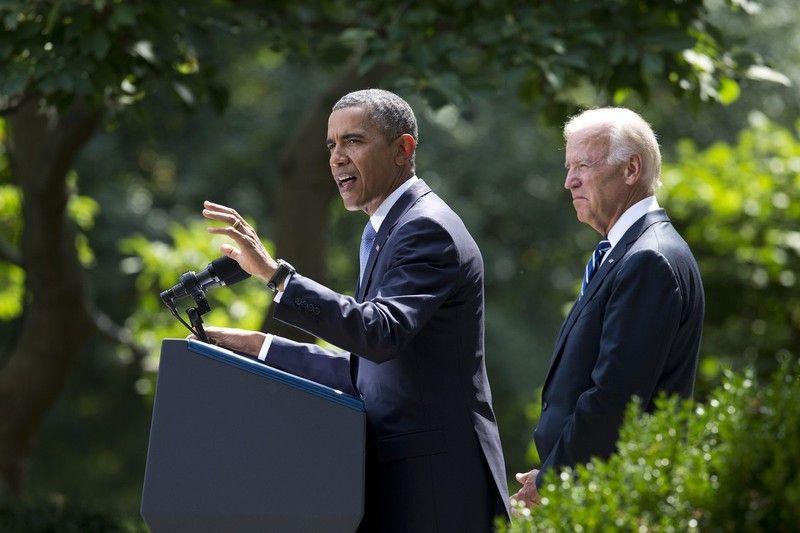
Speaking forcefully and in stark terms in a sun-drenched Rose Garden, Obama said President Bashar al-Assad must be held responsible for the horrific poisoning of civilians, including children. “We are the United States of America and we cannot and must not turn a blind eye to what happened in Damascus,” he said.
He outlined the by-now familiar arguments from the administration that punishing and deterring Assad and degrading his grip on power is in America’s national security interests; is permissible under international conventions; is of benefit to the world; and is an urgent moral imperative.
“Now’s the time to show that America keeps its commitments. We do what we say,” the president argued.
On Saturday, senior administration officials continued to update members of Congress during confidential briefings about intelligence evidence that Assad’s regime was responsible for the Aug. 21 chemical weapons attacks that killed more than 1,400 civilians near Damascus.
Obama’s advisers have been fielding detailed questions for days from Capitol Hill via conference calls and in meetings, all aimed at quieting anxieties about the administration’s military planning, and the utility of executing what the president on Friday called a “limited, narrow” response to punish Syria.
Gavin Newsom's Misguided Redistricting Initiative
A Warning Against the Overuse of Sanctions
Open The Books on the California State Checkbook
Senate Passes Bill Addressing Heroin, Opioid Crisis
Lawmakers are not scheduled to return to work until Sept. 9, after a month-long recess. Some members said this week they wanted Obama to call Congress back into emergency session, but that power is also available to the House and Senate leaders, and the leadership did not rush to put Damascus on either chamber’s agenda. The debate about Syria’s use of chemical weapons and the appropriate U.S. response is now destined to gouge into a short and already crowded legislative agenda for September.
The president said that while he had made his decision, time was not urgent, even though the administration in recent days referred to the situation as “a crisis.” Military strikes will not lose their shelf life, Obama suggested, arguing that the Pentagon believes they would be “effective” to send a strong message to Assad’s regime now or weeks from now.
Throughout America’s history, Congress and the president have enacted 11 formal declarations of war, and numerous authorizations for military action. More recently, presidents have treated congressional votes to approve the use of force as advantageous, but not necessarily binding.
“Due to an expansive interpretation of the president’s constitutional authority as Commander-in-Chief of the Armed Forces and of his inherent powers to use force without congressional authorization, the president has welcomed support from the Congress in the form of legislation authorizing him to utilize U.S. military forces in a foreign conflict or engagement in support of U.S. interests, but has not taken the view that he is required to obtain such authorization,” the Congressional Research Service noted in a 2011 recap of the scuffles between the two branches since the Founding Fathers.
Obama said he believes he has the authority to act without Congress, but also believes U.S. democracy is stronger if the executive and legislative branches, and the American people, stand together.
The president said he discussed his request for authorization of the use of force Saturday morning in conversations with House Speaker John Boehner, House Minority Leader Nancy Pelosi, Senate Majority Leader Harry Reid, and Senate Minority Leader Mitch McConnell.
Boehner for days had urged Obama to address the nation. Some members of Congress are already on record opposing any unilateral U.S. strike against Syria. Others simply sought the public legislative debate Obama has now invited.
Obtaining Congress’ okay to use military force in Syria will be difficult, not just because the issues and consequences are enormous in the Middle East, but because the underlying domestic political divides and scars from the Iraq and Afghanistan wars remain raw.
Vice President Joe Biden, along with Secretary of State John Kerry and Defense Secretary Chuck Hagel -- all former U.S. senators with extensive records on the use of military force around the world -- were at the White House with Obama on Saturday.
Also in attendance were Gen. Martin Dempsey, chairman of the Joint Chiefs of Staff, and other top officials from the administration’s national security team.
The president’s latest public remarks took place just 24 hours after he spoke off the cuff about Syria’s violation of international “norms” during a Cabinet Room event with Eastern European leaders. Following those comments, and after Kerry’s forceful evidentiary case against Syria delivered from the State Department, White House officials promised that the president would communicate his thoughts more expansively to the American people at some point.
Obama is scheduled to travel to Sweden Sept. 4, and to Russia Sept. 5-6 for the annual G-20 summit. Russian President Vladimir Putin, a staunch ally of Assad’s, is this year’s summit host. British Prime Minister David Cameron, who suffered a stinging defeat Thursday night in Parliament when seeking support for military action against Syria, and French President François Hollande, who wants to back the United States with military help against the Syrian regime, are also expected to attend.
The summit now appears fated to take on a dramatically different tone. Normally a scripted international economic conference, the discord in world capitals about Syria’s defiance of the international ban on the use and proliferation of chemical weapons will no doubt overshadow the conversations. That discord about how to respond also has a grip inside the United Nations.
“We will insist that an atrocity must not just be investigated, it must be confronted,” Obama said, referring to the U.N. weapons inspections in Syria that concluded, at least for the time, on Saturday.

A RealClear Thanksgiving: Investing in a Better Future
David DesRosiers • RealClearPolitics
Trump’s Newsom Problem: Antagonist-in-Chief
Carolina Lumetta • RealClearPolitics
America’s Free Spirit
John Maxwell Hamilton • RealClearPolitics
The GOP Majority Should Go Out in Glory
Daniel McCarthy • RealClearPolitics
Republican Majorities Could Return Sooner Than Expected
J.T. Young • RealClearPolitics
The Danger Before the Attack
Leslie J. Sullivan • RealClearPolitics
RCP Today
Top stories on RealClearPolitics
The Takeaway
Polling intelligence and analysis delivered to your inbox
World News
Featuring the latest world news
Policy
Featuring the latest policy news
Support Our Mission
As part of RealClearPolitics, authors aim to provide balanced, non-partisan analysis by presenting top reporting and commentary from all sides of the political spectrum.
Trusted by policymakers and citizens alike since 2000