
Obama Seeks Conflict With GOP in Appointing Rice, Power
Published June 6, 2013 • Read time: 6m
Join the Conversation
0President Obama has again practically baited congressional Republicans to wail about his appointees, betting that congressional overreach might put his administration on higher ground after weeks of scandal distractions and legislative fallbacks.
Returning to a posture he adopted in late 2011 and throughout the 2012 election campaign, Obama this week has telegraphed his intention to drive straight at his Capitol Hill critics on some issues, rather than concede terrain, fishing for new openings to paint Republicans as hazardously obstructionist and partisan.
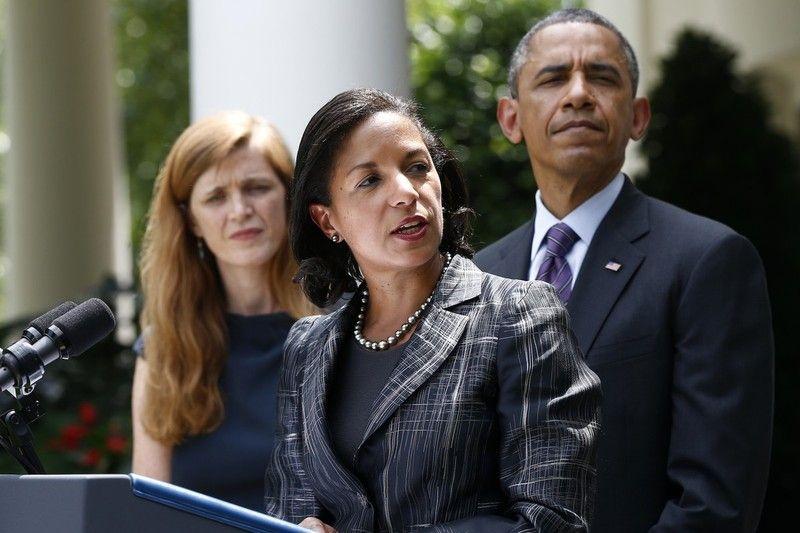
On Wednesday, the president leaped back onto the Benghazi battlefield staked out by his opponents, naming U.N. Ambassador Susan Rice as his top national security adviser to succeed Thomas Donilon, who will depart the White House by July. The post does not require Senate confirmation.
“I’m absolutely thrilled that she’ll be back at my side, leading my national security team in my second term,” Obama said with evident enthusiasm.
The president also will nominate Samantha Power, a White House adviser, human rights advocate and liberal Pulitzer Prize-winning author, to succeed Rice at the United Nations. The selection, anticipated by some in Washington, served to bolster conservatives’ anxieties about Obama’s second-term foreign policy direction. Indeed, pundit Glenn Beck once called Power “probably the most dangerous woman in America.”
Arizona Republican Sen. John McCain said he disagreed with Rice’s appointment, but nonetheless would work with her. Power, he said in a statement, “is well-qualified for this important position and I hope the Senate will move forward on her nomination as soon as possible."
Obamas Host "Hamilton" Cast at White House
Obama Starts 2015 on the Upswing, But Can It Last?
Obama Tests His Sway Against a GOP-Run Congress
Obama Looks Past GOP in Promoting 2015 Agenda
Rice, a trusted Obama adviser since she backed his presidential campaign in 2007, emerged as a prominent target for the administration’s conservative critics when she offered erroneous information in television appearances last September, identifying an anti-Muslim video as the catalyst for deadly terrorist attacks in Libya. The CIA, the White House and the State Department prepared the talking points Rice used, but the CIA later took responsibility for the errors.
As Obama began thinking about his second-term Cabinet after his re-election, Rice asked him to remove her name from a list of candidates to lead the State Department, and the president later chose former Massachusetts Sen. John Kerry. At a November news conference, a clearly angered Obama called GOP criticism of Rice “outrageous.”
“If Senator McCain and [South Carolina] Senator [Lindsey] Graham and others want to go after somebody, they should go after me. And I'm happy to have that discussion with them. But for them to go after the U.N. Ambassador, who had nothing to do with Benghazi and was simply making a presentation based on intelligence that she had received, and to besmirch her reputation is outrageous,” he said.
By promoting Rice to become the coordinator for national security policy just down the hall from the Oval Office, Obama sent Congress a message that on the Benghazi talking points controversy, he believes Republicans undercut their arguments in the eyes of most Americans after months of investigating an alleged “coverup” that House GOP lawmakers did not document.
Rather than sidelining Rice and Power, Obama has elevated the duo, and he appeared to relish the afternoon presentations of his appointees: two mothers who are strong-willed humanitarian advocates, academic standouts, and vanguards of their generation at 48 and 42, respectively, one African-American and one Irish-born.
Obama hosted a similar Rose Garden event Tuesday to nominate three people to fill vacancies on the nation’s second highest court. While nominating two female attorneys and an African-American judge to the U.S. Court of Appeals for the D.C. Circuit, the president aimed his ire at GOP Senate opponents who have opposed his nominees by blocking floor votes for months and years.
“This is not about principled opposition. This is about political obstruction,” he complained. “The fact that Republican senators are now pushing a proposal to reduce the number of judges on this independent federal court also makes no sense. When a Republican was president, 11 judges on the D.C. Circuit Court made complete sense. Now that a Democrat is president, it apparently doesn’t.
“Eight is suddenly enough!” he added in frustration.
Obama’s protests agitated Senate Republicans, who immediately cried foul.
“He is inventing a problem where there is not a problem,” Tennessee’s Lamar Alexander told RCP. “He did the same thing with student loans earlier this week. … This business of threatening the Congress and inventing a crisis is un-presidential, unproductive, and embarrassing for him to act that way. And I'm a senator who is accustomed to working with him, and I appreciate his outreach on the debt. But he needs to fire his campaign manager and start governing instead of running a political campaign in the White House.”
Obama’s supporters and his spokesman have of late been sketching out a distinction between what the White House respectfully refers to as “responsible” congressional oversight of the executive branch and the efforts of House Government Reform and Oversight Chairman Darrell Issa and his allies. Betting that Issa will not confine his remarks and conclusions to facts unearthed from witnesses and documents, including on the IRS evaluations of conservative groups that applied for nonprofit status, the White House celebrated on Sunday when Issa, appearing on CNN, called Press Secretary Jay Carney a “paid liar.”
“Overreach” is the word used by Democrats, and also by nervous Republicans. Some conservatives who are no longer in government have quietly huddled with Issa and his committee staff to encourage the California congressman to focus public attention on alleged wrongdoing by the administration, rather than any bullying or grandstanding by interrogators.
As was true when Obama sought a second term, his job approval numbers have continued to hover about 30 points higher than those for Congress. That fact helps Democrats, and gives the president an opening to gin up or call attention to Republican intransigence.
The White House strategy for the summer and fall envisions a busy president focused on the economy, job creation and numerous international issues during travels to Europe, Africa and Russia.
Even if he and Republicans don’t see eye to eye, Obama wants to be perceived as working across the aisle -- on immigration reform and deficit reduction, for example -- but ready to spar with the congressional GOP when it comes to gridlock, lower student loan interest rates, and money for popular programs such as Meals on Wheels. On scandals, such as the IRS controversy, the White House wants Obama to be the executive who knew nothing about admitted agency “wrongdoing,” but who quickly made public employees accountable when abuses were uncovered. In a second term, effective federal management has taken center stage.
“What I am doing today is my job,” Obama said this week.
That job became even trickier with news late Wednesday of one more potential scandal: That the National Security Agency has reportedly been tracking the phone calls of Verizon Business Network Services customers for more than a month. The surveillance, according to the British newspaper the Guardian, has been carried out under provisions of the Patriot Act, passed in the aftermath of the 9/11 attacks. The report prompted immediate criticism of the administration from the American Civil Liberties Union, and more is sure to follow.
RCP congressional correspondent Caitlin Huey-Burns contributed to this report.

The GOP Majority Should Go Out in Glory
Daniel McCarthy • RealClearPolitics
Republican Majorities Could Return Sooner Than Expected
J.T. Young • RealClearPolitics
The Danger Before the Attack
Leslie J. Sullivan • RealClearPolitics
Jon Finer’s Old and Dangerous ‘New Approach’ to Israel
Peter Berkowitz • RealClearPolitics
The President Deserves Better
John Ullyot • RealClearPolitics
Congress Doesn’t Need Another Blame Game. It Needs To Find What’s Broken
Jarrod Bernstein • RealClearPolitics
RCP Today
Top stories on RealClearPolitics
The Takeaway
Polling intelligence and analysis delivered to your inbox
World News
Featuring the latest world news
Policy
Featuring the latest policy news
Support Our Mission
As part of RealClearPolitics, authors aim to provide balanced, non-partisan analysis by presenting top reporting and commentary from all sides of the political spectrum.
Trusted by policymakers and citizens alike since 2000