How Fishing Helps Veterans Heal -- and Land Jobs
Published May 14, 2013 • Read time: 4m
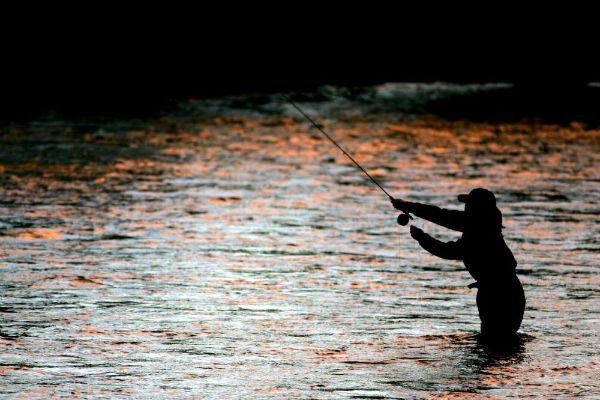
Looking for work can be a lot like fly-fishing. You don’t catch a fish with every cast, but as your skills and presentation improve, so do your chances of hooking into and eventually landing one. Another similarity is that coaching and mentoring will develop that skill set faster than trial and error.
The past few years have seen a marked improvement in the unemployment rate for our most recent crop of veterans from Iraq and Afghanistan, yet the rate remains higher than that of their non-veteran peers. The service-connected disability rate for these particular veterans is also higher, 28 percent compared to 14 percent for the general veteran population. Those figures represent a new set of challenges for those who have already faced down so many because they answered the call of duty.
I personally see the challenges they face. I started Project Healing Waters Fly Fishing at Walter Reed Army Medical Center in 2005 as I saw our young, injured troops working to regain their mobility and functioning. More than just a “take a guy fishing” program, PHWFF works with the physical and occupational therapists at Department of Defense and Veterans Affairs medical facilities to provide regular classes in fly tying, fly casting and rod building. Each of those activities provides the opportunity to improve fine motor skills and adapt to physical limitations.
As the wars progressed, we began seeing still other, “invisible,” injuries: post-traumatic stress disorder and traumatic brain injuries. These can complicate a veteran’s recovery due to their impact on concentration, mental recall, and compounding frustration.
The Empty Promises of Trump and Sanders
Good News for Discouraged Workers
A Vote for Trump Is a Vote Against American Consumers
First Lady Honors Pioneering Female Air Force Officer
The fly tying classes worked there too, as the intricate steps of wrapping and gluing bits of feather, fur and yarn to a hook pulled veterans mentally into a new, adventurous and non-clinical world. That new world became a reality for them because, of course, we also took them fishing. The rhythmic activity of casting a fly line, the peaceful surroundings, and the camaraderie with other veterans works wonders in healing restless, hurting souls as well as bodies.
Even off the battlefield, these young veterans continue to adapt, improvise and overcome, defeating debilitating injuries and recovering the skills needed to function in the years ahead. Yet, as their eventual military discharges drew closer, we saw a new anxiety surface as they realized that, while they had gained so much from our program, fly-fishing wasn’t going to pay the rent.
While it’s not a part of our mission as an organization, we have been successful in placing many participants in jobs through our network of volunteers and supporters. One of the fishing guides who donates his time to our program has hired a few new guides from the veterans he worked with on our trips.
Others have landed jobs with the firms that donate to PHWFF, because they met one of the firm’s directors on the stream, and still more were directed to job openings they learned about from one of our volunteers. I, myself, hired one of our participants, David Folkerts, who now serves as the chief operations officer for PHWFF.
Each of these placements can be attributed to one of the hallmarks of PHWFF: the camaraderie of military veterans. As they work through our program, we get to know them and their abilities. So when we are asked for help with a job search, we -- meaning each of us as individuals -- can take the time to say, “Hey, while I’ve got you on the phone, I know a guy,” presenting the job seeker in a way that no resume can.
There are plenty of offices at the VA, DoD and state-level departments of veterans affairs that mentor our “Gulf War II”-era vets on resume building and job search skills. That’s a wheel we don’t have to reinvent. What we do need is for anyone who appreciates the sacrifices made by our veterans to get into the game, to use their resources when seeking job applicants and to personally step in and help a veteran get his or her resume to the top of the stack.
Often, that can be as simple as helping a new veteran translate his or her military experience into “civilian-ese,” wading past the military acronyms and helping them find new words to describe their duties. Or, it could be simply helping bring to the veteran’s attention the skills and talents they may not even realize they gained during their military service.
Each of these things -- mentoring, camaraderie, and repetition -- can not only help a veteran learn to fish, but they will also help them hook into more employment interviews and land a new career.

A RealClear Thanksgiving: Investing in a Better Future
David DesRosiers • RealClearPolitics
Trump’s Newsom Problem: Antagonist-in-Chief
Carolina Lumetta • RealClearPolitics
America’s Free Spirit
John Maxwell Hamilton • RealClearPolitics
The GOP Majority Should Go Out in Glory
Daniel McCarthy • RealClearPolitics
Republican Majorities Could Return Sooner Than Expected
J.T. Young • RealClearPolitics
The Danger Before the Attack
Leslie J. Sullivan • RealClearPolitics
RCP Today
Top stories on RealClearPolitics
The Takeaway
Polling intelligence and analysis delivered to your inbox
World News
Featuring the latest world news
Policy
Featuring the latest policy news
Support Our Mission
As part of RealClearPolitics, authors aim to provide balanced, non-partisan analysis by presenting top reporting and commentary from all sides of the political spectrum.
Trusted by policymakers and citizens alike since 2000