Imperiled Red-State Dems Follow Their Own Playbooks
Published May 1, 2013 • Read time: 9m
Join the Conversation
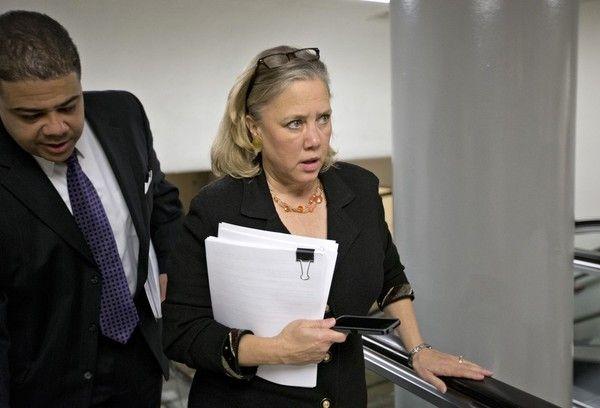
0Sen. Mary Landrieu is the last Democratic statewide officeholder standing in Louisiana. If Republicans have their way, and voters tie her to the president who lost the state by 17 points last fall, she won’t be standing for long.
Landrieu is one of a handful of Democratic senators up for re-election in a red state in 2014. Members of this class last appeared on the ballot with Barack Obama in 2008, and next year's midterms will be the first time they’ve run since his election as president. The GOP will try to pin these incumbents in Alaska, Arkansas, Louisiana and North Carolina to Obamacare, the budget and gun legislation in an effort to nationalize the races. The reason is simple: The incumbent president’s party typically doesn’t do well in midterms.
But Landrieu is running for a fourth term by following her own rules, something other red state Democrats will have to do as well. She’s promoting her support of the national health care law, which is unpopular in Louisiana; is backing her party’s budget, which includes tax increases; and joined a majority of fellow Democrats in supporting a background check for gun buyers -- a vote she cast despite knowing the measure would fail and which she called a tough but rational choice.
“I’ve won three times already in a red state and have a proven an ability to garner support from Democrats, independents and Republicans for a winning coalition,” Landrieu, 57, said in an interview with RealClearPolitics.
Democrats are defending 20 Senate seats in 2014, and Landrieu’s is a top target for Republican officials hoping to net the six seats they need to control the upper chamber. And Louisiana is becoming increasingly unfriendly to the incumbent’s party. A loss would reflect the downward trend of support for Southern Democrats, and underscore the challenge of running against a strong GOP tide. A victory, though, would be a testament to Landrieu’s strong personal brand and extensive experience, and also to the strategy of sticking to one’s own local playbook.
Portman-Strickland Senate Race Finally Set in Ohio
Portman Wastes No Time Attacking Strickland
Strickland Skirts Primary Debates in Ohio Senate Race
Senate Says Climate Change Is Real
“The Democratic Party did a great job holding the Senate last time,” Landrieu said. “President Obama’s re-election was a real victory for the party and I think progressive politics in our country, but I think all these [red state] races are competitive. They didn’t just start being competitive yesterday; they’ve been competitive for a long time, particularly in the South, so it’s not something I’m not familiar with or not used to, and that’s why I run and am proud to be a Democrat. But I’m very proud of the support I get from independents and Republicans, which gives me the margin of victory.”
Localizing races seemed to work for several Democrats in 2012. North Dakota’s Heidi Heitkamp, Virginia’s Tim Kaine, and Montana’s Jon Tester, for example, all won with that strategy. But GOP candidate selection figured into Democratic wins in Indiana and Missouri.
Louisiana Republican operatives say that while the GOP candidate matters, the Senate race there will be more “anybody-but-Landrieu” and anti-Obama than about the Republican opponent. Democrats, they argue, are a dying breed in the state. Though Landrieu is part of a family dynasty (her father, Moon, is a former New Orleans mayor and her brother Mitch now occupies that post with high approval ratings), the state is turning redder. Nonetheless, the operatives concede, Landrieu over-performs in conservative precincts and among white, independent voters.
Rep. Bill Cassidy is the only Republican officially in the race. Former Rep. Jeff Landry, a conservative who lost a member vs. member race last cycle, may also contend. Landrieu has never won re-election with more than 52 percent of the vote, and the 2014 race figures to be no different -- perhaps even closer.
Cassidy, a doctor from Baton Rouge, will stress his opposition to Obamacare. Landrieu is unapologetic about voting for the 2010 law. GOP efforts to bludgeon Democrats in 2012 with that vote proved futile, but by next year the Affordable Care Act will be fully implemented. Whether voters view it as a drag or a benefit is to be determined.
The president addressed that concern during his press conference Tuesday. “Even if we do everything perfectly, there will still be glitches and bumps, and there will be stories that can be written that say, ‘Oh, look -- this thing's not working the way it's supposed to and this happened and that happened,’ and that's pretty much true of every government program that's ever been set up,” he said.
Landrieu supported the law and secured in it an additional $300 million in Medicaid funds for her state, which she said GOP Gov. Bobby Jindal and other members of the Louisiana delegation also backed in light of post-Hurricane Katrina needs. The deal became known as the Louisiana Purchase and opponents painted Landrieu as a sellout. She took to the Senate floor that February to defend the provision and to strike back at critics. The health care vote doomed Arkansas Democrat Blanche Lincoln’s 2010 re-election bid. But unlike Landrieu, Lincoln had faced a brutal primary challenge and lagged early in the polls.
Republicans are waging similar anti-health care and anti-Obama campaigns against incumbent Democrats Mark Pryor of Arkansas, Mark Begich of Alaska and Kay Hagan of North Carolina and have been anxiously tracking their votes in the upper chamber. But there is some nuance and separation among these Democrats.
Landrieu and Hagan voted for a bipartisan gun control measure, sponsored by West Virginia Democrat Joe Manchin and Pennsylvania Republican Pat Toomey, that would have expanded the current background check system to include purchasers at gun shows and on the Internet. Begich and Pryor and Montana Sen. Max Baucus (who announced after the vote he would not seek re-election) voted against the bill. The divide among these red state Democrats was reflective of individual state dynamics. Landrieu and Hagan represent states that voted for Romney in 2012 -- but which also include large urban areas where there is more concern about gun crime.
The Louisiana Democrat explained her vote as one that would “strengthen Second Amendment rights” for her constituents. “I'm confident that most people understand the importance of closing this loophole while preserving the rights of law-abiding individuals to own and use guns for hunting, sport and self-protection,” she said in a statement after the vote, noting that she also opposed bills to ban assault weapons and limit magazine sizes.
Other issues challenge red state Democrats. Landrieu and Pryor are the only two incumbents up for re-election who have not supported gay marriage. (Landrieu said she personally supports same-sex marriage, but her state does not.) She was also among a handful of senators who recently voted against repealing the medical device tax, a provision in the Obamacare law that even some Democrats oppose. Landrieu supported her party’s budget proposal, while Pryor, Hagan, Begich and Baucus did not.
Landrieu’s re-election success greatly depends on turning out her base. And in Louisiana, that means high turnout among the African-American community is critical. In 2008, she slightly outperformed Obama among this group -- which made up roughly 30 percent of the state’s electorate that year, compared to 12 percent in Arkansas. African-Americans fled the state after Katrina in high numbers; they are making a return, though not to previous levels.
Participation tends to drop off in midterm elections. And while Obama’s unpopularity in the state can be a liability for Landrieu, a presidential-level turnout operation would help her. Robert Mann, chairman of the Manship School of Mass Communication at Louisiana State University and director of the school’s Reilly Center for Media & Public Affairs, said the incumbent senator might be at a disadvantage by not sharing a ticket with the president.
“She is not going to be running with Barack Obama on the ballot. That means she and the party are going to have to work to get the base out,” said Mann, who served as press secretary to former Louisiana Sen. John Breaux, a conservative Democrat. Tying candidates to Obama might not pack the same political punch it did in 2010, since the president will be a lame duck, Mann noted.
Democratic strategists say Obama probably won’t be welcomed in places like Louisiana, Arkansas, Alaska, Montana and North Carolina to campaign. But his commitment to raise money for congressional races will help. Red state Democrats have already raised substantial amounts of money: Landrieu brought in $1.2 million last quarter and has $3.5 on hand; Pryor brought in $1.9 million and has $3.4 million on hand; Begich raised $948,000 and has $1.5 million on hand; and Hagan raised $1.6 million and has $2.7 million on hand.
Landrieu points to her fundraising ability as one key to success, and says her campaign organization, variety of supporters and endorsements from local Republican officials will make a difference.
“It’s going to be a very tough race, a tough state for Democrats,” said one Democratic strategist with ties to Louisiana. But with her fundraising prowess, “she will have the resources to frame the race as she sees fit.”
Landrieu believes her stature in the Senate carries appeal. If Democrats hold on to the upper chamber after the midterms and Landrieu wins re-election, she will be poised to claim the chairmanship of the Energy and Natural Resources Committee, a coveted post not held by a Louisianan in 24 years. Landrieu told RCP that prospect is “exciting” for the state, where coastal restoration and domestic oil and gas production is of great interest. In 2007, for example, she voted against a measure to eliminate tax deductions for oil companies. Landrieu also points to her a seat on the Appropriations Committee, her support of school reform and her chairmanship of the small business subcommittee.
“I’ve been with the president when I think his positions are right in my state, and I’ve been against him when I think they are wrong for Louisiana,” she said, a line fellow imperiled Democrats will echo throughout this campaign cycle.
Of course, the midterm is still a year and a half away, and a variety of factors could change the dynamics.
“This is an incumbent running against a really, really strong Republican tide,” Mann said. “She’s going to have to have everything go right for her.”

A RealClear Thanksgiving: Investing in a Better Future
David DesRosiers • RealClearPolitics
Trump’s Newsom Problem: Antagonist-in-Chief
Carolina Lumetta • RealClearPolitics
America’s Free Spirit
John Maxwell Hamilton • RealClearPolitics
The GOP Majority Should Go Out in Glory
Daniel McCarthy • RealClearPolitics
Republican Majorities Could Return Sooner Than Expected
J.T. Young • RealClearPolitics
The Danger Before the Attack
Leslie J. Sullivan • RealClearPolitics
RCP Today
Top stories on RealClearPolitics
The Takeaway
Polling intelligence and analysis delivered to your inbox
World News
Featuring the latest world news
Policy
Featuring the latest policy news
Support Our Mission
As part of RealClearPolitics, authors aim to provide balanced, non-partisan analysis by presenting top reporting and commentary from all sides of the political spectrum.
Trusted by policymakers and citizens alike since 2000