
New START: State Department's "Facts" Don't Match Reality
Published April 15, 2013 • Read time: 3m
“Three years in, New START has performed exactly as advertised,” writes John Kerry, Secretary of State, in his most recent article. In reality, the New Strategic Arms Reductions Treaty (New START) was a bad deal for the U.S. three years ago and it remains so today.
Kerry says he would like to see unanimity on vital issues on nonproliferation and arms control. He asks, “How do we do that?” For starters, the State Department should negotiate treaties that are not lopsided to the U.S.’s disadvantage. A large majority of reductions that must be conducted under New START are to the U.S. nuclear weapons arsenal; Russia is allowed to build up. Moscow launched the most expensive nuclear weapons modernization program since the end of the Cold War after New START was signed.
Secretary Kerry asserts that New START is “maintaining stability and predictability.” This is just not so. The severely degraded verification regime compared to the original START’s standard does not provide sufficient insights into Russia’s strategic buildup or locations of its strategic systems.
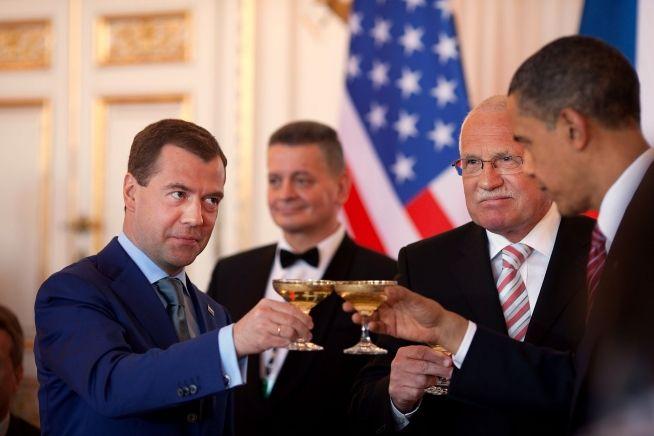
New START preserved Russia’s at least 10:1 advantage in tactical nuclear weapons and re-established the link between strategic offensive and defensive systems. This link allowed Russia to use New START as a vehicle to protest against U.S. missile defense deployments in Europe. The President’s comments to outgoing Russia President Medvedev in March 2012 that he would have more “flexibility” after his re-election further undermined U.S. efforts to protect itself and allies from a ballistic missile threat from Iran.
Gavin Newsom's Misguided Redistricting Initiative
A Warning Against the Overuse of Sanctions
Open The Books on the California State Checkbook
Senate Passes Bill Addressing Heroin, Opioid Crisis
The Administration recently decided to “restructure” the SM-3 Block IIB program, a more powerful interceptor that was supposed to be deployed in Europe to address a long-range ballistic missile threat. The “restructure” will delay the program by years—if it is completed at all.
The President also failed to deliver on his promises to the Senate to fund the nuclear weapons complex at levels necessary to revitalize the decrepit U.S. nuclear weapons infrastructure. His budget proposal from last year would underfund the nuclear weapons account by about $4 billion compared to his own 2010 certification between fiscal years 2013 and 2017. Yet the U.S. nuclear weapons complex is in dire need of investments, especially considering that the U.S. is the only nuclear weapons state in the world without a substantive nuclear weapons modernization program.
It would be easier to forge an arms control consensus if New START benefited the U.S. It did not three years ago, and it does not today.
This article originally appeared on the Heritage Foundation's Foundry blog.

The Danger Before the Attack
Leslie J. Sullivan • RealClearPolitics
Jon Finer’s Old and Dangerous ‘New Approach’ to Israel
Peter Berkowitz • RealClearPolitics
The President Deserves Better
John Ullyot • RealClearPolitics
Congress Doesn’t Need Another Blame Game. It Needs To Find What’s Broken
Jarrod Bernstein • RealClearPolitics
Democrats Won the Midterms. Common Sense Won, Too
Jordanne Kemper • RealClearPolitics
The 120th Congress Shapes Up
Carolina Lumetta • RealClearPolitics
RCP Today
Top stories on RealClearPolitics
The Takeaway
Polling intelligence and analysis delivered to your inbox
World News
Featuring the latest world news
Policy
Featuring the latest policy news
Support Our Mission
As part of RealClearPolitics, authors aim to provide balanced, non-partisan analysis by presenting top reporting and commentary from all sides of the political spectrum.
Trusted by policymakers and citizens alike since 2000