Numbers Defined Romney -- and Did Him In
Published Nov. 7, 2012 • Read time: 5m
BOSTON -- Mitt Romney's six-year quest for the presidency ended before the clock struck midnight on Tuesday.
He had projected confidence in the days leading up to the election, and even as the TV networks and the press declared that President Obama had won re-election, the two-time presidential contender’s aides called for a reconsideration. They insisted that more votes needed to be counted, that their candidate still had a chance.
It was classic Romney.
The former Massachusetts governor is a self-described “numbers guy.” He immerses himself in data, and until the numbers prove something, he doesn’t buy it.
And yet, numbers were Romney’s undoing in 2012. From an unrelenting focus on the unemployment rate to a secretly recorded video reference to the “47 percent” to President Obama’s needling Romney’s arithmetic for deficit reduction to faulty internal poll numbers, the math ultimately failed to add up for him.
What might have hurt Romney more, however, was his longtime underestimation of Obama -- a problem that dogged Hillary Clinton before him.
In December 2007, Romney held court with a small group of reporters one snowy afternoon in Iowa. He was asked his thoughts on the coming election and his potential competitors. Looking back nearly five years later, one answer stands out: When he mused about Barack Obama’s chances in the election, Romney was dismissive. His words went something like this: “I just don’t think the American people will go for someone who has so little experience.”
Lies, Assault and Cover-ups Don't Stop Donald Trump
Trump Stands by His Man; Obama on a Health Scourge; Hayden Interview; Reagan's Courage
Analysis: For Trump, Few Limits to Win-At-Any-Cost Approach
What If Clinton Isn't Indicted?
That attitude stayed with him long after he lost the 2008 primary to John McCain, and long after Barack Obama became the 44th president of the United States.
As the primary contests drew near back then, though, Romney wondered to some of his closest confidants whether he himself was up to the job. But the truth is that no one ever believed that Mitt Romney wasn’t qualified to hold the nation’s top job. The problem was his tendency to miscalculate politically. Despite a relationship with politics dating back to his teens, when his father was governor of Michigan, the political realm was never a natural fit for Mitt.
Throughout both of his presidential campaigns, Romney expected his business experience to carry him through, and showed almost a disdain for the political system and the differences between business and government. He reminded every audience he could that he spent 25 years working in the private sector, rescued the 2002 Winter Olympics, and then ran the state of Massachusetts for a term as governor.
What he rarely did, however, was explain how those experiences would translate to the Oval Office. He simply expected his listeners to make the leap because he didn’t want to make the sale himself.
Not long after Obama was inaugurated in 2009, Romney struck up a close relationship with the leadership of the House Republican Conference, including Paul Ryan, Eric Cantor and Kevin McCarthy. They invited him to a retreat at the Homestead resort in Virginia, where he was treated as the party’s beacon just 10 days after the president’s celebration.
And on that Friday night at the end of January, he congratulated the House GOP for staying strong and voting in solidarity against the stimulus package that irked so much of the country. He became something of a folk hero for House Republicans long before they sensed the possibility of taking back the majority in their chamber less than two years later. It had the effect of elevating Romney to a level that no other Republican politician enjoyed after the shellacking of 2008, and it may have gone to his head.
The double-Harvard grad buckled down and wrote a book, laying out a platform for his eventual 2012 campaign. He raised money for Republicans all over the country competing in the midterms, and he began carefully plotting an election strategy.
In true consultant fashion, he determined what didn’t work about his first campaign: He had talked too much about social issues and defense, he figured. In his second, more finely tuned race, he would drill down on the economy, which would suit him better anyway.
Along the way, he may have gotten cocky: This election was his turn; he had paid his dues, endured a loss in 2008 and believed that an economic focus would carry him to victory.
So he set out to create and reinforce the perception that his nomination was inevitable. He delayed announcing his bid as long as possible in 2011, which effectively pushed back the start of the race for the other candidates.
Romney also made himself extremely inaccessible to the media, because he was, after all, the “VIP” in the race. Instead, he wrote op-ed after op-ed, escaping the media filter to make his thoughts directly known to the public. That dynamic set in motion a strained relationship with the press corps that remained for the entire campaign.
It wasn’t that the media disliked him, but that the media expected more of someone with such a knack for details and statistics, and Romney refused to deliver in that regard.
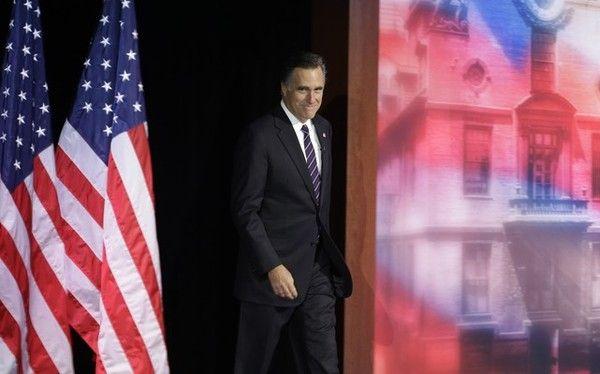
Romney nicknamed the small tribe of reporters traveling with him in his 2008 bid. As the 2012 campaign dragged on, he struck up a similar level of familiarity with his much larger press corps. But so much of how he presented himself when the cameras were rolling felt forced to close observers. Ironically, all of that melted away when he gave his concession speech Tuesday night.
“I pray that the president will be successful in guiding our nation,” Romney said graciously, after two years of speaking about his opponent with withering criticism.
Romney, who looked like he may have shed some tears before he took the stage, referred several times to prayer and the solace he finds in it. He urged his audience to pray for the president, as well.
“The nation chose another leader,” he admitted.
And it was clear that this time that he accepted it.

A RealClear Thanksgiving: Investing in a Better Future
David DesRosiers • RealClearPolitics
Trump’s Newsom Problem: Antagonist-in-Chief
Carolina Lumetta • RealClearPolitics
America’s Free Spirit
John Maxwell Hamilton • RealClearPolitics
The GOP Majority Should Go Out in Glory
Daniel McCarthy • RealClearPolitics
Republican Majorities Could Return Sooner Than Expected
J.T. Young • RealClearPolitics
The Danger Before the Attack
Leslie J. Sullivan • RealClearPolitics
RCP Today
Top stories on RealClearPolitics
The Takeaway
Polling intelligence and analysis delivered to your inbox
World News
Featuring the latest world news
Policy
Featuring the latest policy news
Support Our Mission
As part of RealClearPolitics, authors aim to provide balanced, non-partisan analysis by presenting top reporting and commentary from all sides of the political spectrum.
Trusted by policymakers and citizens alike since 2000