
Why Won't Obama Call It Terrorism?
Published Sept. 27, 2012 • Read time: 3m
The U.N. General Assembly convened this week in New York, but America's commander-in-chief avoided meetings with foreign leaders to hold multilateral talks with Barbara, Joy, Sherri, Elisabeth, and Whoopi on the set of ABC's "The View."
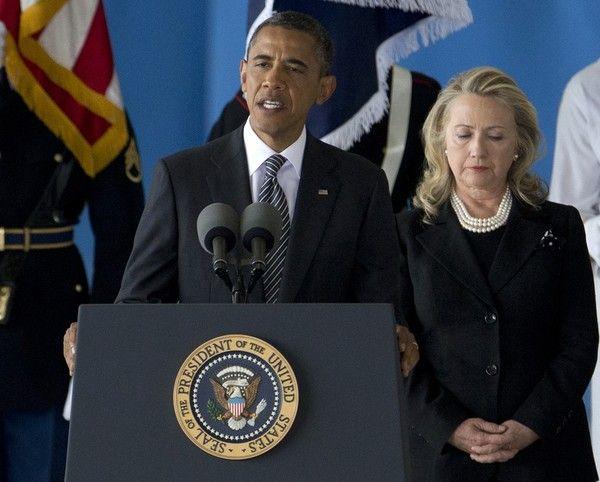
On the show, President Obama offered his puzzling view of the attack on the American consulate in Benghazi, Libya. He yet again failed to call it what was: a terrorist attack on the 11th anniversary of 9/11.
How can President Obama address a crisis if he can’t be honest about its causes? How can he fight terrorism if he won’t identify terrorist acts?
Amid Middle East turmoil and six weeks before the election, President Obama refuses to have an honest conversation with the American people. The country deserves honesty, not obfuscation, from our president.
At first, the administration struggled to define the attack, at one stage even making the odd claim that it had nothing to do with America or American policy. But by now, nearly everyone but the president himself has finally admitted: the attack was the work of terrorists.
National Counterterrorism Center Director Matt Olsen told a Senate hearing the four Americans killed in Benghazi died “in the course of a terrorist attack on our embassy.”
Press Secretary Jay Carney said it was “self-evident that what happened in Benghazi was a terrorist attack.”
Secretary of State Clinton said last week: “What happened in Benghazi was a terrorist attack, and we will not rest until we have tracked down and brought to justice the terrorists who murdered four Americans.”
The FBI Gained Access; We'd Already Lost Our Privacy
Is Trump Right About NATO?
Arizona's Voting Rights Fire Bell
U.S. Officials Say 2 Americans Died in Brussels Attack
The president of Libya, Mohammed Magarief, told NBC News, “It’s a pre-planned act of terrorism.”
And we have now learned that U.S. officials knew within a day that al-Qaeda was involved.
“Within 24 hours of the 9-11 anniversary attack on the United States consulate in Benghazi, U.S. intelligence agencies had strong indications al-Qaeda-affiliated operatives were behind the attack, and had even pinpointed the location of one of those attackers,” reports the Daily Beast.
Nevertheless, President Obama, when asked by Joy Behar whether the attack was a terrorist act, replied that it “wasn’t just a mob action.” He would not call it terrorism.
Carney, speaking Wednesday, said the president believes it was a “terrorist attack.” But why hasn’t the president himself said so in the last 15 days? He has wasted lots of breath condemning the video that some in the Middle East were protesting. But not a single word condemning terror.
Appearing on “60 Minutes” Sunday, the president offered another troubling take on the violence across the Middle East. He referred to it simply as “bumps in the road.” But that’s no way to describe terrorist attacks on Americans.
Why is President Obama downplaying these serious attacks?
And why would President Obama choose to be dishonest in the first place? If not dishonest, why was he so dangerously aloof?
No one on the “View” couch asked these follow-up questions, but the American people must. For the safety of our citizens, the security of our country, and the strength of democracy in the world, we must keep asking: “Why?”

The GOP Majority Should Go Out in Glory
Daniel McCarthy • RealClearPolitics
Republican Majorities Could Return Sooner Than Expected
J.T. Young • RealClearPolitics
The Danger Before the Attack
Leslie J. Sullivan • RealClearPolitics
Jon Finer’s Old and Dangerous ‘New Approach’ to Israel
Peter Berkowitz • RealClearPolitics
The President Deserves Better
John Ullyot • RealClearPolitics
Congress Doesn’t Need Another Blame Game. It Needs To Find What’s Broken
Jarrod Bernstein • RealClearPolitics
RCP Today
Top stories on RealClearPolitics
The Takeaway
Polling intelligence and analysis delivered to your inbox
World News
Featuring the latest world news
Policy
Featuring the latest policy news
Support Our Mission
As part of RealClearPolitics, authors aim to provide balanced, non-partisan analysis by presenting top reporting and commentary from all sides of the political spectrum.
Trusted by policymakers and citizens alike since 2000