
China: The Partisan Campaign Concern
Published Sept. 19, 2012 • Read time: 4m
In a presidential election campaign so far dominated by domestic economic concerns, debate over international matters has largely been an afterthought. With the outbreak of anti-American violence in some Muslim-majority countries, this may begin to change, but it is still too soon to tell.
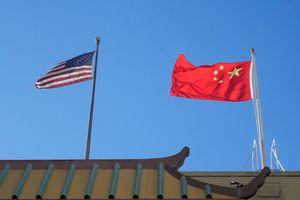
What is clear, however, is that China will be on voters’ minds come Election Day, in part because it is a crossover issue. Sino-American relations clearly fall in the foreign policy realm, but voters’ interest in China is driven largely by domestic economic worries. This was underscored by the Obama administration’s Sept. 17 unfair trade case at the World Trade Organization against alleged Chinese subsidies of auto parts exports.
So voters can expect to hear more about China as an economic competitor as the campaign progresses, especially from GOP nominee Mitt Romney, in part because Republican voters are more concerned about China than are Democrats.
Most Americans describe relations between the U.S. and China as good and most consider China a competitor rather than an enemy or partner, according to a new survey by the Pew Research Center.
At the same time, when asked which country represents the greatest danger to the U.S., more Americans volunteer China (26 percent) than name any other country, including Iran and North Korea. And about half (52 percent) view China’s emergence as a world power as a major threat to the United States.
But, Republicans are more concerned than Democrats about the impact of China’s rise. Six-in-10 Republicans believe Beijing’s emergence as a world power poses a major threat to the U.S., compared with 48 percent of Democrats. And Republicans are more likely (74 percent) than Democrats (61 percent) to say China cannot be trusted.
Moreover, contrary to the popular narrative that Democrats are protectionists and Republicans are free traders, far more Republicans (71 percent) than Democrats (54 percent) see the U.S. trade deficit with China as a very serious problem for the United States. Similarly, GOP members (76 percent) are more likely than Democrats (67 percent) to worry about the loss of U.S. jobs to China. And Republicans (87 percent) are more concerned than Democrats (75 percent) about the large amount of American debt held by the Asian nation.
With such concerns, it is hardly surprising that Republicans are also far more likely to favor toughness with China on economic and trade issues. Democrats are more likely to say building a strong relationship with China is a top priority. About two-thirds of Republicans (68 percent) say it is very important for Washington to be tough with Beijing, compared with 53 percent of Democrats. At the same time, 59 percent of Democrats believe building a strong bilateral relationship with China should be a top priority, while only 48 percent of Republicans agree.
And GOP voters also think their party can do a better job than the Obama administration in dealing with China. Republicans (65 percent) are nearly twice as likely as Democrats (35 percent) to say the president should be tougher on Beijing. Meanwhile, roughly half (51 percent) of Democrats say that Obama’s dealings with China are about right.
This critique may, in part, simply reflect a partisan belief typical of those out of power that they can always do better than those in power. A decade ago, 40 percent of Democrats said then-President George W. Bush was not being tough enough on China, while just 34 percent believed his dealings with China were about right. In contrast, only 32 percent of Republicans criticized Bush for not being tough enough; 57 percent said his administration’s handling of China was about right.
Security issues involving China are less of a public concern or a partisan issue. Only about half the public is worried about cyber attacks from China (50 percent) or Beijing’s growing military power (49 percent) and just 27 percent are concerned about tensions between China and Taiwan. And there is no real difference between the party faithful on Beijing’s military ambitions or regarding its relations with Taipei.
Despite the recent upsurge in anti-American violence in much of the Muslim world, domestic economic issues are likely to dominate the U.S. presidential campaign over the next six weeks. The lone international economic exception may be China. Because in many voters’ minds, China is a domestic economic concern seen through a partisan lens.


RCP Today
Top stories on RealClearPolitics
The Takeaway
Polling intelligence and analysis delivered to your inbox
World News
Featuring the latest world news
Policy
Featuring the latest policy news
Support Our Mission
As part of RealClearPolitics, authors aim to provide balanced, non-partisan analysis by presenting top reporting and commentary from all sides of the political spectrum.
Trusted by policymakers and citizens alike since 2000